
Can Plants Hear? Exploring Unusual Scientific Theories
The Truth Behind Music, Vibrations And Plant growth

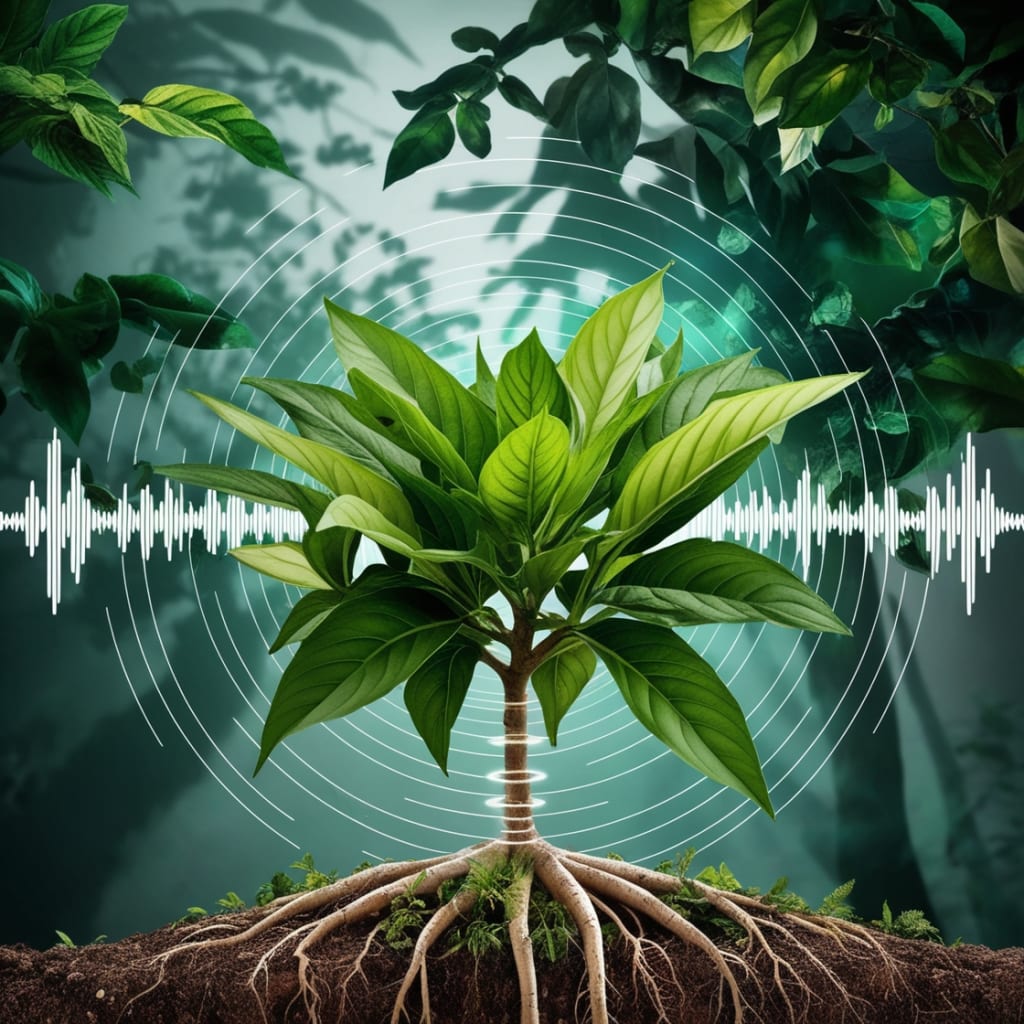
Introduction: The Silent World of Plants—Or Is It?
Plants don’t have ears, a brain, or vocal cords. They don’t talk, bark, or hum. So why are scientists asking whether they can hear?
For centuries, we’ve treated plants as passive life forms—responding to sunlight, water, and soil nutrients. But recent research suggests that plants may be far more aware of their environment than we ever imagined. Some experiments even indicate that they may respond to sound waves.
Let’s dive into the science—and speculation—behind the idea that plants can hear, and what it could mean for the future of botany, agriculture, and our relationship with nature.
Do Plants Really Hear? Defining the Question
To explore whether plants can hear, we first need to ask: What is hearing?
- In animals, hearing involves:
- Sound waves entering the ear,
- Vibrations being converted into electrical signals,
- Signals processed by the brain.
Plants lack ears and brains. But they do have mechanosensory cells—cells that respond to vibration and pressure. So while they may not “hear” like we do, they could still sense sound in meaningful ways.
The Science of Sound and Plants
Recent studies show that plants can detect and respond to sound frequencies.
📌 Key Research Highlights:
University of Missouri, 2014: Scientists discovered that the Arabidopsis plant (a small flowering plant) could detect the sound of a caterpillar chewing on its leaves. In response, it released more defensive chemicals to deter the predator.
Tel Aviv University, 2019: Researchers played sound recordings of bee wingbeats near evening primroses. The flowers responded by producing more nectar within minutes, likely to attract more pollinators.
University of Western Australia, 2017: Found that roots of corn plants gravitated toward the source of clicking sounds in the soil, suggesting they may “listen” for water or other root systems.
These findings imply that plants might use sound cues to enhance survival strategies, such as protecting themselves or attracting pollinators.
Do Plants Respond to Music? Myth vs. Science
Many people believe that playing music can help plants grow. This idea became popular in the 1970s, especially after the book The Secret Life of Plants suggested plants had emotional responses to music.
But does the science back this up?
🔬 What Studies Suggest:
Some experiments show that plants exposed to classical or soothing music grew better than those in silence or exposed to harsh, noisy environments.
Others found no significant effect or inconclusive results, making it difficult to draw hard conclusions.
The truth may lie not in the “music” itself, but in the sound frequencies and vibrations. Certain sound frequencies may stimulate plant cells or activate growth hormones, such as auxins and gibberellins.
Is This Consciousness or Reaction?
Now comes the big question: If plants respond to sound, does that mean they’re conscious?
Most scientists say no. These responses are likely biochemical, not emotional or cognitive. In other words, a plant doesn’t “know” it’s listening—it’s simply reacting to external stimuli.
Still, the complexity of plant behavior has led to a growing field called “plant neurobiology”—a controversial area that studies signaling pathways in plants that mimic neural communication.
While plants don’t have nerves, their vascular systems carry signals, chemicals, and even electrical impulses that resemble basic decision-making processes.
The Role of Epigenetics and Memory in Plants
Fascinatingly, plants can retain information. This is known as plant memory.
For example:
A 2016 study showed that plants exposed to certain stress sounds became more resistant in future stress events.
The Mimosa pudica (the "sensitive plant") learned to ignore harmless stimuli (like water droplets), a trait it retained for weeks.
This form of “learning” may be linked to epigenetic changes, where a plant’s response to sound gets encoded into its biological structure and passed on.
Practical Applications of Plant Acoustic Research
The implications of plant-hearing theories extend far beyond curiosity—they’re shaping future tech and farming.
🚜 Smart Agriculture:
- Farmers could use sound frequencies to promote growth, flowering, or pest resistance.
- Sound-based irrigation systems might trigger plant roots to grow toward water sources.
🧪 Environmental Monitoring:
- Sound-responsive plants could serve as biosensors—alerting humans to changes in the environment, pollution, or soil quality.
🎧 Urban Gardening:
- Playing specific frequencies may help indoor plants thrive in artificial or low-light conditions.
The Philosophy: If Plants Hear, What Else Are We Missing?
The idea that plants can “hear” forces us to rethink how we define intelligence, awareness, and communication in nature.
Maybe we’ve been measuring life by human standards for too long. If plants can sense and react to vibrations, what other messages might be carried in the natural world—unheard by us, but deeply meaningful to them?
Could sound be the language of life that transcends species?
Conclusion: Listening to the Green Silence
The theory that plants can hear is no longer just poetic imagination—it’s a field of study with growing evidence. While they may not “listen” in the way we do, plants appear to perceive and react to sound vibrations in purposeful, adaptive ways.
From detecting predators to attracting pollinators and responding to music, plants are showing us that life is not as silent as we once believed.
As we continue to uncover the unseen forces of nature, one thing becomes clear: maybe we’re the ones who need to learn how to listen.
About the Creator
Muhammad Asim
Welcome to my space. I share engaging stories across topics like lifestyle, science, tech, and motivation—content that informs, inspires, and connects people from around the world. Let’s explore together!
Keep reading
More stories from Muhammad Asim and writers in Education and other communities.
The Human Brain: 10 Fascinating Facts You Never Knew
The human brain is the most complex and powerful organ in the body. It is the command center of the nervous system and is responsible for every thought, emotion, memory, and movement. Despite years of scientific research, the brain still holds many secrets. In this article, we'll explore 10 fascinating facts about the human brain that will truly amaze you.
By Muhammad Asim9 months ago in Education
A Beginner’s Guide to Google Ads
Online advertising can feel overwhelming when you first look into it. There are many platforms, many settings, and plenty of advice that can make the process sound more complicated than it really is. One of the most widely used advertising platforms today is Google Ads, created by Google.
By supun fernando2 days ago in Education
Modern-Day Monarchs: The Rise of Self-Sustaining Billionaire Compounds
Across the globe, a new form of elite living is taking shape. Billionaires are building expansive, self-sustaining compounds that resemble modern kingdoms. These estates are not simple homes. They are carefully planned domains designed to operate independently from surrounding systems. In many ways, they echo the private realms once occupied by monarchs.
By Inspirata Group7 days ago in Education
REEEEEEEEE!
I'm on a low road right now. There are a literal million things to do and not one of them worth my time. I would rather sit in place and burn but the orbit takes me on its inevitable route 'round the center; and I a center in my own right, around which others orbit, and so on and so forth, ad infinitum, ad nauseum.
By C. Rommial Butler7 days ago in Poets




Comments
There are no comments for this story
Be the first to respond and start the conversation.