
Breathing the Unseen Enemy: Smog’s Worldwide Impact
A look into how invisible air pollution is silently shaping our health, cities, and climate

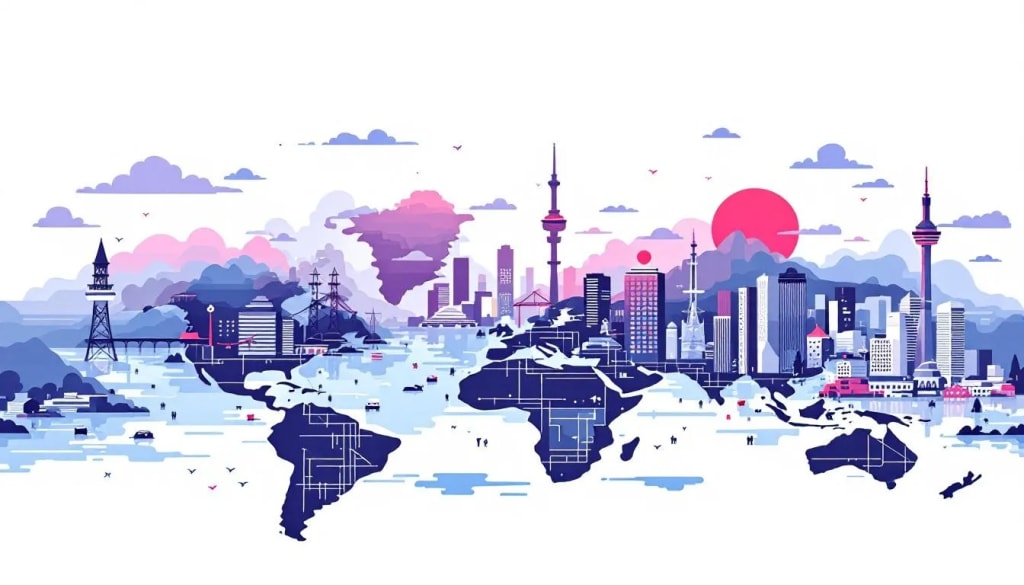
Smog Around the World: A Global Crisis We Can’t Ignore
Step outside on what should be a bright sunny day, and instead of being greeted by blue skies, there’s a thick, grayish haze hanging low in the air. You squint, cough, and maybe even check your phone to see if it's safe to breathe. This isn’t an isolated scene from a dystopian movie—it’s a daily reality for millions of people around the world dealing with smog.
Smog, a term born from the combination of "smoke" and "fog," is one of the most visible forms of air pollution, and yet, we often underestimate its reach and impact. From bustling megacities to rural industrial towns, the smog crisis is not limited by geography or economy. Let’s take a journey across the globe to understand how different regions are affected, why it’s happening, and what’s being done about it.
Understanding Smog: What Is It Really?
Smog typically forms when pollutants from vehicles, factories, construction sites, and burning fossil fuels react with sunlight. There are two main types: sulfurous smog, also known as “London smog,” which comes from burning coal, and photochemical smog, or “Los Angeles smog,” which is created when sunlight reacts with nitrogen oxides and volatile organic compounds in the air.
The health effects are alarming: smog can cause asthma attacks, lung infections, and long-term respiratory issues. It doesn’t just affect people with pre-existing conditions—children, the elderly, and even healthy adults are at risk.
Asia: A Region at the Epicenter
Asia, particularly South and East Asia, has become a poster child for the smog crisis in the past decade. Cities like New Delhi, Beijing, and Lahore frequently top global air pollution rankings. In New Delhi, for instance, the air quality index (AQI) can reach hazardous levels for weeks at a time, especially during winter when crop burning, firecrackers, and stagnant weather patterns converge.
In China, years of unchecked industrial growth led to infamous “airpocalypses.” Back in 2013, Beijing's smog was so bad that flights were canceled, schools were shut down, and visibility dropped to just a few meters. However, in recent years, China has implemented strict policies on coal usage, vehicle emissions, and green energy adoption. These efforts have shown results, with gradual but noticeable improvements in air quality.
South Korea and Japan, while not as severely affected, still face smog issues due to transboundary pollution—meaning dirty air doesn’t respect national borders. Dust storms from the Gobi Desert and emissions from neighboring countries often impact their air quality.
North America: Improvements, But Not Out of the Woods
North America has made significant strides in tackling air pollution, particularly since the introduction of the Clean Air Act in the U.S. However, that doesn’t mean smog has disappeared.
Los Angeles, once infamous for its thick smog, has improved thanks to vehicle emissions standards and regulations. Still, the city occasionally experiences smog events due to geography (the mountains trap pollution) and growing traffic.
Wildfires in recent years have introduced a new smog threat to North America. States like California, Oregon, and even parts of Canada have seen weeks of toxic air during fire seasons, undoing some of the progress made in urban centers. These smoke-driven smog events are particularly harmful, not just to humans, but to ecosystems, agriculture, and infrastructure.
Europe: Clean Air Movements and Mixed Results
Europe has long been at the forefront of environmental advocacy, and many cities boast efficient public transport, low-emission zones, and green urban planning. Yet, smog still haunts parts of the continent.
Cities like Paris London, and Milan have experienced episodic smog events, especially in colder months when heating systems ramp up. In Eastern Europe, coal-burning power plants continue to be a major source of pollution. Kraków in Poland, for example, has faced repeated air quality crises despite growing awareness and protest movements.
The European Union has launched several initiatives aimed at reducing pollution—like banning high-polluting vehicles from city centers and pushing for electric vehicle adoption. While these are steps in the right direction, enforcement and public compliance vary widely from country to country.
Africa: A Growing Concern With Limited Data
Africa’s air pollution problem is often underreported, not because it’s less severe, but due to limited monitoring infrastructure. However, studies show that smog is becoming a growing health concern across the continent.
In cities like Lagos, Cairo, and Nairobi, rapid urbanization, poor waste management, and reliance on diesel generators and biomass fuels contribute to dirty air. In rural areas, indoor air pollution from cooking stoves remains a leading cause of respiratory illness, especially among women and children.
The lack of reliable data makes it harder to tackle the problem effectively. Fortunately, organizations and startups are stepping in with low-cost sensors and community-based monitoring programs to fill the gap.
Latin America: Cars, Industry, and Topography Collide
Latin America’s major urban centers like Mexico City, São Paulo, and Bogotá have long struggled with smog. In Mexico City, the high altitude and surrounding mountains trap pollutants, making it especially vulnerable.
Efforts like “Hoy No Circula” (a program that limits which cars can drive on certain days) and investments in public transportation have helped. But enforcement and corruption often hinder progress.
Compounding the issue is a growing number of vehicles on the roads and lax emissions standards in some countries. As industrial growth continues, governments face the challenge of balancing economic development with environmental protection.
What Can Be Done? Local Solutions to a Global Crisis
There’s no single solution to the global smog problem. But across the world, several strategies have proven effective:
Vehicle emission regulations: Setting strict standards and promoting electric vehicles.
Public transport in estment: Making buses, subways, and bikes accessible and affordable.
Cleaner energy: Phasing out coal and investing in wind, solar, and hydropower.
Urban green spaces: Trees and plants help absorb pollutants and cool urban areas.
Public awareness campaigns: Informing citizens about air quality and safe behaviors.
However, perhaps the most important step is international cooperation. Air doesn’t stop at national borders. Smog created in one country can travel thousands of miles, affecting neighbors near and far. That’s why global agreements, data sharing, and joint research are essential.
About the Creator
Aamir Rehman
i am a professional writer and where i am covers current affairs with clarity, depth, and integrity.
Keep reading
More stories from Aamir Rehman and writers in Education and other communities.
The Mindset Shift: Fitness Is a Lifestyle, Not a Punishment
In today's fast-paced world, the concept of fitness is often tangled with pressure, perfection, and punishment. But true wellness doesn't come from rigid routines or unrealistic goals—it comes from a mindset shift: understanding that fitness is a lifestyle, not a short-term fix.
By Aamir Rehman11 months ago in Motivation
Why Environmental Compliance Is Becoming a Business Priority for Companies in Dubai
Dubai continues to grow at a remarkable pace. Industrial zones expand, construction projects reshape the skyline, and logistics networks move goods through ports and airports every day. This growth creates strong economic opportunities, but it also increases environmental pressure across the city.
By Umar Quality Jounal5 days ago in Education
Can Social Media Shape a Better Society?
In today’s world, social media has become one of the most influential parts of everyday life. It connects people across countries, cultures, and languages within seconds. News travels quickly, ideas spread widely, and people share their thoughts with audiences they may never meet in person.
By zohaib ahmad2 days ago in Education


Comments
There are no comments for this story
Be the first to respond and start the conversation.