
Breaking Down Addition and Subtraction Problems
Breaking Down Addition and Subtraction Problems: A Simplified Approach
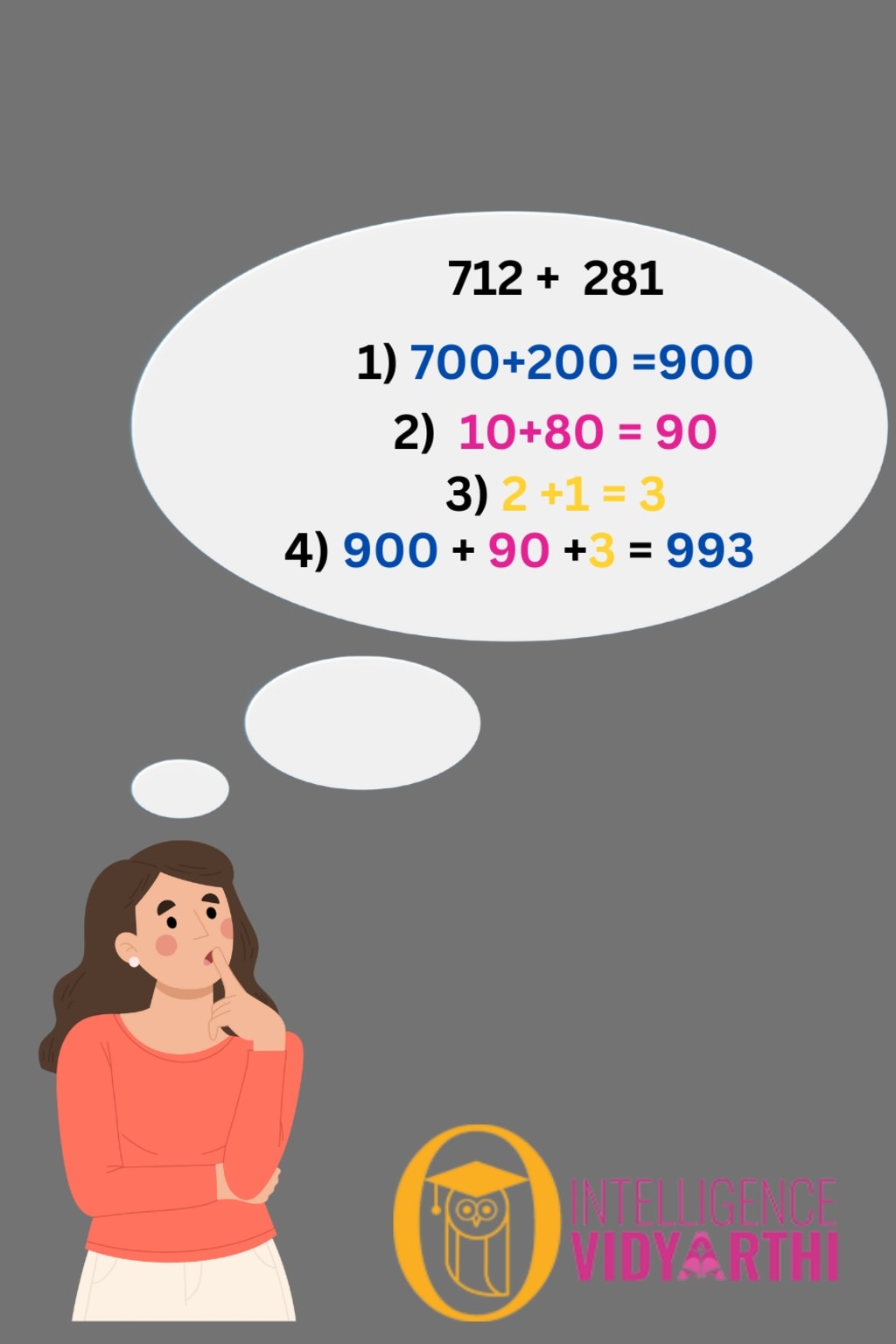
Addition and subtraction are fundamental arithmetic operations, and mastering them is crucial for building a strong mathematical foundation. However, as problems become more complex, it can be challenging to keep track of all the numbers involved. Breaking these problems into smaller, manageable parts can make solving them much easier and more intuitive. In this blog, we’ll explore strategies for dissecting addition and subtraction problems to enhance your problem-solving skills.
Before you begin solving a problem, take a moment to understand it thoroughly. For example, if you’re asked to calculate 376 + 489, start by visualizing the numbers and the operation. Recognize that you’re combining two quantities to get a total. Similarly, for subtraction like 678–297, you’re finding out how much remains after removing one quantity from another.
mental math
2. Break Down Addition Problems
Addition problems can be simplified by breaking them into parts. Let’s use 376 + 489 as an example:
Break into Hundreds, Tens, and Units:
Separate each number into hundreds, tens, and units:
376 = 300 + 70 + 6
489 = 400 + 80 + 9
Add Each Component Separately:
Add the hundreds: 300 + 400 = 700
Add the tens: 70 + 80 = 150
Add the units: 6 + 9 = 15
Combine the Results:
Add the partial sums together: 700 + 150 + 15 = 865
By breaking the numbers into parts and adding each part separately, you simplify the addition process and reduce the likelihood of mistakes.
3. Break Down Subtraction Problems
Subtraction can also be streamlined using a similar approach. Consider 678–297:
Break into Hundreds, Tens, and Units:
Separate each number:
678 = 600 + 70 + 8
297 = 200 + 90 + 7
Subtract Each Component Separately:
Subtract the hundreds: 600–200 = 400
Subtract the tens: 70–90 (you need to borrow here)
Adjust the tens: 70 + 10 = 80 (from the hundreds)
Now subtract: 80–90 = -10 (so, borrow from the hundreds, making it 400–200 = 300 and so on)
Subtract the units: 8–7 = 1
Adjust for any borrowing errors if necessary and combine the parts carefully. For this example: 300 + (-10) + 1 = 291
4. Apply the Strategy to Larger Numbers
This breakdown method can be applied to larger numbers as well. For instance, 2,345 + 1,678:
Break Down:
2,345 = 2,000 + 300 + 40 + 5
1,678 = 1,000 + 600 + 70 + 8
Add Components:
Thousands: 2,000 + 1,000 = 3,000
Hundreds: 300 + 600 = 900
Tens: 40 + 70 = 110
Units: 5 + 8 = 13
Combine Results:
3,000 + 900 + 110 + 13 = 4,023
Mastering these techniques requires practice. Start with simple problems and gradually move on to more complex ones. The more you practice breaking down problems, the more intuitive the process will become.
By breaking addition and subtraction problems into smaller parts, you simplify calculations and reduce the risk of errors. This method not only helps in managing complex numbers but also builds a deeper understanding of arithmetic operations. Embrace this approach, and you’ll find that solving math problems becomes a more manageable and rewarding experience.
About the Creator
SAKSHEE SHUKLA
https://intelligencevidyarthi.in/course_details?table_manners_&_etiquettes&cm=MTc=
Keep reading
More stories from SAKSHEE SHUKLA and writers in Education and other communities.
Math with 2D Shapes
Mental math is a valuable skill that enhances our ability to solve problems quickly and efficiently. When it comes to 2D shapes, mastering mental math can simplify many everyday calculations and deepen your understanding of geometry. Let’s explore how you can sharpen your mental math skills with 2D shapes.
By SAKSHEE SHUKLAabout a year ago in Education
Golf Handicap Reduction Without a Swing Overhaul: Smarter Ways to Play Better Golf
Lowering your handicap does not always require technical changes or hours on the range; it requires rebuilding your swing. Many golfers overlook the fact that scoring improvement often comes from strategic thinking, mental discipline, and better preparation. By focusing on how you play rather than how you swing, you can unlock consistent progress and enjoy the game more. This article explores practical, on-course methods that help you shoot lower scores while keeping your swing exactly as it is.
By Ian Schenkel Haliburtona day ago in Education
The Editorial Stack: Building Content Teams for the Multi-Platform Era
In an age where content travels across screens, feeds, formats, and audiences in real time, the old newsroom model no longer fits the demands of digital publishing. Today's media landscape requires more than great writers and sharp editors—it demands a multi-disciplinary, agile, and strategically aligned editorial stack. From video producers to data analysts, newsletter editors to TikTok creators, modern content teams must be designed with versatility and collaboration at their core.
By James Kaminskya day ago in Education
Wild Card Weekend Recap: What Happens Now?
I think I figured out why I love Wild Card Weekend so much. It's because it's the first playoff anything of the calendar year. The NFL season starts in the fall, and once upon a time, the champion was crowned either on or slightly before New Year's. The evolution of the NFL schedule has resulted in the playoffs starting just into the New Year, and currently, the final week of the season falls on the first weekend of the New Year, with Wild Card Weekend coming a week after that. So yes, chronologically, the NFL's Wild Card Weekend serves as the first playoff anything of the calendar year.
By Clyde E. Dawkins7 days ago in Unbalanced



Comments (1)
Excellent