
Book Review: The Intelligent Investor by Benjamin Graham
Unlock the secrets of value investing with "The Intelligent Investor" by Benjamin Graham. Learn how to build wealth and protect your portfolio like Warren Buffett. Click here for the full review!
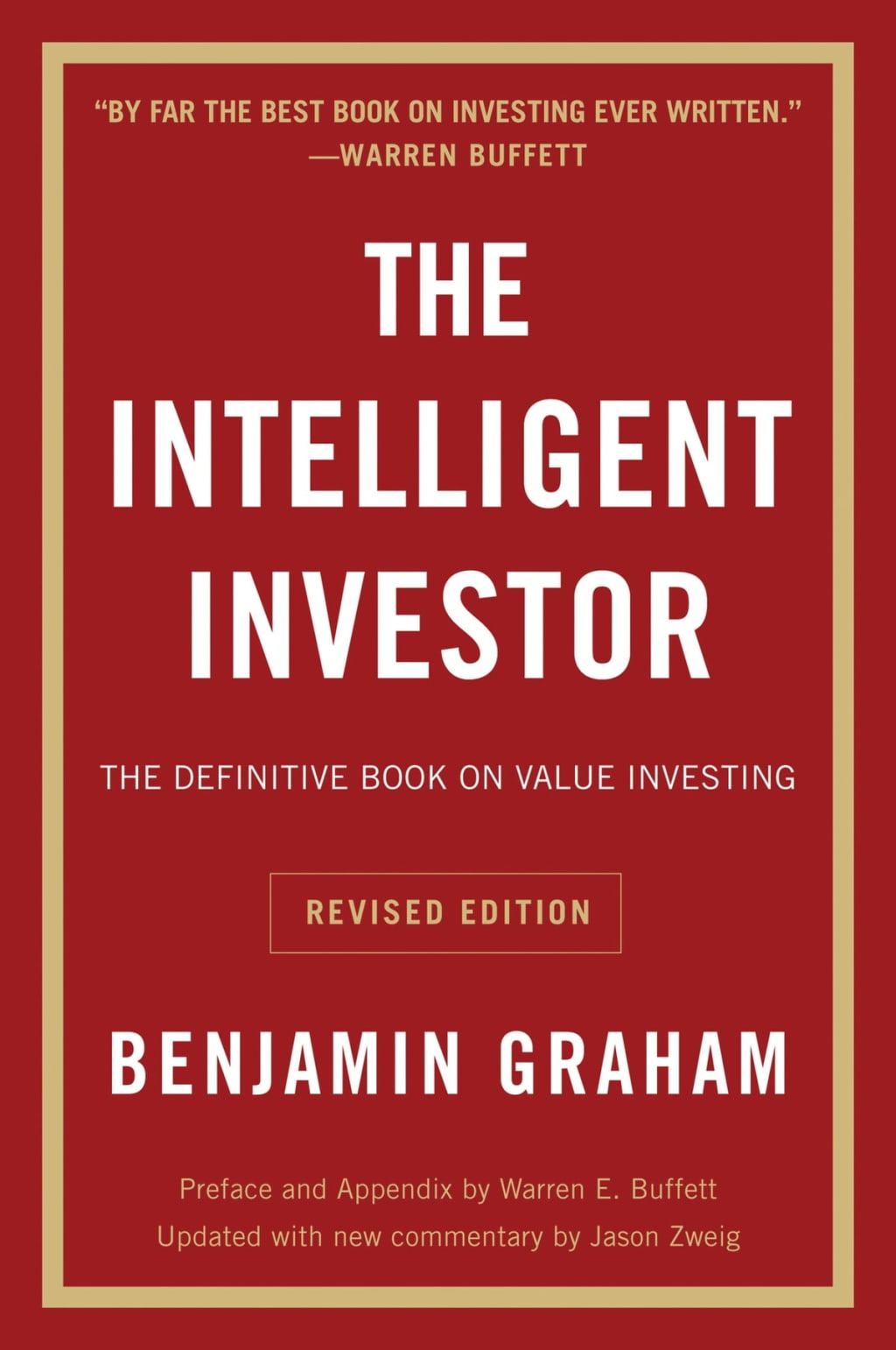
The Intelligent Investor by Benjamin Graham is widely regarded as one of the most important books ever written on investing. Published originally in 1949, it focuses on value investing, a strategy that prioritizes investing in undervalued stocks with long-term potential. Graham emphasizes the importance of discipline, patience, and understanding market fluctuations without emotional interference. Warren Buffett, one of the most successful investors of all time, credits this book as a foundation for his own investment philosophy.
This summary will cover the book's key concepts and provide a chapter-by-chapter breakdown.

Introduction: The Timeless Principles of Value Investing
In the introduction, Graham explains the main objective of the book: to provide a framework for investors to make rational, long-term decisions based on fundamental analysis. Graham distinguishes between "speculators" and "investors," noting that speculation is driven by short-term market movements, while investing focuses on the intrinsic value of a business.
Graham's central message is that successful investing requires a combination of careful analysis, a margin of safety (buying stocks at prices well below their actual value), and a long-term perspective. This combination helps investors avoid the emotional pitfalls of market speculation, such as fear and greed.
Chapter 1: Investment vs. Speculation
In this opening chapter, Graham sets the foundation by differentiating between investing and speculation. He stresses that investing involves thorough research and a focus on minimizing risk, while speculation is akin to gambling. Graham warns readers that many people who think they are investing are actually speculating, often swayed by market trends and emotions.
The key takeaway from this chapter is that investors should always assess whether they are acting based on long-term, value-driven research or short-term speculative behavior. Graham encourages readers to be disciplined and stay true to a long-term strategy.
Chapter 2: The Investor and Inflation
This chapter discusses the impact of inflation on investments. Graham notes that inflation erodes the purchasing power of money and suggests that investors should not ignore its effects. He emphasizes that equities (stocks) have historically been a better hedge against inflation than bonds, as businesses can pass inflationary costs onto customers.
Graham advises investors to diversify their portfolios, including a mix of stocks, bonds, and possibly even real estate to protect against inflation's impacts. He also introduces the idea of "defensive" versus "enterprising" investors, which he expands upon in later chapters.
Chapter 3: A Century of Stock Market History
In Chapter 3, Graham offers a historical overview of stock market returns over the past century. He provides context for understanding market cycles, showing that while the stock market can experience significant volatility in the short term, over the long run, it has tended to generate positive returns.
The key lesson is that market downturns are inevitable but should not deter the disciplined, long-term investor. Graham emphasizes the importance of understanding historical market performance to avoid panic during periods of economic turmoil.

Chapter 4: General Portfolio Policy: The Defensive Investor
This chapter is directed at the "defensive investor," someone who seeks safety, simplicity, and steady returns. Graham recommends a balanced portfolio, typically a 50/50 split between stocks and bonds, as a way to minimize risk. He suggests that defensive investors should focus on high-quality, dividend-paying stocks and bonds with strong credit ratings.
For these investors, the emphasis should be on consistency and minimizing exposure to risky assets. Graham advocates for a passive approach, avoiding the temptation to frequently buy and sell based on market movements.
Chapter 5: The Defensive Investor and Common Stocks
Graham builds on his advice for defensive investors, emphasizing the importance of purchasing common stocks from financially sound companies. He warns against chasing high-growth stocks or overly speculative investments, recommending instead that defensive investors focus on established companies with strong balance sheets.
Graham introduces the concept of the price-to-earnings (P/E) ratio and suggests that investors should be cautious of companies with excessively high P/E ratios, as they may be overvalued.
Chapter 6: Portfolio Policy for the Enterprising Investor
This chapter shifts focus to the "enterprising investor," someone willing to take on more risk in exchange for higher potential returns. Graham emphasizes that enterprising investors must conduct in-depth research and be prepared to dedicate more time and effort to managing their portfolios.
He provides several strategies for enterprising investors, including focusing on undervalued stocks (often small or mid-sized companies), looking for "special situations" (like mergers or liquidations), and buying stocks with strong dividends. However, Graham warns that this approach requires significant skill and discipline.
Chapter 7: The Investor and Market Fluctuations
In one of the most famous chapters, Graham discusses market fluctuations and how investors should respond to them. He introduces the metaphor of "Mr. Market," a character who offers stocks at fluctuating prices depending on his mood. Sometimes Mr. Market is overly optimistic and offers high prices, while at other times, he is overly pessimistic and offers low prices.
The lesson here is that investors should not be swayed by Mr. Market's emotions but should instead use market fluctuations to their advantage. When prices are irrationally low, investors should buy; when prices are irrationally high, they should hold or sell.
Chapter 8: Investing in Investment Funds
Here, Graham evaluates mutual funds and investment trusts, which allow investors to pool their money and buy a diversified portfolio of securities. He advises investors to be cautious when selecting funds, emphasizing that many funds charge high fees and may not consistently outperform the market.
Graham encourages investors to look for funds with low expenses and long track records of success. He also stresses the importance of diversification and not placing all your investment capital into a single fund.
Chapter 9: The Investor and His Advisors
In this chapter, Graham addresses the role of financial advisors and stockbrokers. He urges investors to be cautious when seeking advice, as many brokers are motivated by commissions and may push investors into making frequent trades. He advises investors to work with advisors who charge flat fees rather than commissions and who are aligned with the investor's long-term goals.
Graham also recommends that investors educate themselves so that they can make informed decisions, even if they are working with an advisor.
Chapter 10: The Margin of Safety
The concept of the "margin of safety" is one of the most important ideas in the book. Graham explains that investors should always buy stocks at prices that provide a significant buffer below the stock's intrinsic value. This margin of safety helps protect investors from unforeseen market downturns or company-specific risks.
The margin of safety is a fundamental principle of value investing, as it minimizes the risk of loss and increases the potential for long-term gains.
Chapter 11: Security Analysis for the Lay Investor
This chapter provides an introduction to the key concepts of security analysis, or the process of evaluating a company's financial health and its stock price. Graham emphasizes the importance of examining a company's earnings, debt levels, and competitive position before investing.
He warns investors to avoid companies with excessive debt and unstable earnings, as these factors increase the risk of the investment. Instead, investors should focus on financially sound companies with a history of stable earnings growth.

Chapter 12: Things to Consider About Per-Share Earnings
Graham cautions investors against placing too much emphasis on per-share earnings, as they can be manipulated or misleading. He highlights the importance of considering a company's overall financial health, including its balance sheet and cash flow statements, rather than focusing solely on earnings figures.
The key takeaway is that investors should take a comprehensive approach to analyzing a company's financials, rather than relying on a single metric like earnings.
Chapter 13: A Comparison of Four Listed Companies
In this chapter, Graham provides real-world examples of four companies, analyzing their financial statements and discussing the strengths and weaknesses of each. This analysis gives readers a practical understanding of how to apply Graham's principles of value investing in the real world.
Chapter 14: Stock Selection for the Defensive Investor
This chapter offers practical advice on stock selection for defensive investors. Graham recommends that defensive investors look for large, established companies with a long history of dividend payments and stable earnings. He also advises them to avoid companies with excessively high P/E ratios, as these stocks may be overvalued.
Chapter 15: Stock Selection for the Enterprising Investor
Here, Graham discusses stock selection strategies for the enterprising investor. He suggests looking for companies that are temporarily out of favor or undervalued by the market but that have strong fundamentals. He also advises enterprising investors to be patient and wait for opportunities to buy these stocks at a discount.
Chapter 16: Convertible Issues and Warrants
In this chapter, Graham examines convertible securities and warrants, which offer investors the opportunity to convert their investment into shares of common stock at a predetermined price. He warns that while these securities can offer significant upside potential, they are also riskier than traditional stocks or bonds.
Chapter 17: The Overall Results to Be Expected by the Defensive Investor
This chapter reviews the potential outcomes for defensive investors, who follow a conservative approach and invest in a diversified portfolio of high-quality stocks and bonds. Graham argues that defensive investors can expect modest, consistent returns over time, with relatively low risk.
Chapter 18: The Overall Results to Be Expected by the Enterprising Investor
Graham discusses the potential outcomes for enterprising investors, who are willing to take on more risk in exchange for the possibility of higher returns. He emphasizes that success in this strategy requires significant research, discipline, and patience.

Conclusion: The Timeless Principles of Value Investing
Graham concludes the book by reiterating his core principles: the importance of a long-term perspective, a margin of safety, and the distinction between investing and speculation. He reminds readers that successful investing requires discipline, rationality, and a focus on the intrinsic value
**Affilitate Disclosure** This article contains affiliate links, meaning that we will receive a small commission at not added cost to you as part of our partnership with Audible when you sign up for a free trial to obtain this book. AI helped in preparing this article.
<meta name='impact-site-verification' value='4e3de333-26f3-4882-9084-3a6f6f9e5a24'>
About the Creator
Keep reading
More stories from writers in Education and other communities.
How AI Builds Trust and Strengthens Public Service
Public administration continues to evolve as artificial intelligence reshapes how governments connect with citizens. As expectations for fast, reliable, and transparent services grow, agencies must adopt modern tools that enhance performance and accountability. AI offers solutions that streamline operations while reinforcing public trust. Moreover, when leaders use technology responsibly, they create systems that feel accessible and fair. As a result, digital transformation becomes more than a technical shift, reflecting a deeper commitment to responsive and ethical governance.
By Ehab Al Kuttub3 days ago in Education
Is Reality Objective or Observer-Dependent? Exploring One of the Deepest Questions in Science and Philosophy
What Does It Mean for Reality to Be Objective? An objective reality is one that exists independently of observers. Mountains, stars, atoms, and galaxies would exist whether or not conscious beings perceive them.
By shahkar jalalabout 22 hours ago in Education
Blessed 33
So I woke up on the morning of February 5, 2026 and guess what and you know what I realized? It’s my 33rd birthday. Do you know what that means? Yes, technically I’m getting old, but what I couldn’t have guessed was this would be one of the best days of my life.
By Joe Patterson6 days ago in Confessions




Comments
There are no comments for this story
Be the first to respond and start the conversation.