

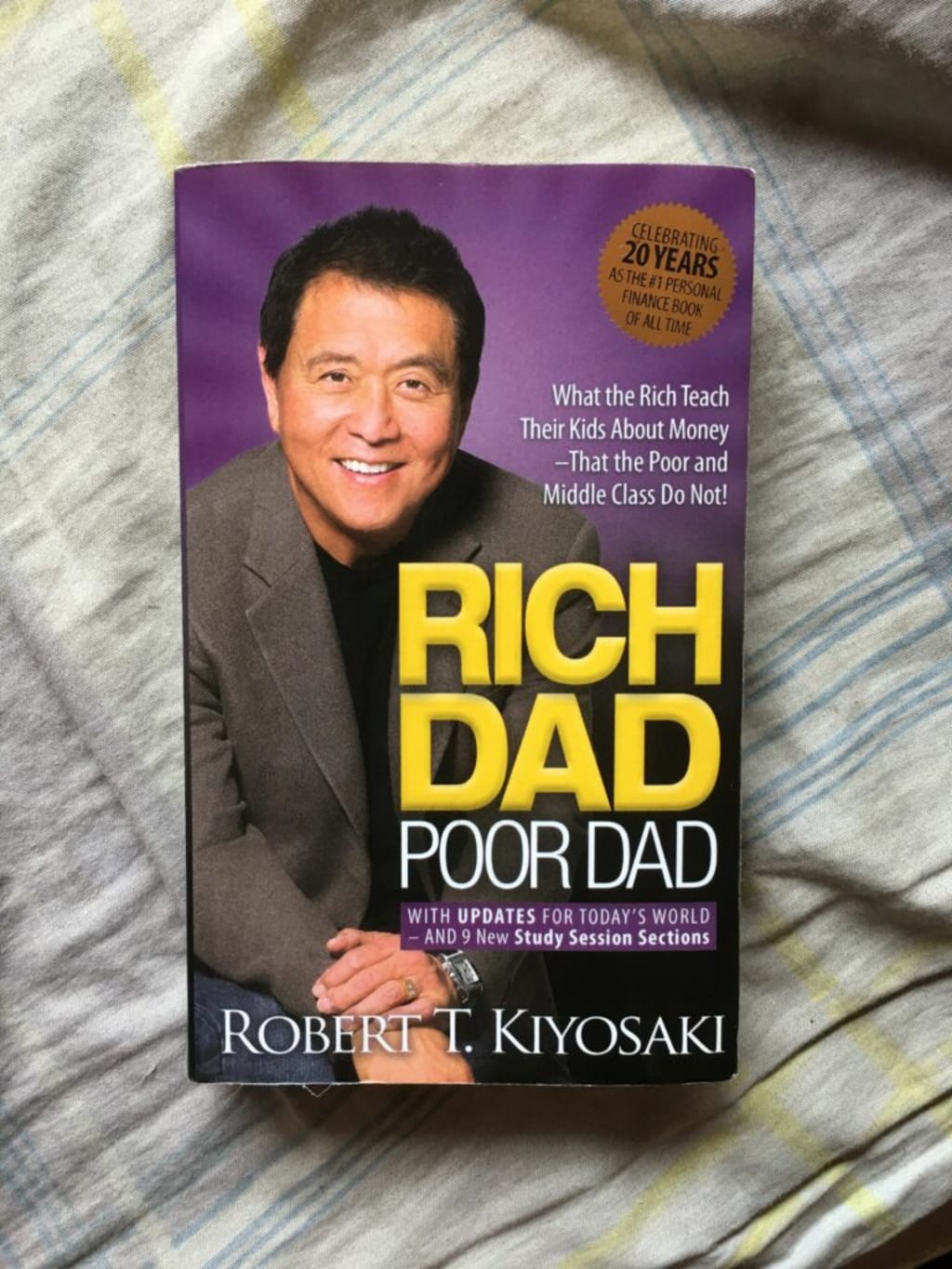
"Rich Dad, Poor Dad" by Robert Kiyosaki is a personal finance book that has sold millions of copies worldwide. The book is based on the author's own experiences growing up with two "dads" - his biological father (the "poor dad") and his best friend's father (the "rich dad") - and the different financial lessons he learned from each of them.
Robert Kiyosaki is an American businessman, author, and financial educator. He is best known as the author of the book "Rich Dad, Poor Dad," which has sold millions of copies worldwide and is considered a personal finance classic. The book is based on Kiyosaki's own experiences growing up with two "dads" - his biological father (the "poor dad") and his best friend's father (the "rich dad") - and the different financial lessons he learned from each of them.
Kiyosaki is a proponent of financial literacy and encourages individuals to take control of their financial future through investing in real estate, stocks, and other opportunities. He also stresses the importance of building assets rather than just accumulating wealth, and encourages readers to think differently about money.
Kiyosaki has written several other books, including "Cashflow Quadrant," "Rich Dad's Guide to Investing," and "Retire Young, Retire Rich." He is also a motivational speaker and has been featured in various media outlets, including Forbes, CNN, and ABC News.
Kiyosaki's teachings and books have been met with mixed reviews, some praise his simple and easy to understand approach to financial education and his emphasis on financial literacy and self-empowerment. Others criticize him for oversimplifying complex financial concepts and promoting a get-rich-quick mentality
One of the main messages of the book is the importance of financial literacy and the need to think differently about money in order to achieve financial freedom. Kiyosaki stresses the importance of building assets rather than just accumulating wealth, and encourages readers to take control of their financial future through investing in real estate, stocks, and other opportunities.
One of the strengths of the book is its relatable, personal anecdotes, which make the financial concepts more accessible to the reader. It also provides a good introduction to some basic financial concepts such as cash flow, assets, and liabilities.
However, some readers have criticized the book for oversimplifying complex financial concepts and for promoting a get-rich-quick mentality. Additionally, it doesn't provide any detail on how to invest in stocks or real estate.
Overall, "Rich Dad, Poor Dad" is a thought-provoking and motivational book that encourages readers to take control of their financial future. While it may not be the most comprehensive guide to personal finance, it is a valuable starting point for those looking to improve their financial literacy and change their relationship with money.
THE BRIEF OUTLINE ON THE BOOK
I. Introduction
Overview of the book and its main themes: financial literacy and the importance of building assets
Introduction of the two "dads" in the book: the author's biological father (the "poor dad") and his best friend's father (the "rich dad")
II. The Lessons of the Poor Dad
The author's childhood experiences with his biological father
The financial lessons learned from the "poor dad", including the importance of formal education and working for money
III. The Lessons of the Rich Dad
The author's relationship with his "rich dad" and the financial lessons learned from him
The importance of financial literacy and the need to think differently about money
The importance of building assets and creating passive income streams
IV. The Importance of Building Assets
How to identify different types of assets (e.g. real estate, stocks, businesses)
The difference between assets and liabilities
The importance of cash flow and understanding the difference between "good debt" and "bad debt"
V. Investing in Real Estate
The benefits of investing in real estate and how it can create passive income
Tips for finding and evaluating real estate investments
VI. Investing in Stocks
The benefits of investing in stocks and how it can create passive income
Tips for finding and evaluating stock investments
VII. The Importance of Financial Freedom
The benefits of financial freedom and how it can improve one's quality of life
The importance of taking control of one's financial future
VIII. Conclusion
A summary of the main points covered in the book
An encouragement to readers to start taking control of their financial future
About the Creator
ERIC
The most successful Share market trader in UK.
Scaling a Business by Doing Less, Not More
Many business owners believe growth comes from adding more. More services, more markets, more tools, and more staff. While this sounds logical, it often leads to confusion and burnout. Scaling a business becomes easier and more sustainable when leaders choose to do less, but do it better.
By Darrell Hulsey6 days ago in Education
How Regulatory Rules Are Reshaping the Complexity of Modern Lending Facilities
Lending facilities are a core component of the financial system, enabling banks and financial institutions to provide liquidity, manage credit flow, and support economic stability. In today’s highly regulated financial environment, regulatory compliance, financial regulations, and lending rules have become central to how these facilities function. As oversight increases, lenders must navigate a growing web of requirements that directly affect the structure, speed, and accessibility of lending facilities.
By Eric Kleiner6 days ago in Education



Comments
There are no comments for this story
Be the first to respond and start the conversation.