

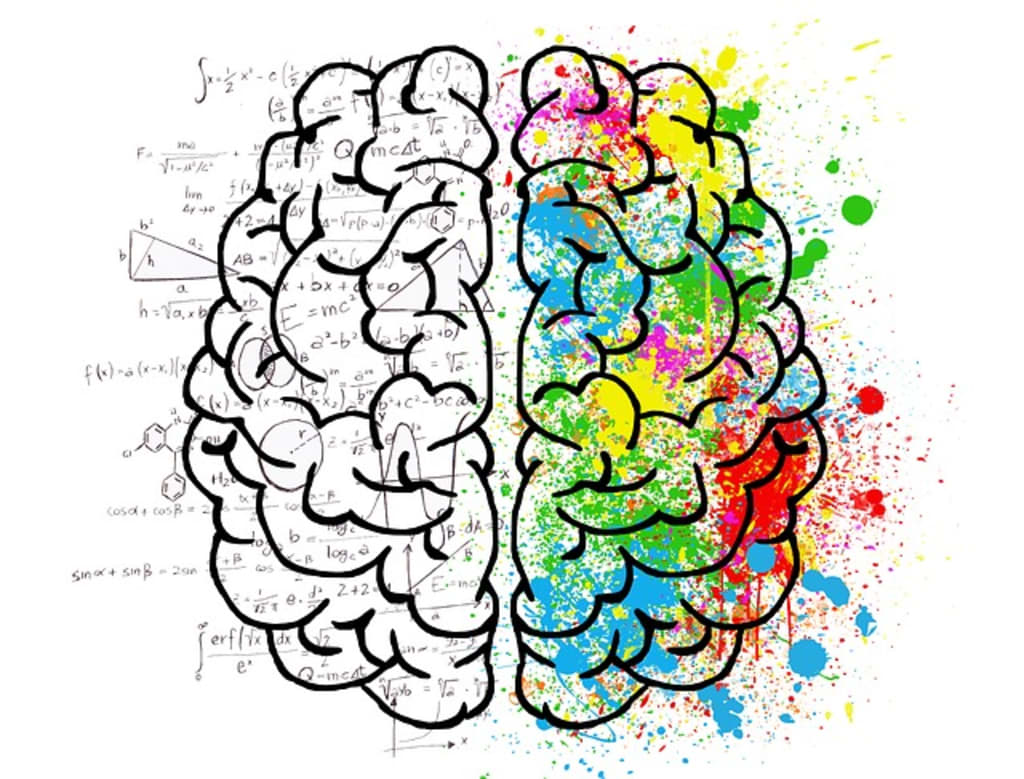
This is a continuation of the previous article on the brain and opiates. There is a family of what are known as endorphins and in the area of the brain there is the diencephalon that is strong along with groups of chemicals that are available to reduce the amount of pain experienced. There modest to extreme pain thanks to the transmitters that are non-opiate pain regulators that have not been traced yet. The Gate control regulating and controlling the pain signals. Opiates regulate the amount of pain itself then goes to the brain and is processed in a lot of ways like for sensory discriminatory ways, motivational ways, as well as affective, cognitive and evaluative ways all at the same time. These types of discriminations that can locate the pain in the somatosensory part of the brain.
The 'cingular anterior cyrus' is the part of the brain that controls motivation with a degree of aversion. Cognitive evaluation of pain occurs in the frontal cortex while the midbrain opiates with the help of the thalamus. The limbic system interpretation back at the gate is to see what to do with the pain that is experienced. Also, what to do with various disorders? The most usual issues are usually congenital. Analgesia is a condition a person does not have any pain or experiences it that could lead to serious problems and dangerous aspects to the body such as infections and diseases. Pain is a necessary part of life if we are to survive. Pain that is asymptomatic and not symptomatic like brain damage in some forms knows that pain but not sure how much pain is felt. There is 'allodynia' which is an abnormal amount of pain to a normal amount of pain stimulation. The treatment that is medical and psychological for pain that does not go away could be Surgery but this will not work permanently for there could be phantom limb pain. Another issue is the 'placebo effect' that works sometimes for there is a 'pleasure effect' that a personal belief the brain addresses the level of pain known and processes the opiates to shut down the pain. There is a healing way for the brain to use it own ways if for just because of no apparent cause there could be pain that is psychological.
Attention and relaxation and psychological misdirection affects pain for the whole body that focuses on different aspects and stimulate another body area to take away pain from the most serious part. Some of these aspects are biofeedback, hypnosis, relaxation, accupuncture, TENS unit (transcutaneous electrical nerve stimulation) that simultaneously closes out the pain that is increasing the opiates of the body. It seems that the maximum opiates and the TENS does not work much, pain drugs has the brain stimulated with other interventions to help the pain.
Chronic pain is a relationship that is long term for the family dynamics to deal minimally psychologically. Now for a little history lesson and in the Early 1400's from the Middle Ages to Modernity that is between the Renaissance era and the Enlightenment era the modernity worldview was to analyze and categorize the ideas and beliefs from everyone. The Renaissance and Enlightenment when Descartes' questions 'What makes a person?' is explained. Is the mind and body 'dualistic'? What is the relationship between the body, mind and spirit and is the person? The person as a whole.
The person can control pain at times through hypnosis and 30% of the population has the ability to have a surgery that effects the mind and body but not separate from the spirit.
To be continued in the next article -Conclusion to Pain and Opiates
About the Creator
Mark Graham
I am a person who really likes to read and write and to share what I learned with all my education. My page will mainly be book reviews and critiques of old and new books that I have read and will read. There will also be other bits, too.
Reader insights
Nice work
Very well written. Keep up the good work!
Top insight
Expert insights and opinions
Arguments were carefully researched and presented
Keep reading
More stories from Mark Graham and writers in Education and other communities.
Biological Psychology
What is pain? To start with here are some kinds of pain that we all feel from time to time. Acute pain like feeling acute soreness. Chronic pain when we feel pain all the time. There is what is known as Pain sensitivity that means the loss of normal functioning due to chronic pain. Then there is what we all know as headaches from stress and tension to migraines to sinus. There are presenting items that help us to discuss and describe these kinds of pain and the problems that they cause. The theory of the pain: 1. can it be associated with some kind of damage that is observed somehow. 2. There is damage that occurs without pain or pain can occur without damage. 3. Huge damage can produce a kind of euphoria like some feel in Battlefield problems or in the triage area or even in the ER and the kind of life these people live. 4. There is severe pain where damage and euphoria work together.
By Mark Graham3 years ago in Education
Why Do Wormholes Require Exotic Matter? Exploring the Physics Behind Spacetime Tunnels
What Is a Wormhole? A Brief Overview In general relativity, gravity is not a force but a consequence of curved spacetime. Massive objects distort spacetime, guiding the motion of matter and light.
By shahkar jalal8 days ago in Education


Comments
There are no comments for this story
Be the first to respond and start the conversation.