

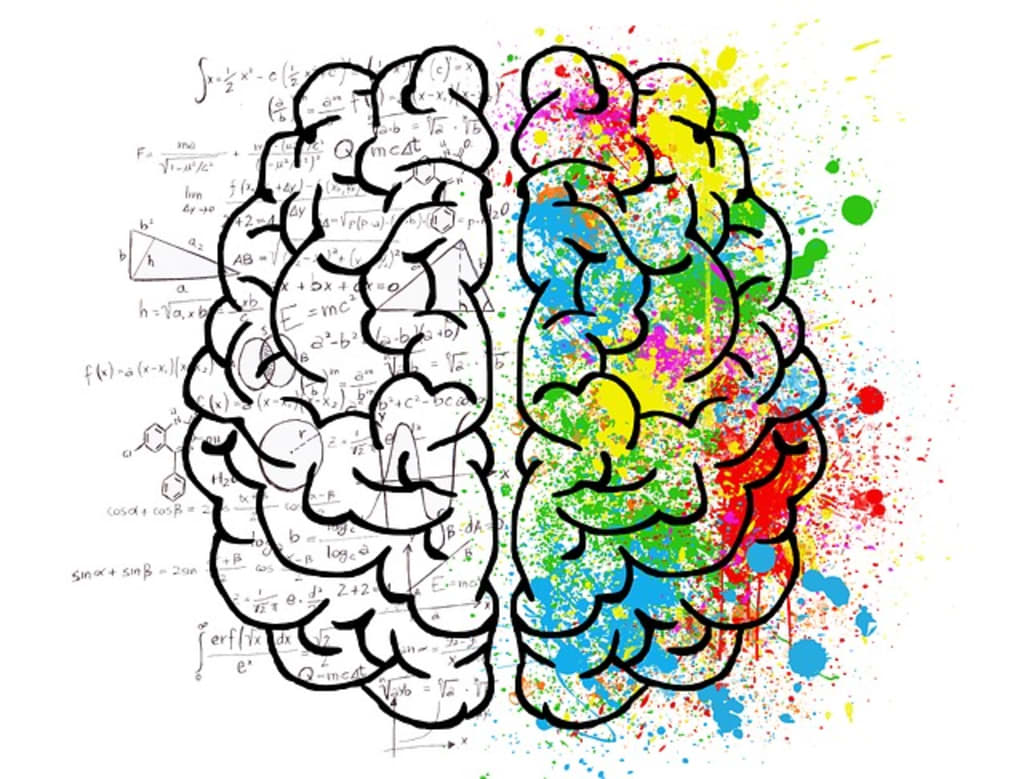
This is the continuation of the lecture lesson on Emotion. At the end of the Emotion lesson there will be a very short lesson on Learning and Memory. Now back to Emotion..
The ability to violate homeostatis all the resources of the body at use is a coordinated system and an emphasis as in the muscular movement, as in daily life and at times used inappropriately at times. The arousal response with a partial emergency response without the complete elimination of homeostatis along with the central nervous system, the parasympathetic system, the sympathetic nervous system all maintain regular activities. The sympathetic system with a coordinated arousal response system or the 'flight or fight' theory keeps things working together. The heart rate and volume increases and the muscles race and tense with the adrenaline release and the increase of oxygen along with blood glucose in and for the muscles changing in the capillaries that contract or constrict (deflate) them. Muscular in nature measures can be made with the heart with heat. Biofeedback and Lesion practice started with only two basic parts of the basic brain. The brainstem that monitors vital processes of the body such as temperature, pulse, respiration and blood pressure and the midbrain and coordinating systems for emergency, arousal and emotional behaviors that are witnessed. Sham-Rage studies say that complete rage behavior is triggered by normal behavior that are automatic behaviors, but not in a specific place but in a system.
The forebrain and thalamus and sensory input to the cortex along with the hypothalamus for motivation and emotions. The pituitary gland and the endocrine system directly do its' functions for the body. Non-direct of emotion yet is the limbic system in the amygula and the cingulate cyrus that have various roles that go back and forth. The emotional system is pervasive in the brain and two conclusions is that it is easier to break up and how important it is to the brain.
Medial forebrain bundle or MFB connect midway in the amygula that deals with incentive and rewards and punishment. Some senses dealing with emotion like pleasure, pain, sexual areas develop in the brain. At one time the brain was only one mass now the brain has two sides named the left and right hemispheres and were identical until the study of Gross anatomy now the brain has differences that have occurred when Dax discovered that a patient lost speech and the left side was damaged. The observations were made and language function is in the left temporal lobe of the brain where also 'handedness' is found. The two sides of the brain are no longer identical. The left side of the brain dominant to humans is like a dictionary of the brain. It is to notice what could go wrong with the body. Men have little language for men are more on the spatial skills and Women have more language skills and less spatial skills, but this really depends on the person whether male or female.
Gender differences are present for emotions are on the right side and are generalized in affect on the right side mostly. It is all about understanding the expression of and the intensity and the emotion of what is going on in living and how the brain works. Affect is the tone of language and hearing and expressing language. It improves with humans when they interrupt the words and the facial expressions that will help them understand the social context and the relationships for the positive emotions on the right side of the brain. The frontal lobe and cortex are working together most times. When there is brain damage on the left side it is catastrophic because of the negative feelings when brain damage occurs. Damage on the right side there is indifference 'LaBelle indifference'. The two sides of the brain are asymmetrical where thought questions and class and what determines gender identity. Intergender conditions teach us hormone control and the primary determinants of hunger, weight regulation and common disorders of sleep. The hypothalamus helps with motivation and could help answer 'Why doe we need sleep?' 'Periodocity?' and 'Why do dreams occur?'
To be continued: Emotion
About the Creator
Mark Graham
I am a person who really likes to read and write and to share what I learned with all my education. My page will mainly be book reviews and critiques of old and new books that I have read and will read. There will also be other bits, too.
Keep reading
More stories from Mark Graham and writers in Education and other communities.
Biological Psychology
This is the final lecture/lesson dealing with Biological Psychology that is dealing with the ideas of Emotion. There are critical factors that effect emotion that are personal and individual that need understanding and have surplus meanings that also impose our own meanings. The Physiology of emotions are the characteristics of emotions that individuals have some understanding of being and having emotional awareness of and encounter an absense of emotion that is startling to us. Almost everyone experiences emotions. Other cultures there are some emotions that are not transferred and some are basic but some lack transference and are specific to various cultures. The social contexts are very important along with social meaning. Emotions are powerful and transfer these emotions transforms a person or circumstances. Emotions are labile (changeable) or transient. Emotions communicate purposes given that are direct and indirect while they are also controlled and focused and can be manipulated at times.
By Mark Graham3 years ago in Education
How Intentional Listening Transforms Leadership and Team Excellence
Leadership has long been associated with decisiveness, direction, and the ability to articulate vision. While these qualities remain essential, the most effective leaders today are distinguished by a different capability: their ability to listen with intention. As workplaces become more collaborative and knowledge-driven, leadership success increasingly depends on understanding people rather than simply directing them. Intentional listening allows leaders to grasp not only what is being said, but also what remains unspoken. This deeper understanding strengthens relationships, improves decision-making, and fosters trust. In high-performing teams, listening is not passive but strategic, shaping how leaders connect with individuals and guide collective effort.
By Thomas Kuriakose, MD3 days ago in Education


Comments
There are no comments for this story
Be the first to respond and start the conversation.