

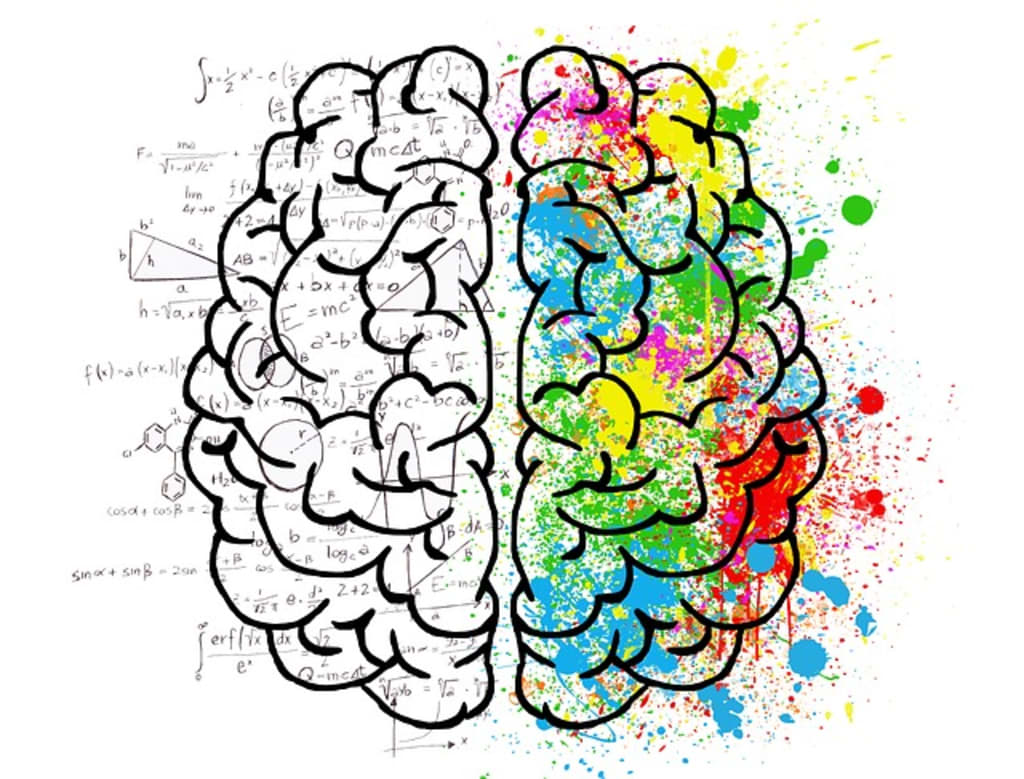
This is a continuation of the lecture/lesson on Emotion. This will also be the final lecture/lesson for Biological Psychology. There will also be a very short lesson on Learning and Memory at the end of the lesson on Emotion.
Emotion
The arousal systems are interconnected into systems and there are no special place or function. Stress is an emotional response to deal with problems to be helpful. In other areas like in Chronic stress where health problems both physical and psychological, and maybe in a extrasensory manner that occurs in nature. Low physical health are when problems occur and produces physical stress. Coping begins and should help with various neurotic problems and we can then and may begin learning problem solving behaviors, learn coping skills when we are very young and deal with the immediate short term circumstances that occur almost daily it seems.
In cognitive processing the attitude of stress is about your interpretation of an event, and when aggressive behaviors and anxiety and fear all become a part of a natural reaction the processes intended to energize, escape and/or avoidance behaviors in a way all help us to get away from the negative problems, but with more experience to the stimulus avoidance we do not experience the stimulus as much.
Escape is a motivated behavior and to avoid pain it could be motivated by the behavior of fear. Extinction is the loss of a behavior response. When we had a learned response fear was sufficient to drive a response for months for anyone's behavior.
Phobias are extreme fear that can amount to panic that is an illogical sense to some extent disabling and yet limited in some fashion. It is a learned response and not usually present in children. It is an emotional response and powerful a stimulus that will be signal to whatever fear produces sharp constraints or direction to behavior. They are very strong emotionally. Phobias is to give height to an idea, experience or image that lead to a fear that we withdraw from and avoid that maintains the phobias that never really experienced. Cognitive and physiological behavior that is potentially built in the circuits that could also be evolutionary that have a predisposition to fear in certain circumstances.
Therapy that was offered or would have been offered a long time ago was not good. Therapy is to teach control of the emotion and be able to offer relief to persons suffering from any phobias. Cognition labels the issue giving arousal the response to the behavior or influence. It is possible to control emotions at least most of the them. Emotions are as stated a few times labile. We can just wait and relax or when severe anxiety or fear begins we deal with getting help with our minds and to concentrate with the body to calm ourselves. Rumination makes things advance and if we can we need to focus our minds on something else by changing ideas. It is possible to regulate what goes on in the body with learning various relaxation training. This is a qualitative response training like biofeedback, meditation, hypnosis, self-hypnosis along with other things to approach and regulate emotion. All concentration and calming influences we are always learning in a cognitive manner with sympathetic and relaxation skills in a formal way that for phobias we are progressive using a heirarchy of desensitization and how we reverse classical conditioning. Volpe taught to be calm then the person arranges situations that provoke fear for the individual from the least to the most fearful then relaxes with the learned skills and think about cognitive imaging or the fearful image and develop control with our emotions.
______________________
Learning and Memory
This is about functionalism and behaviorism, but to be more specific it is to understand, predict, and control behavior and adapt over time. There is the idea of plasticity of the brain and getting better at doing things and making adjustments. Changes in the Central nervous system is to accomplish what is to be done and carry forward knowledge.
Memory is what makes you you. It is the useful storage of information and how we use what we need to learn. There is one way our memory helps us learn and it through the use of pneumonics that is a way to make trials that we use to make memory relatively permanent. Language learning and motor language that use operant and classical conditioning for instrumental language use. There are several paradigms with language and the theories, assumptions and processes that we use. Education is for mastering the materials and manage cognitive processes. The idea of a photographic memory and learning memory skills for the long and short term memory that all go along with our motor skills that are held in the cerebellum.
Motivation leads to a habit that leads to a drive that gives us an incentive then gives us a reward or punishment. Any expression is a learned behavior. Learning is a process itself and is distributed in thought in the brain schematically and occurs with the function of attention. There is the term 'engrams' where sensory storage and how information is used. Another term in this area is 'modularity' that functions occur at certain times and systems of control, but there are subtle differences in the brain in part that is dealing with all this is the Corpus callosum and sometimes language takes place here to help in learning and memory. The brain changes over time and relative not absolute for being asymmetrical and lateral.
__________________
Remember: Counselors do not diagnose one must go to a medical doctor for this. Paying too much attention to the counseling aspect is a mistake and problems could be caused by something else mentally and physically (MB/HPA issues).
( I hope you learned a lot about how the brain works and how everything is connected to the mind and the body. Please comment and/or give a tip if there is anything you liked and learned in all or any of the Biological Psychology article lessons. Thank you for reading.)
About the Creator
Mark Graham
I am a person who really likes to read and write and to share what I learned with all my education. My page will mainly be book reviews and critiques of old and new books that I have read and will read. There will also be other bits, too.
Reader insights
Nice work
Very well written. Keep up the good work!
Top insight
Expert insights and opinions
Arguments were carefully researched and presented
Keep reading
More stories from Mark Graham and writers in Education and other communities.
The Human Guide Behind Technical Excellence
Mentorship of skilled technicians plays a decisive role in shaping strong careers and reliable work standards. Technical skill alone does not make a technician capable. Real growth comes from shared experience, steady guidance, and trust built over time. In many industries, mentorship fills the gap between classroom learning and real job demands. It helps technicians move from basic ability to confident performance. This article explores how mentorship supports learning, builds skills, and strengthens the future workforce.
By Michael Gastinela day ago in Education
Pioneering Therapies for Untreated Diseases
Medical science has made incredible progress in treating many illnesses. Yet, some diseases remain resistant to conventional therapy. These untreated diseases affect millions of people worldwide, causing long-term disability or shortened lifespans. Pioneering therapies for untreated diseases aim to fill this gap, offering hope where traditional treatments have failed. Scientists, clinicians, and biotech companies are working together to create therapies that are both innovative and effective.
By Dr. Janet Chollet2 days ago in Education
Miss Persephone's Manual to a Seemingly Ordinary Life
Miss Persephone was found at the dining table, her blue eyes swollen, her tears arriving and retreating like the tides of the ocean. Earlier that day, her family had visited her in the retirement home where she had lived for eight years. It was her eightieth birthday.
By Imola Tóth2 days ago in Fiction


Comments
There are no comments for this story
Be the first to respond and start the conversation.