
Bill Gates to Give Away Nearly All His Wealth and Close the Gates Foundation by 2045
Microsoft Co-Founder Sets Bold 20-Year Plan to Address Global Issues and Leave a Legacy of Philanthropy

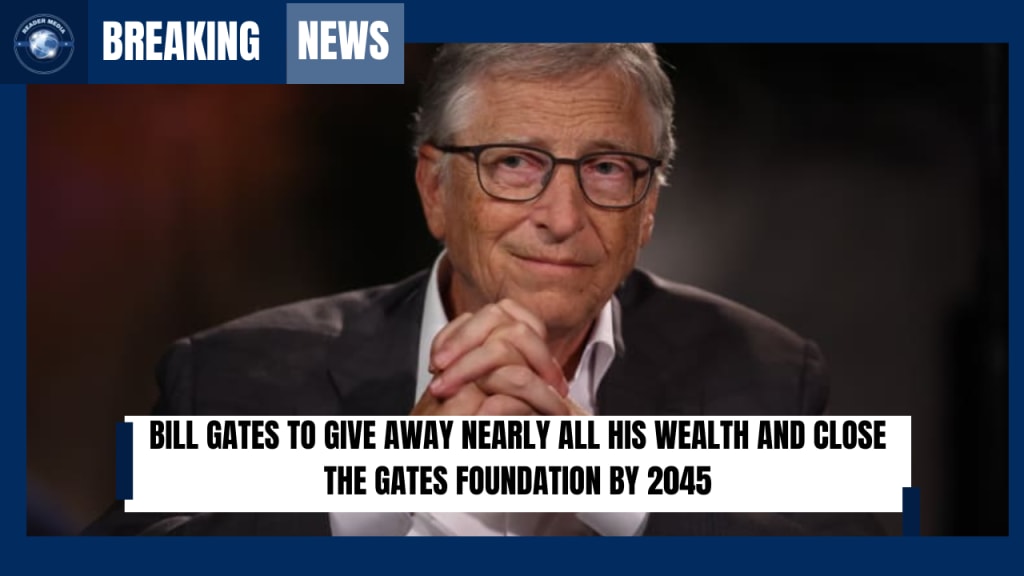
Bill Gates, the co-founder of Microsoft, has made a bold decision to give away almost all of his personal wealth and shut down the Gates Foundation in the next 20 years. This announcement, made in a recent blog post, highlights his determination to be remembered not for dying rich but for making a significant positive impact on the world. Here’s an in-depth look at his plans and the broader implications of this decision.
A Commitment to Giving Back: Why Gates is Changing His Focus
At the age of 69, Gates shared that he no longer wants to hold onto resources that could be better used to help others. With a net worth of approximately $168 billion, Gates has already been active in philanthropy for many years. He aims to donate much of this wealth, setting a clear goal to give away $200 billion by the time the Gates Foundation closes in 2045.
The Gates Foundation’s Legacy and Future Goals
The Gates Foundation, which was established in 2000, has already contributed over $100 billion toward global causes. These include efforts to combat diseases, poverty, and to promote education and healthcare. Gates has set ambitious goals for the remaining years of the Foundation, increasing its budget from $6 billion annually to $9 billion.
Among the Foundation’s goals in the next two decades, Gates focuses on key areas:
Reducing Preventable Deaths: A major focus is to continue lowering maternal and child deaths caused by preventable diseases.
Eradicating Diseases: Gates hopes to further efforts to eliminate diseases like polio, malaria, measles, and Guinea-worm disease.
Supporting Education and Agriculture: He is committed to improving education and agricultural practices in African nations, aiming to help hundreds of millions of people break free from poverty.
The Role of Governments in Global Aid
Despite his optimism, Gates recognizes the critical role governments play in supporting global aid efforts. As many countries, particularly the United States, reduce their global aid budgets, Gates expressed concern about the future of international philanthropy. He highlighted that no philanthropic organization, even one as large as the Gates Foundation, can fill the funding gap left by government cuts.
Gates emphasized that effective global aid will require strong partnerships between governments, nonprofits, and private individuals. The potential for significant impact depends on how well these organizations work together to address the world’s most urgent problems.
Gates’s Influences: Family, Buffett, and Carnegie
Gates’s commitment to philanthropy has been shaped by several influential figures in his life. His mother, Mary Gates, instilled in him the belief that wealth should be used to help others. She taught him the principle that "to whom much is given, much is expected." Gates also recalled how his mother reminded him, after his success with Microsoft, that wealth is meant to be a stewardship and that he had a moral obligation to share it.
In addition to his parents, Gates’s longtime friend Warren Buffett has also had a profound impact on his philanthropic views. Buffett, who has donated tens of billions of dollars to charity, was the first person to introduce Gates to the idea of giving away all of one’s wealth. In fact, the Giving Pledge, which was co-founded by Gates and Buffett in 2010, has already been signed by over 240 billionaires who have pledged to give away most of their fortunes during their lifetimes.
Andrew Carnegie’s Influence on Gates’s Philanthropy
Another significant influence on Gates’s philanthropic philosophy comes from Andrew Carnegie, a steel tycoon from the Gilded Age. Carnegie’s 1889 essay "The Gospel of Wealth" has long been considered a blueprint for modern philanthropy. In the essay, Carnegie wrote that "the man who dies rich dies disgraced." This idea has stuck with Gates, who has said that it influenced his decision to speed up his philanthropic efforts.
The Global Future: Optimism and Challenges
While Gates remains optimistic about the world’s future, he is aware of the challenges that lie ahead. He believes that technological advancements and improvements in healthcare will lead to progress over the next two decades. Artificial intelligence, in particular, could play a key role in addressing global issues like healthcare, education, and poverty.
However, Gates also acknowledged that, even if things don’t improve as quickly as he hopes, he would still feel compelled to donate his wealth. He pointed out that, rather than spending money on luxury items like boats or gambling, he feels his wealth should be used to help create meaningful change.
Why Wealthy Individuals Should Give Back Quickly
One of the main takeaways from Gates’s announcement is his belief that wealthy individuals should consider speeding up the pace of their giving. He hopes that other billionaires will follow his lead and accelerate their philanthropy, as doing so can have a profound impact on global society. Gates argued that giving quickly, and in a way that directly addresses the needs of the world’s poorest people, can lead to significant change.
He also believes that people who have amassed wealth have a responsibility to contribute to society in a way that leads to long-term progress. Gates hopes that his decision to give away his fortune will inspire others to think about how they can contribute more to the world in a timely and impactful way.
Closing the Gates Foundation: What’s Next for Global Philanthropy
Gates’s decision to close the Gates Foundation by 2045 is a significant milestone in his long-term vision for philanthropy. By that time, he hopes that his wealth will have been fully used to help address global challenges like disease, poverty, and education. As he moves forward with his philanthropic efforts, Gates’s focus is on making sure that the foundation’s work has a lasting impact.
While Gates acknowledges that no single organization can solve all of the world’s problems, he remains hopeful about the potential for global collaboration. He is confident that, with the help of governments, philanthropists, and private organizations, the world can make significant progress in addressing some of its most pressing challenges.
A Legacy of Giving Back
Gates’s decision to give away his wealth and close the Gates Foundation is a testament to his belief in the power of philanthropy to make the world a better place. His commitment to using his fortune to address global issues, from health to education to poverty, shows that he wants to leave behind a legacy of giving back. Gates’s announcement also serves as a reminder that wealth, when used responsibly, has the potential to create lasting positive change.
As the next 20 years unfold, Gates’s philanthropic efforts will continue to play a crucial role in tackling some of the world’s biggest challenges. Through collaboration and innovation, there is hope that the global community can work together to make significant strides in improving the lives of the world’s most vulnerable populations.
Disclaimer
This content has been created by an AI language model and is intended to provide general information. While we strive to deliver accurate and reliable content, it may not always reflect the latest developments or expert opinions. The content should not be considered as professional or personalized advice. We encourage you to seek professional guidance and verify the information independently before making decisions based on this content.
This information is sourced from CNBC
About the Creator
Reader Media News
Welcome to Reader Media – your go-to source for the latest news, expert insights, and in-depth articles across business, tech, health, entertainment, sports, and more. Stay informed and engaged with the world through quality content.
Keep reading
More stories from Reader Media News and writers in Education and other communities.
REAL ID Requirement for Air Travel: What You Need to Know
Starting Wednesday, May 7, a new rule is in place for air travel in the U.S. All travelers must use a REAL ID-compliant state-issued ID or driver's license to board flights. The new rule is part of the ongoing effort to increase security at airports and federal facilities. Here’s everything you need to know about the REAL ID and what to expect at the airport.
By Reader Media News9 months ago in Education




Comments
There are no comments for this story
Be the first to respond and start the conversation.