
Beyond Virtual Machines: The Power of Server less Functions
Understand About Advance Techniques in Cloud Computing

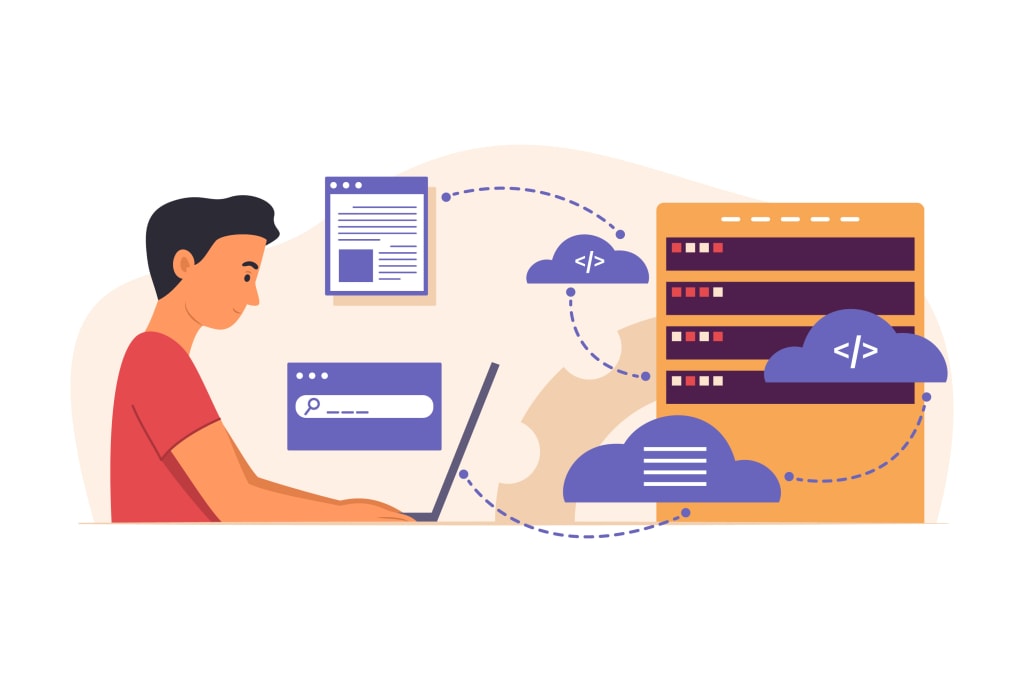
Cloud computing has migrated through the huge transformation—from archaic virtual machines to an advanced serverless function. It has changed the way developers write and deploy applications, allowing them to write code without having to handle any servers. This review paper will provide an outline of what serverless functions are, their benefits, use cases, and their impact on reshaping modern applications.
Table of Contents
- Serverless Functions
- Serverless Computing Architecture
- Function Services Benefits
- Some of the Serverless Functions Use Cases
- Challenges and Considerations
- How to Get Started with the Serverless Functions
- Serverless Platforms
- Some of the Practice Tips for Developing Serverless Applications
- Future Trends of Serverless Computing
Hyderabad Cloud Computing Training
Serverless functions are, in fact, as close to the essence of serverless architecture as one can get. Essentially, they allow the developer to run the code, which is triggered by events, and yet not be involved in any server provision or management activity. Although somewhat counterintuitive because of its name, serverless computing actually does not exclude servers but just abstracts the server management from the developer, allowing them to be concerned with just writing application logic.
A serverless function is generally a stateless, ephemeral piece of code with a single purpose. It is activated on events like HTTP requests, changes in databases, or file uploads. On each trigger, the function runs once and ends, making it thus very efficient and cost-effective for running back-end logic. Such a model is useful for developers who are interested in making applications easily scalable without having to use servers in the traditional sense.
Serverless Computing Architecture
Serverless computing is an extension of FaaS. In this architecture, the provider takes care of the infrastructure – servers, OS, and scaling – and hence, a developer is able to execute his code in the form of independent functions. It is basically an event-driven architecture in which functions run on triggers.
Some of the basic components of serverless architecture :
Function as a Service: This is the way serverless functions are mostly deployed. Developers create serverless functions and deploy them with a cloud provider. The cloud provider is then responsible for the execution of the functions and scaling them up and down.
event sources: these are the events that start the execution of serverless functions. Typical event sources include HTTP requests, message queues, and scheduled events.
API Gateway: It works as an intermediary between client and serverless function, which helps a developer in making the function available as APIs.
This architecture can therefore simplify the development, leading to quick deployment and scaling without the need to worry about the infrastructure.
Benefits of Serverless Functions
The adoption of serverless functions provides a number of advantages to the developers and organizations:
Cost-Efficiency: Serverless functions are pay-as-you-go for the service. Organizations pay only for what is being used in terms of compute resources. Cost is dealt with by eliminating the cost expended on idle servers and managing more predictable budgeting.
Scalability: Serverless functions will scale automatically with the load that is placed upon them. In the case of an increased workload, more instances of the function will scale out from the cloud provider to handle the traffic and ensure better performance.
Accelerated Development: Server management abstracts away from developers, thereby letting them focus on code and deliver functionalities at a faster pace. It speeds up the development life cycle so that teams can respond to the demands of the market well.
Reduced Operational Overhead: Serverless functions eliminate the headache of maintaining, updating, and scaling servers from developers. That clear resource is eventually channeled into initiatives more strategic.
These advantages make the serverless feature appealing to any organization interested in increasing their innovation and optimizing their application development processes.
Typical Use Cases for Serverless Functions
Serverless functions can be used in a number of use cases, as follows:
Web Applications: These functions can be applied for web applications that provide backend logics to authenticate users, process form submissions, and run database queries.
APIs: RESTful APIs can be developed by developers using serverless functions. They can create APIs that fetch and manipulate data in a scalable and cost-effective manner. Data Processing: Serverless functions are perfect for data processing in real-time; for example, in transforming files uploaded to cloud storage or analyzing streaming data from IoT devices.
Event-Driven Architectures: Serverless functions can react to events from just about any resource—such as database changes, message queues—and therefore support complex workflows without the need for a dedicated server.
The case enforces the use of serverless functions and helps to understand how the functions can hit different possibilities of requirements in an application.
Challenges and Considerations
Cold Starts: Since a serverless function initializes on use, then it has been shown to have some latency when it is invoked after a duration of inactivity. This may reduce performance, in particular for time-sensitive applications.
Vendor Lock-In: An organization, by using the serverless platform investment, may be locked into one cloud vendor, not able to migrate to another vendor in future.
Monitoring and Debugging: The debugging of serverless functions sometimes becomes a bit hard, compared to applications deployed in the traditional way, because developers do not have specific information about the concrete underlying infrastructure.
Execution Limits: Most of the serverless platforms have limits on execution time, memory used, and the number of concurrent executions. These kinds of constraints force developers to write functions that fit within these limits.
Having these challenges identified, developers will then be able to come up with armament that will see to it that the shifting to a serverless architecture dynamically lowers issues that can be raised effectively.
Getting Started with Serverless Functions
Developers need to do the following to get started with serverless functions:
Selecting a Cloud Provider: Choose a cloud provider in which serverless computing makes sense, such as AWS Lambda, Google Cloud Functions, or Azure Functions.
Write your Function: The code of the function is developed in the language preferred by a user. Be sure that the function is stateless and independently executable.
Enable the Function: Deploy your function using the tooling provided by the cloud provider. Normally this includes uploading the code and setting up triggers.
Testing and Monitoring: When the function has been deployed, test to ensure it's working as expected. Monitor the live action of the function and crowd judging with the help of the monitoring tool provided by the cloud provider.
With these simple steps, developers are able to make serverless functions fast and realize the benefits of this new architecture.
Serverless Platforms In Play
Several cloud providers have robust serverless platforms with features and capabilities that differ in certain ways from each other. AWS Lambda is one of the true pioneers of serverless computing services out there. Besides supporting multiple languages, it also smoothly integrates with many AWS services. With the help of Google Cloud Functions, it becomes possible to create event-driven functions that react to quite a wide variety of events, whether originating from Google Cloud services or from third-party ones.
Azure Functions: One more serverless offering by Microsoft, where a developer can build and deploy a function using any of the supported technology or programming languages; powerful integration with Azure services.
Netlify Functions: For frontend developers, it translates to deploying serverless functions surrounding static sites, hence extending the functionality easily.
These, in turn, bring to the right fit that developers might be looking for in their application needs using this power of serverless computing.
Best Practices for Serverless Application Development
Developers will want to follow best practices to maximize these serverless functions:
Keep Functions Small: A function should be designed to do just one thing. Again, this modularity enhances the maintainability of your application and makes it easier to debug.
Optimize for Cold Starts: Minimize cold start latency by keeping functions lightweight with a minimum number of dependencies. Use provisioned concurrency on the more critical functions.
Implement Monitoring: It can be achieved by making use of monitoring tools to trace function performance, rates of error, and patterns of usage. This can provide data for effecting optimizations and fault isolation.
Plan for Security: Secure the serverless functions with authentication/authorization mechanisms. Sensitive information must not be added to the function code as hardcoded.
Following these best practices, developers will be able to develop their applications efficiently and securely, delivering optimum performance.
FUTURE TRENDS IN SERVERLESS COMPUTING
Emerging trends in serverless as it matures:
Adoption
Associated increasingly by organizations as they realize the benefits of a serverless architecture
Adoption across industries is more widespread
Enhanced tooling
Growing around serverless functions is improved tooling for monitoring, debugging, and deploying serverless applications.
Integration with AI and ML
Serverless functions are integrating with AI and ML services.
Helps developers in building intelligent applications with ease.
Focus on Multi-Cloud Strategies: There is more and more adoption of multi-cloud strategies that enable avoiding vendor lock-ins and harnessing the strengths of multiple cloud providers.
All of this points towards a very bright future, as far as the innovation and growth of Functions as a Service, is concerned.
More Learning: Cloud Computing Course in Hyderabad
To learn more about cloud computing and the associated serverless architecture, an individual can take up a course on Cloud Computing Course in Hyderabad. These courses would provide you with thorough training on cloud technologies, including serverless computing, so as to make you proficient. All these will surely empower you with the knowledge of the concepts of cloud computing, hence making you able to design applications which are scalable and good enough to serve businesses in the modern era.
In typical words, serverless functions really are one such big milestone in cloud computing, as these cater to the developers' ability and let them create and deploy applications having more efficiency and flexibility. This technology, on one hand, when used for harnessing the best benefits and best practices associated with serverless architecture, will be very helpful to developers in developing innovative solutions resulting in business success and competitive advantages in cloud computing. So this will be another step of cloud computing that will really start from the near landscape to this live in the digital age terrain.
About the Creator
jinesh vora
Passionate Content Writer & Technology Enthusiast. Professionally Digital Marketer.
Keep reading
More stories from jinesh vora and writers in Education and other communities.
The Art of Keyword Optimization: How to Naturally Integrate Keywords into Content
Table of Contents Introduction: Evolution in Keyword Optimization Understanding Keywords and Their Importance Types of Keywords: A Comprehensive Overview The Art of Natural Integration Tools and Techniques to Help with Effective Keyword Research Creating Content for Resonance Measuring the Impact of Keyword Optimization Conclusion: The Future of Keyword Optimization
By jinesh vora2 years ago in Education
The World’s Safest Countries: Where Doors Stay Unlocked and Police Rarely Carry Guns
In many parts of the world, locking doors, installing security cameras, and relying on heavily armed police forces are everyday realities. However, there are a few countries where life feels very different. In these places, crime rates are extremely low, communities are tightly connected, and trust among citizens is remarkably high. As a result, people often leave their doors unlocked, and in some cases, police officers patrol the streets without carrying firearms.
By Irshad Abbasi 4 days ago in Education
📢 Raise Your Voice Thread: 03/05/2026
Our “Raise Your Voice Threads” are hosted most alternating Thursdays at 12PM ET to offer creators more avenues to uncover exceptional stories on Vocal. As we are continuously searching for fresh creators and inspiring stories, this thread provides an opportunity to exchange and discuss the stories that have moved and motivated us on Vocal.
By Raise Your Voice by Vocal3 days ago in Resources



Comments
There are no comments for this story
Be the first to respond and start the conversation.