
Beyond the One-Size-Fits-All Classroom: How Personalized Learning is Redefining Education in 2025
From Standardized Scripts to Student-Crafted Journeys: How 2025’s Personalized Learning is Writing a New Chapter for Every Learner
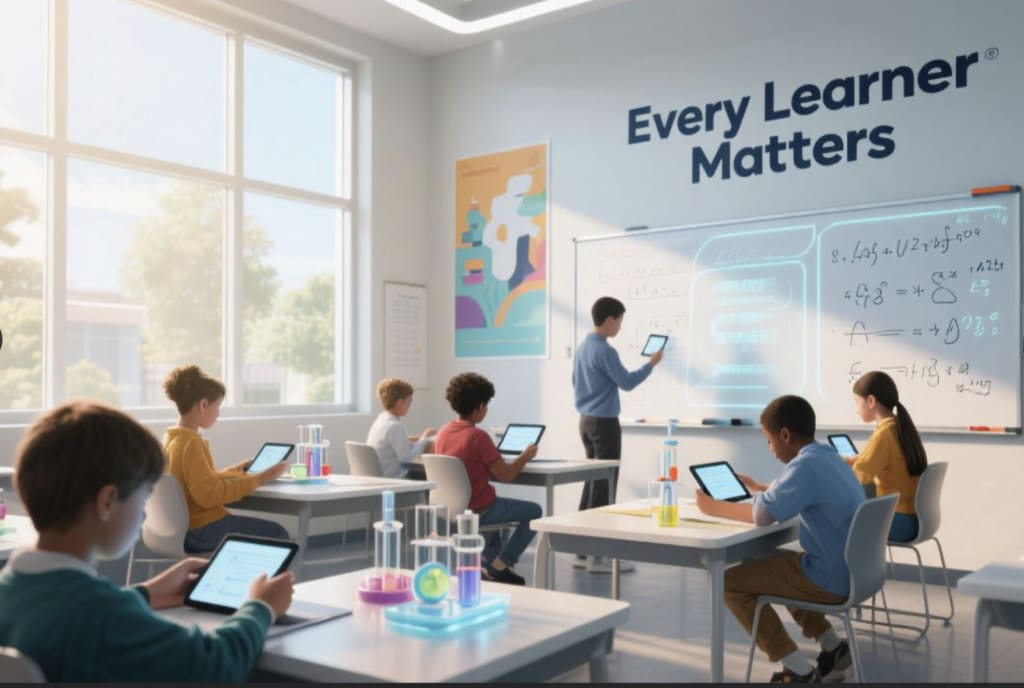
Let me tell you about Mia.
Three years ago, Mia was a 9th-grader in a bustling urban high school—bright, curious, but lost. Her math teacher taught algebra at a pace that left her bored (she’d already mastered the basics over summer with a YouTube tutor), while her history class moved so slowly that she’d zone out, doodling in her notebook. By October, her grades were a rollercoaster: A’s in science (her passion), D’s in subjects that felt “too slow” or “too fast.” When I asked her why she hated school, she shrugged: “It’s like everyone’s eating the same meal, but some of us are starving and others are stuffed.”
Mia’s story isn’t unique. For decades, education has operated on a “one-size-fits-all” model—45-minute lectures, standardized curricula, and assessments that measure how well students regurgitate information, not how deeply they understand it. But here’s the truth: students aren’t widgets. They learn at different paces, through different modalities (visual, auditory, kinesthetic), and with unique interests that can fuel their curiosity.
In 2025, a quiet revolution is underway—one that’s moving away from rigid systems and toward personalized learning. And it’s not just about tech gadgets or flashy apps. It’s about rethinking education as a human-centric experience, where every student’s strengths, gaps, and passions are seen, valued, and nurtured.
The Problem with “Standardization”
Let’s be clear: Standardized education served a purpose. It created a baseline of literacy and numeracy, built shared cultural knowledge, and prepared generations for industrial-era jobs. But today’s world is different. Automation, AI, and the gig economy demand skills like critical thinking, creativity, and adaptability—traits that can’t be measured by a multiple-choice test.
Research from the World Economic Forum’s Future of Jobs Report 2024 found that 65% of children entering primary school today will work in jobs that don’t exist yet. Meanwhile, 40% of U.S. high school students report feeling “unengaged” or “checked out” in class, according to Gallup’s annual student poll. When learning feels irrelevant or one-paced, students disengage—and disengagement is the silent killer of potential.
Personalized Learning: Not a Trend, a Necessity
So what is personalized learning? At its core, it’s an approach that tailors teaching to the individual needs, interests, and learning styles of each student. It’s not about letting kids “do whatever they want”; it’s about guiding them to take ownership of their education while providing the structure they need to grow.
Here’s how it works in practice:
• Diagnostic Tools: Teachers start by assessing students’ current skills, knowledge gaps, and learning preferences (e.g., do they prefer videos, hands-on projects, or group work?). Platforms like Panorama Education (panoramaed.com) help schools gather this data holistically—beyond test scores—to build a full picture of a student’s needs.
• Flexible Pacing: In a personalized classroom, a student who masters algebra in 2 weeks might move on to geometry, while another spends extra time mastering fractions—no more “falling behind” or “bored out of their minds.” Tools like Khan Academy (khanacademy.org) let students learn at their own speed, with adaptive exercises that adjust difficulty based on performance.
• Interest-Driven Projects: Why force a future marine biologist to write essays about Shakespeare? Personalized learning encourages students to connect academics to their passions. Mia, for example, now spends part of her math class analyzing climate data for a local environmental group—turning statistics into something that matters to her.
• Teacher as Coach: In a personalized system, teachers aren’t just lecturers; they’re mentors. They spend less time delivering content (thank you, pre-recorded video lessons!) and more time mentoring, troubleshooting, and sparking curiosity. As 10th-grade teacher Maria Gonzalez told me, “I finally get to be the ‘guide on the side’ instead of the ‘sage on the stage.’ My students are more engaged, and I’m more energized—win-win.”
The Tech Behind the Human Touch
Critics worry that personalized learning means replacing teachers with algorithms. Nothing could be further from the truth. Technology is a tool, not a replacement. Here are three tools making waves in 2025 classrooms—without losing the human element:
1. Classcraft (classcraft.com): This gamified classroom management platform lets teachers turn lessons into collaborative quests. Students earn points for teamwork, creativity, and resilience—traits that matter far more than test scores. Mia’s class uses it to track progress on group projects, and she says, “It makes learning feel like an adventure, not a chore.”
2. Nearpod (nearpod.com): An interactive lesson platform that blends live teacher-led sessions with student-paced activities. Teachers can embed polls, quizzes, and virtual reality field trips (yes, VR!) into lessons, keeping students engaged in real time. For example, a history teacher might take students on a VR tour of ancient Rome during a lesson on the Colosseum—making history come alive.
3. DreamBox Learning (dreambox.com): Designed specifically for math, this adaptive platform adjusts its lessons based on a student’s responses. If a learner struggles with fractions, DreamBox will slow down and offer visual aids (like pizza slices!). If they breeze through, it’ll introduce more complex problems. The best part? Teachers get real-time reports showing where each student needs support—so they can intervene before frustration sets in.
The Future is Personal
Mia graduated from high school last spring—on time, with honors, and a scholarship to study environmental science. When I asked her what changed her trajectory, she said, “No one treated me like a number anymore. They saw what I could do, not just what I couldn’t.”
That’s the heart of personalized learning: seeing students as individuals, not data points. It’s not about ditching traditional education—it’s about making it work for everyone.
To the teachers reading this: Your students are more than test scores. To the parents: Your child’s curiosity is worth nurturing. And to policymakers: Investing in tools and training that support personalized learning isn’t a luxury—it’s an imperative for the next generation.
Because in 2025, education isn’t just about what we teach. It’s about how we teach—and ensuring that every student has the chance to thrive.
---
Ready to explore tools that make personalized learning a reality? Check out https://panoramaed.com for holistic student insights, https://classcraft.com to gamify engagement, or https://dreambox.com for adaptive math practice. Because when education fits, everyone wins.
About the Creator
Keep reading
More stories from liang ming and writers in Education and other communities.
Beyond One-Size-Fits-All: How Personalized Learning is Transforming Education (And the Tools Making It Possible)
Let’s start with a question: When was the last time you felt truly engaged in a lesson? Was it when a teacher tailored a project to your obsession with space? Or when a math problem finally clicked because it connected to your part-time job’s budgeting? Chances are, those moments weren’t accidents—they were early hints of a revolution unfolding in education: personalized learning.
By liang ming8 months ago in Education
Short Tempers and Legal Threats: UK Teachers Report Rise in Problem Parents
A growing number of teachers in the United Kingdom are reporting confrontations with parents, including displays of short tempers, verbal abuse, and even threats of legal action, according to a recent survey conducted by the National Education Union (NEU). The findings highlight increasing pressure on school staff as they navigate complex interactions with parents while maintaining standards of education and safeguarding children. The NEU survey, which collected responses from over 15,000 teachers across England, Wales, Scotland, and Northern Ireland, found that more than 60% of respondents had experienced at least one incident of aggression or intimidation from parents over the past academic year. Around 15% of teachers said they had faced explicit threats of legal action, often over disciplinary decisions, homework disputes, or perceived issues with the school environment. Many educators report that the rise in confrontations is being driven by heightened stress among parents, who face pressures from work, finances, and social media scrutiny. “Parents today are under immense pressure, and unfortunately, that sometimes spills over into aggressive behavior towards staff,” said one teacher from a primary school in Manchester. “We try to engage constructively, but the short tempers can make communication extremely difficult.” The survey also revealed that secondary school teachers are disproportionately affected. Staff members teaching older students reported more frequent and intense confrontations, often related to disciplinary matters such as detentions, exam performance, or social media incidents involving students. Primary school teachers, while facing fewer threats, still reported incidents that caused stress and anxiety. Union leaders say that this trend is concerning because it affects both teacher wellbeing and the wider learning environment. “When staff feel intimidated or threatened by parents, it impacts their ability to teach effectively,” said Mary Bousted, co-general secretary of the NEU. “Schools are meant to be safe spaces for children and adults alike, and this rise in aggression undermines that principle.” Schools have also reported an increase in formal complaints lodged by parents over relatively minor issues. While many complaints are resolved amicably, others escalate to involve external legal advice, putting further strain on teachers and school leadership teams. Legal threats, even when ultimately unsubstantiated, can be intimidating and emotionally draining for staff. Experts suggest that social media and the ease of online communication have contributed to the rise in confrontations. Parents can quickly voice grievances publicly or privately, sometimes without full understanding of school policies or procedures. This has added a new layer of complexity to teacher-parent interactions and has occasionally led to public criticism of staff. Government officials acknowledge the challenges faced by educators. The Department for Education (DfE) has urged schools to adopt clear policies on parental conduct and to provide support for staff experiencing aggression. Guidance includes formal reporting mechanisms, training on conflict resolution, and consultation with local authorities or unions when necessary. Some schools have introduced proactive measures to reduce tensions, such as regular parent-teacher meetings, mediation services, and clear communication of rules and expectations. In addition, mental health support for both students and staff is being emphasized to mitigate stress-related behavior. Nevertheless, union representatives warn that systemic pressures—such as increasing class sizes, tighter budgets, and staff shortages—may exacerbate conflicts between teachers and parents. “We are asking parents to work with us, but they also need to understand the pressures on staff,” Bousted said. “Respectful communication is essential for a healthy school community.” The survey underscores the importance of balancing parental involvement with professional boundaries. While parental engagement is vital for student success, teachers are calling for greater recognition of their professional authority and protection from intimidation. As the new school term progresses, education leaders are monitoring incidents closely, emphasizing training, and seeking collaboration between parents and staff. Ensuring that schools remain safe, respectful, and supportive environments for both students and teachers is now a critical priority in the UK education system. The NEU survey concludes that tackling this issue will require a combined effort from parents, school leaders, and policymakers to reinforce positive engagement, protect teachers from aggression, and maintain a constructive environment for learning.
By Fiaz Ahmed 2 days ago in Education
Strategy Before Software: Why Content Strategy Matters More Than Platform Technology
A strong content strategy matters more than platform technology because strategy shapes every choice a team makes. It guides tone, purpose, structure, and audience focus. Technology can help with speed and reach, but it cannot replace direction. A tool only works well when someone uses it with a clear plan. Without a strategy, even the best systems fail to connect with real people.
By James Kaminsky5 days ago in Education




Comments
There are no comments for this story
Be the first to respond and start the conversation.