
Beyond the One-Size-Fits-All Classroom: How Personalized Learning is Redefining Education for Every Student
From Factory-Model Classrooms to Student-Centered Journeys: How Personalized Learning Unlocks Every Learner’s Unique Potential

Let’s start with a question: When was the last time you learned something exactly at your pace, in a way that made your brain feel like it was humming with curiosity? For most of us, that memory probably dates back to kindergarten—building block towers at your own speed, asking “why?” until an adult (patiently or not) ran out of answers. But somewhere along the way, school became less about your journey and more about the journey: 30 students lined up in desks, following the same lesson plan, moving from math to science to history because the bell said so—even if half the class was still stuck on last week’s fractions.
The truth is, traditional education was designed for a world where “standardization” was king. Factories needed workers who could follow instructions; governments needed citizens who could recite facts. But today? We live in an era of infinite choice, rapid innovation, and jobs that didn’t even exist 10 years ago. Our kids deserve an education that prepares them not just to follow, but to lead—and that starts with unlearning the one-size-fits-all model.
The Problem with “Same for Everyone”
Let’s paint a picture. Imagine two 8th graders: Mia and Ethan. Mia loves math—she races through equations, asks for extra problems, and begs her teacher to let her explore geometry instead of repeating algebra. Ethan, on the other hand, dreads math class. He freezes during timed tests, gets frustrated when the class moves on before he grasps a concept, and has started skipping homework because “it’s just too hard.”
In a traditional classroom, both Mia and Ethan get the same textbook, the same lectures, and the same homework. Mia gets bored, zones out, and eventually loses interest. Ethan gets anxious, falls further behind, and starts to believe he’s “bad at math.” This isn’t a hypothetical—it’s happening in schools across the globe. Research from the National Center for Education Statistics found that 65% of high school students say they’re “not engaged” in math classes, and 40% report feeling “stressed” by the pace of instruction.
The root issue? Education has become a “production line,” not a “growth journey.” Students are treated like products to be standardized, not individuals with unique strengths, weaknesses, and passions.
Enter Personalized Learning: Education That Adapts to You
Thankfully, a quiet revolution is underway. Meet personalized learning—an approach that tailors teaching to each student’s needs, interests, and learning speed. Unlike one-size-fits-all, personalized learning uses data, technology, and human insight to create custom pathways. It’s like having a private tutor for every student, but scaled to fit entire classrooms (and even entire schools).
Let’s break down how it works:
1. Data-Driven Insights, Not Guesswork
Personalized learning tools (think apps, software, or platforms) track student progress in real time. For example, a math program might notice that Mia masters multiplication in 20 minutes but struggles with word problems—so it automatically serves her harder multiplication drills and fun word problem games. For Ethan, it might slow down, break concepts into smaller steps, and send him a short video explaining fractions using his favorite hobby (soccer stats).
2. Learning at Your Own Pace
Gone are the days of “keep up or get left behind.” In a personalized classroom, students move forward when they’re ready—not when the syllabus says so. Struggling with long division? You’ll get extra practice until you nail it. Already acing algebra? You might start exploring graphing calculators or even basic coding. This freedom to progress at your own speed doesn’t just boost confidence—it fosters a love for learning.
3. Interest-Driven Exploration
Personalized learning isn’t just about what you learn—it’s about why you learn it. Platforms like Outschool (a massive online marketplace for kid’s classes) let students dive into topics that spark joy: from dinosaur paleontology to video game design to magic tricks. When learning feels relevant, students engage deeply. A 2023 study by the RAND Corporation found that students in personalized, interest-based programs were 30% more likely to report “liking school” and 25% more likely to pursue advanced courses.
Real Stories, Real Change
Let’s circle back to Mia and Ethan.
After her school adopted a personalized learning platform called DreamBox (a math program that adapts to each student’s skill level), Mia started getting “challenge badges” for mastering advanced geometry. She began leading peer study groups, teaching fractions to classmates who struggled—turns out, her enthusiasm was contagious.
Ethan, meanwhile, started using Khan Academy (a free, adaptive learning site with lessons in everything from math to art history). The platform let him pause videos, rewatch confusing sections, and earn “energy points” for completing exercises. Over six months, his math grade jumped from a D to a B+. “I used to hate math because I felt stupid,” he told his teacher. “Now it’s like the app’s cheering me on—and I finally get it.”
These stories aren’t outliers. Educators report that personalized learning reduces dropout rates, improves test scores, and even boosts social-emotional skills like resilience and self-advocacy.
How You Can Support Personalized Learning (Even If You’re Not a Teacher)
If you’re a parent, student, or someone who cares about education, there are ways to champion this movement:
• Advocate for Tools: Ask your school district to invest in adaptive platforms like DreamBox or Khan Academy. Many districts offer free access—just do a quick search for “[Your District Name] + personalized learning.”
• Encourage Curiosity: At home, let kids explore topics they love. Platforms like Coursera for Campus (free for K-12 schools) or National Geographic Kids offer interactive lessons that turn “homework” into an adventure.
• Be a Voice for Change: Talk to teachers, principals, or local officials about the need for flexible curricula. Share stories of students like Mia and Ethan—data and emotion together make powerful arguments.
The Future is Personal
Education isn’t just about memorizing facts; it’s about nurturing curious, confident, and capable humans. The one-size-fits-all model served its purpose in the industrial age, but today’s world demands something more: learners who know their strengths, embrace their passions, and aren’t afraid to ask, “What’s next?”
Personalized learning isn’t a fantasy—it’s happening right now. And with tools, teachers, and communities working together, we can make it the norm, not the exception.
Ready to see personalized learning in action? Check out these platforms to start your journey:
• https://www.dreambox.com/ – Adaptive math learning for K-8 students.
• https://www.khanacademy.org/ – Free, personalized lessons for all ages.
• https://outschool.com/ – Hundreds of live, kid-led classes on topics you won’t find in textbooks.
Because when education fits you, learning isn’t a chore—it’s a adventure. Let’s make sure every student gets to go on theirs.
---
Note: This article reflects personal observations and research. Product links are shared for informational purposes only; individual results may vary.
About the Creator
Keep reading
More stories from liang ming and writers in Education and other communities.
Beyond the One-Size-Fits-All Classroom: How Personalized Learning is Redefining Education
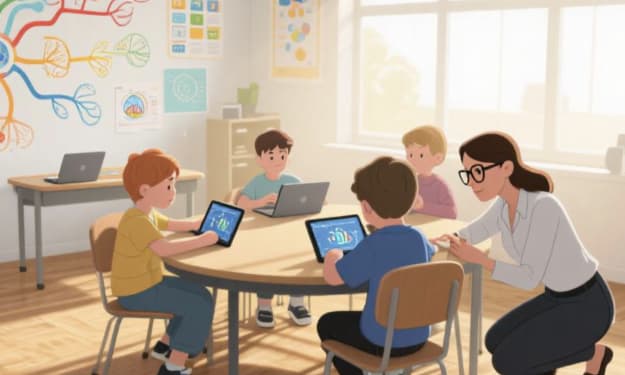
It was a Tuesday afternoon in a bustling urban middle school, and Ms. Carter’s 8th-grade math class looked… different. Instead of rows of students scribbling identical equations in workbooks, small groups huddled around tablets, debating how to design a budget for a fictional community center. One student, who’d previously struggled with basic arithmetic, was leading the conversation, using a color-coded app to track expenses. Across the room, a quiet kid—who’d never raised his hand—was typing furiously on a laptop, solving advanced geometry problems he’d chosen himself after acing a diagnostic quiz that morning.
By liang ming8 months ago in Education
NCLEX Study Plan: A Step-by-Step Guide for Nursing Students
Preparing for the NCLEX-RN is one of the most important milestones in the nursing students’ career. This is because the NCLEX is the final step before nursing students can become licensed nurses. However, it is not as easy as simply reading nursing textbooks and taking notes from class lectures. This is because the NCLEX is designed to test the nursing students’ clinical judgment and decision-making skills.
By Sulcus Learninga day ago in Education
The Value of Hard Work
Hard work is one of the most important qualities for success in life. It means putting effort, time, and dedication into our tasks and responsibilities. Many people dream of becoming successful, but success does not come easily. It requires patience, determination, and continuous effort. Hard work helps people achieve their goals and build a better future. It also teaches discipline and responsibility, which are necessary for personal and professional growth.
By aadam khan6 days ago in Education
Silken Chains
Silhouettes of the female form were given flesh and bone. Silken skin glistened under the spotlight. Dry ice rose around our Icons as they danced atop their podiums in the Square. Heralded for their beauty, their movements were slight, powerful, and sensual.
By Paul Stewart5 days ago in Fiction


Comments
There are no comments for this story
Be the first to respond and start the conversation.