
Beyond Artificial Intelligence
The Inimitable Human Skills That Will Always Reign Supreme.

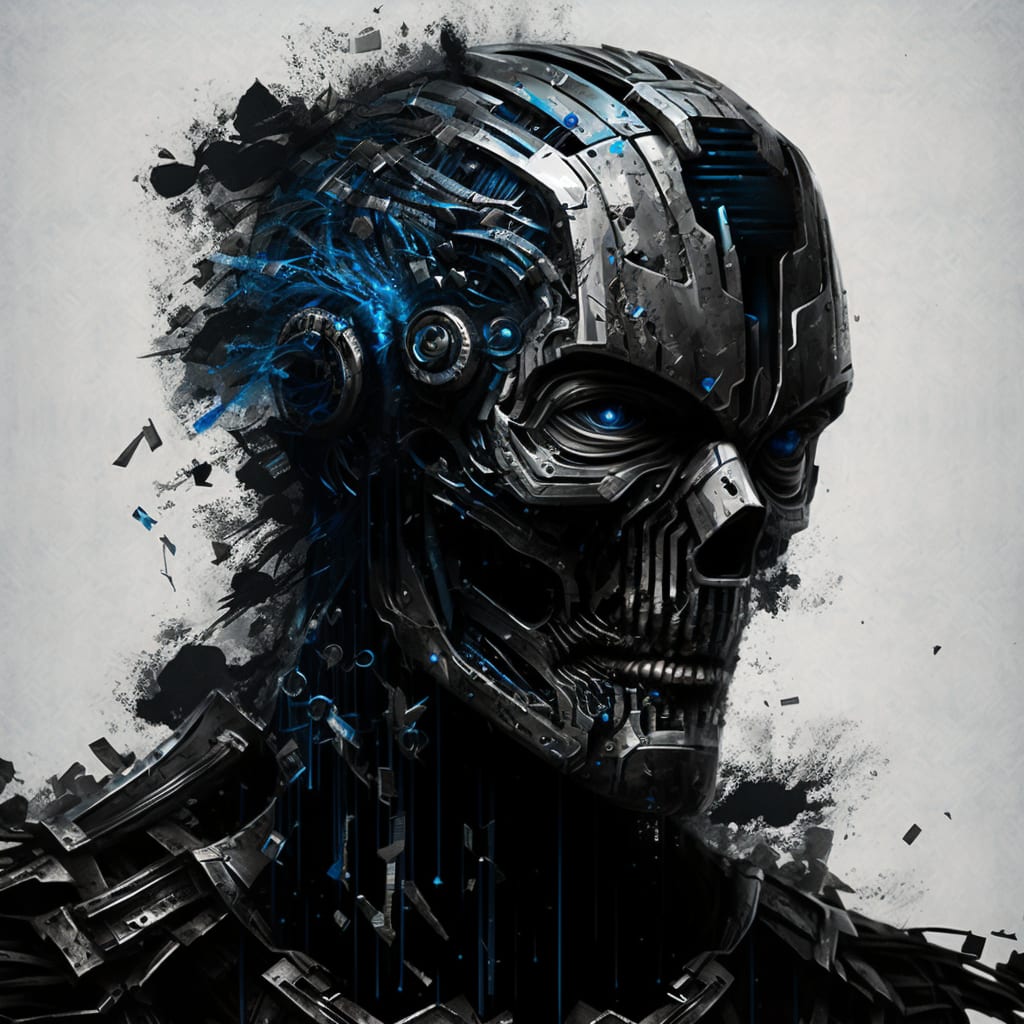
As artificial intelligence becomes more advanced, there is growing concern about the extent to which machines will replace humans in the workforce. While machines can perform many tasks faster and more accurately than humans, there are skills that are unique to humans and cannot be replicated by machines.
One such skill is empathy, which is essential in fields like healthcare, social work, and education. While machines can analyze data and provide recommendations, they cannot provide the emotional connection and support that a human can. Patients, for example, need emotional support and reassurance, especially when dealing with illnesses, and this is something that only a human can provide. The same is true for social work and education. Empathy is essential in helping people through difficult times, and machines cannot provide the same level of emotional support.
Creativity is another uniquely human skill, essential in fields like design, advertising, and marketing. While machines can analyze data and make predictions, they cannot generate truly original ideas in the same way that humans can. This is because creativity requires intuition, imagination, and the ability to think outside the box. It is the ability to see connections and possibilities that others cannot see, and this is something that only humans can do.
Emotional intelligence is also uniquely human, essential in leadership roles. Effective leaders must be able to inspire, motivate, and empathize with their teams. While machines can provide data and insights, they cannot provide the same level of emotional connection and understanding that a human can. In leadership, emotional intelligence is critical in building trust and creating a positive work environment.
In addition to soft skills, there are technical skills that require human intuition and decision-making, such as in law and finance. These fields require judgment and expertise that machines cannot provide. In law, for instance, a machine can analyze case data and provide recommendations, but it cannot make the final decision in a trial. Similarly, in finance, a machine can analyze market data and provide recommendations, but it cannot make investment decisions based on human intuition and risk assessment.
While AI will continue to automate tasks and jobs, there will always be a need for the unique skills and qualities that only humans possess. As we move forward, it is important to recognize and celebrate these skills that make us uniquely human. It is also important to invest in education and training programs that focus on developing these skills, as they will become increasingly valuable in the workplace. Employers must recognize the value of human skills and find ways to integrate them into their business processes. This could involve redefining job roles, creating new positions, or providing training and development programs.
It is also important to recognize that AI and humans can work together to achieve better outcomes. Machines can automate routine tasks, freeing up humans to focus on higher-level tasks that require human skills. For instance, in healthcare, machines can analyze patient data and provide recommendations, while humans can provide emotional support and care. In law, machines can analyze case data and provide recommendations, while humans can make the final decision based on judgment and intuition. This is the future of work - a world where humans and machines work together to achieve better results.
It's clear that technology will have a big impact on the workforce. Many jobs that are currently done by humans will become automated, while new jobs that require different skills will emerge. However, the idea that machines will replace humans in every aspect of work is simply not true. There are certain skills that are unique to humans, and these skills will continue to be in demand in the future.
One of the most important of these skills is critical thinking. This involves analyzing information, evaluating arguments, and drawing conclusions. While machines can analyze data and provide recommendations, they can't think critically in the same way that humans can. Critical thinking requires judgment, intuition, and the ability to consider multiple perspectives. In fields like law, medicine, and engineering, critical thinking is essential in making decisions that have significant consequences. Machines can help by providing data and insights, but the final decision must be made by a human who can think critically.
Another important human skill is adaptability. This means being able to adjust to changing circumstances and learn new skills quickly. While machines can be programmed to perform specific tasks, they can't adapt to new situations in the same way that humans can. In a rapidly changing world, adaptability is becoming increasingly important. As new technologies emerge and job requirements evolve, workers must be able to adapt quickly to stay relevant. This is a skill that can't be replicated by machines, and it will be in high demand in the future.
Collaboration is another skill that is unique to humans. This means working effectively with others to achieve a common goal. While machines can work together, they can't collaborate in the same way that humans can. Collaboration requires communication, empathy, and the ability to understand and respect different perspectives. In fields like business, healthcare, and education, collaboration is essential in achieving positive outcomes. Machines can help by providing data and insights, but the human element is essential in building relationships and achieving consensus.
Finally, there's creativity. This means being able to generate new ideas and solutions. While machines can analyze data and provide recommendations, they can't create something truly original in the same way that humans can. Creativity requires imagination, intuition, and the ability to think outside the box. In fields like art, design, and advertising, creativity is essential in creating something that stands out from the crowd. Machines can help by providing data and insights, but the final product must be created by a human who can think creatively.
In conclusion, while AI will continue to automate many tasks and jobs, there will always be a need for the unique skills and qualities that only humans possess. These skills include empathy, critical thinking, adaptability, collaboration, and creativity. It's important to recognize the value of these skills and invest in education and training programs that develop them. It's also important to recognize that AI and humans can work together to achieve better outcomes. By leveraging the strengths of both humans and machines, we can create a future where work is more efficient, productive, and fulfilling.
About the Creator
CODESTIC DESIGNER
With over 5 years of experience crafting engaging content for various industries, Codestic recognizes the significance of connecting with target audiences and attaining business objectives through their expertise in digital marketing.
Keep reading
More stories from writers in Education and other communities.
How Interest Rates Impact Real Estate Investments and Investor Decision Making
Interest rates impact real estate investments at every stage of the buying and owning process. From the first loan application to long term holding strategies, interest rates influence costs, demand, and overall returns. Many investors focus only on property price, but interest rates often play a larger role in success or failure. This article explains how interest rates affect real estate investments in a clear and simple way, using practical examples that are easy to understand.
By Manny Khoshbin3 days ago in Education
The Human Advantage Russia’s Soft Skills Renaissance in the Age of AI (2026)
In the rapidly shifting economic landscape of 2026, Russia has entered a new era of human capital development. For years, the Russian job market was dominated by a "Hard Skills First" mentality prioritizing technical degrees, engineering prowess, and tangible manufacturing expertise. However, as Artificial Intelligence (AI) and automation begin to handle the heavy lifting of data analysis and routine tasks, a fundamental realization has swept through the offices of Moscow and the industrial hubs of the Urals: technical skills get you the job, but soft skills keep the business alive. Today, soft skills training in Russia has evolved from a "corporate luxury" into a survival-critical investment, driven by a need for agility, emotional intelligence, and human-centric leadership in an increasingly complex world.
By Neeraj kumarabout 13 hours ago in Education




Comments
There are no comments for this story
Be the first to respond and start the conversation.