
Battles of WW2(Pt.3)
This is the Part 3 of WW2 battles that were fought b/w Allied and Axis Powers
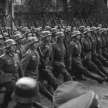

The list of some other battles of WW2 are:
1. Battle of France:
The Battle of France was a major military campaign fought during World War II in 1940. The battle was fought between Germany and its allies, and France and its allies. It was one of the most significant campaigns of the war, and ultimately resulted in the defeat of France and the occupation of the country by Nazi Germany.
The battle began on May 10, 1940, when Germany launched a surprise invasion of France, Belgium, Luxembourg, and the Netherlands. The German forces, led by General Erich von Manstein, quickly advanced into France, utilizing their superior armor and air power to devastating effect. The French, on the other hand, were caught off guard and suffered from a lack of coordination and leadership.
The Germans made rapid advances, capturing the port of Calais and cutting off the British Expeditionary Force (BEF) and French forces from the rest of the French army. The BEF and the French forces were pushed back to the coast, where they were trapped and surrounded by the German army.
The evacuation of the BEF from the beaches of Dunkirk became a symbol of the battle, as hundreds of thousands of British and French soldiers were evacuated to safety by a flotilla of ships, including civilian vessels. Despite this, the battle was a crushing defeat for the Allies. The French army was forced to surrender on June 22, 1940, and France was occupied by German forces for the rest of the war.
The Battle of France was a significant victory for Germany, as it gave them control over a large part of Europe and access to important resources. It also established Germany as a major military power and bolstered the reputation of Adolf Hitler, who had personally overseen the campaign. The battle also had significant implications for the rest of the war, as it allowed Germany to focus its attention on other fronts, such as the Soviet Union.
2. Invasion of Yugoslavia:
The invasion of Yugoslavia was a military campaign launched by Nazi Germany in April 1941 during World War II. The campaign was aimed at conquering and occupying the Kingdom of Yugoslavia, which had recently undergone political turmoil and was considered a vulnerable target.
The German invasion began on April 6, 1941, with an overwhelming force of German, Italian, and Hungarian troops crossing the Yugoslav border. The Yugoslav army was caught off guard and had little chance of repelling the German attack. In just ten days, the German forces had advanced deep into Yugoslav territory, capturing Belgrade, the Yugoslav capital, and securing control over most of the country.
The Yugoslav government, led by Prince Paul, had been pressured by Nazi Germany to sign a treaty of friendship and cooperation in 1941, but was overthrown by a pro-British coup just days before the invasion. The coup was led by General Dušan Simović, who hoped to avoid war by allying with the Allies. However, the coup weakened the Yugoslav military and made it more vulnerable to the German invasion.
Resistance to the German invasion was sporadic and largely disorganized, although there were pockets of resistance throughout the country. In Croatia, the Ustaše, a pro-fascist group, seized power and established a puppet state aligned with Nazi Germany.
The invasion of Yugoslavia was a swift and decisive victory for Nazi Germany, and paved the way for further German expansion in the Balkans. The occupation of Yugoslavia was brutal and repressive, with the German authorities carrying out mass executions, deportations, and other atrocities against the civilian population.
The invasion of Yugoslavia also had significant geopolitical implications, as it opened up a new front in the war in southeastern Europe and forced the Allies to divert resources and attention to the Balkans. The campaign also marked the beginning of the German occupation of Greece, which fell to the German army shortly after the Yugoslav campaign.
3. Battle of Greece:
The Battle of Greece was a military campaign fought between the Allies (primarily British and Greek forces) and Axis powers (primarily German, Italian, and Bulgarian forces) in Greece and the surrounding region during World War II. The campaign began in April 1941, after Germany had successfully invaded Yugoslavia and pushed into Greece.
The initial German invasion of Greece was launched on April 6, 1941, with German forces crossing the border from Bulgaria. The Greek army, aided by British forces, attempted to hold off the German advance, but were ultimately overwhelmed by the superior German forces and tactics. The Germans rapidly advanced through Greece, capturing key cities and strategic positions.
Despite the Greek and British resistance, the German army was able to gain control of Greece within a month. The Allies were forced to evacuate, with the remaining British and Commonwealth forces retreating to the island of Crete.
The Battle of Greece was a significant victory for Nazi Germany, as it allowed them to establish a foothold in the eastern Mediterranean and control important resources in the region. It also allowed the Germans to launch further attacks on the Balkans and the Middle East.
The campaign had significant consequences for the Greek population, who suffered greatly under German occupation. The occupation was marked by widespread atrocities, including mass executions and deportations of civilians. Resistance to the occupation was strong, with Greek partisans engaging in guerrilla warfare against the German forces throughout the war.
The Battle of Greece also had implications for the wider war, as it forced the Allies to divert resources to the Mediterranean and the Balkans, away from other key fronts such as North Africa and the Soviet Union. Despite the defeat, the Greek resistance played an important role in the war effort, and the country eventually regained its independence in 1944.
4. Battle of Kiev:
The Battle of Kiev was a major military engagement fought during the early stages of Operation Barbarossa, Nazi Germany's invasion of the Soviet Union during World War II. The battle was fought between German forces, commanded by General Guderian, and Soviet forces, led by General Kirponos, around the Ukrainian city of Kiev.
The battle began on August 23, 1941, with a massive assault by the German army on the Soviet defenders around Kiev. The German forces employed their characteristic blitzkrieg tactics, using tanks, artillery, and air support to quickly penetrate Soviet lines and encircle the defenders.
Despite fierce resistance by the Soviet army, the German army was able to encircle and isolate the defenders in the city of Kiev. The Soviet army, which had suffered significant losses in the opening days of the battle, attempted to break through the German encirclement and escape, but their efforts were largely unsuccessful.
The battle was marked by some of the most brutal fighting of the war, with both sides suffering heavy casualties. The German army was eventually able to capture the city of Kiev on September 19, 1941, after more than three weeks of fighting.
The Battle of Kiev was a significant victory for the German army, as it allowed them to capture a major city and a significant amount of Soviet territory. It also dealt a major blow to the morale of the Soviet army and helped to pave the way for further German advances in the Soviet Union.
However, the battle was also a costly one for both sides, with the German army suffering significant casualties and losses of equipment. The Soviet army, while defeated, was not completely destroyed, and would go on to fight a long and grueling war against the Germans.
Overall, the Battle of Kiev was a major engagement that had far-reaching consequences for the war and the world. It marked a significant victory for Nazi Germany, but also highlighted the strength and resilience of the Soviet army, which would ultimately play a key role in the defeat of Nazi Germany.
Although there are many other campaigns and battles that I did not mention. Hope this will give you an overview about how brutal a war is and how many lives it can take in some period of time.
About the Creator
Keep reading
More stories from War Explained and writers in Education and other communities.
Striking the Right Balance: Modern Tech and the Human Touch in Harmony
As technology continues to reshape every corner of business and daily life, the balance between innovation and personal interaction becomes increasingly important. Automation, artificial intelligence, and digital communication have allowed companies to operate faster, smarter, and more efficiently. These tools improve productivity and offer consumers greater convenience, transforming how services are delivered and experiences are shaped.
By Ian Schenkel Haliburtonabout 20 hours ago in Education
Rage
Content Warning: Domestic Violence, Assault Rage D. A. Ratliff “Who did this?” My voice echoed through the house. All I wanted was a cup of tea, but one of the twins, running through the house like maniacs, knocked it over. My nerves tingled, and every muscle in my body felt coiled like a spring. Survival seemed out of reach.
By D. A. Ratliff4 days ago in Fiction



Comments
There are no comments for this story
Be the first to respond and start the conversation.