

Basics of Environmental Science
(14N) by cosmic radiation, but it is unstable and decays to the commoner 12C at a steady rate. While
water is exposed to the air, both 12C and 14C dissolve into it, but once isolated from the air the
decay of 14C means that the ratio of the two changes, 12C increasing at the expense of 14C. It is
assumed that 14C forms in the air at a constant rate, so the ratio of 12C to 14C is always the same and
certain assumptions are made about the rate at which atmospheric carbon dioxide dissolves into
sea water and the rate at which water rising from the depths mixes with surface water. Whether or
not the initial assumptions are true, the older water is the less 14C it will contain, and if the
assumptions are true the age of the water can be calculated from its 14C content in much the same
way as organic materials are 14C-dated.
Carbon, oxygen, and sulphur are among the elements living organisms use and they are being cycled
constantly through air, water, and living cells. The other elements required as nutrients are also
engaged in similar biogeochemical cycles. Taken together, all these cycles can be regarded as
components of a very complex system functioning on a global scale. Used in this sense, the concept
of a ‘system’ is derived from information theory and describes a set of components which interact to
form a coherent, and often self-regulating, whole. Your body can be considered as a system in which
each organ performs a particular function and the operation of all the organs is coordinated so that
you exist as an individual who is more than the sum of the organs from which your body is made.
Biochemical cycles
The surface of the Earth can be considered as four distinct regions and because
the planet is spherical each of them is also a sphere. The rocks forming the
solid surface comprise the lithosphere, the oceans, lakes, rivers, and icecaps
form the hydrosphere, the air constitutes the atmosphere, and the biosphere
contains the entire community of living organisms.
Materials move cyclically among these spheres. They originate in the rocks
(lithosphere) and are released by weathering or by volcanism. They enter
water (hydrosphere) from where those serving as nutrients are taken up
by plants and from there enter animals and other organisms (biosphere).
From living organisms they may enter the air (atmosphere) or water
(hydrosphere). Eventually they enter the oceans (hydrosphere), where
they are taken up by marine organisms (biosphere). These return them to
the air (atmosphere), from where they are washed to the ground by rain,
thus returning to the land.
The idea that biogeochemical cycles are components of an overall system raises an obvious question:
what drives this system? It used to be thought that the global system is purely mechanical, driven by
physical forces, and, indeed, this is the way it can seem. Volcanoes, from which atmospheric gases
and igneous rocks erupt, are purely physical phenomena. The movement of crustal plates, weathering
of rocks, condensation of water vapour in cooling air to form clouds leading to precipitation—all
these can be explained in purely physical terms and they carry with them the substances needed to
sustain life. Organisms simply grab what they need as it passes, modifying their requirements and
strategies for satisfying them as best they can when conditions change
Yet this picture is not entirely satisfactory. Consider, for example, the way limestone and chalk rocks
form. Carbon dioxide dissolves into raindrops, so rain is very weakly acid. As the rain water washes
across rocks it reacts with calcium and silicon in them to form silicic acid and calcium bicarbonate,
as separate calcium and bicarbonate ions.
About the Creator
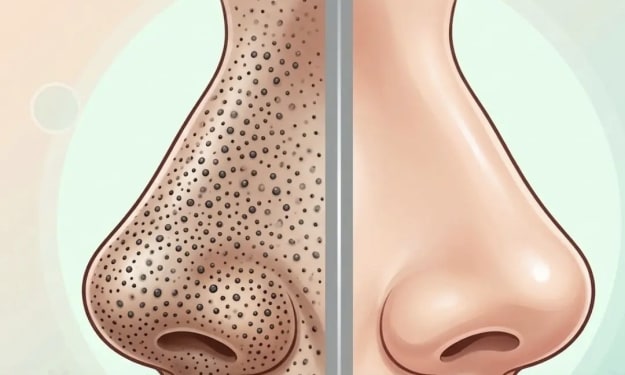
Natural Ways to Clear Blackheads and Whiteheads
Blackheads and whiteheads are very common skin problems that affect people of all ages. They usually appear on the nose, chin, forehead, and sometimes on the cheeks. These small bumps form when the pores of the skin become clogged with oil, dead skin cells, and dirt. Blackheads appear dark because the clogged material inside the pore reacts with air and becomes oxidized, while whiteheads remain covered by skin, giving them a white or flesh-colored appearance.
By DigitalAddi5 days ago in Education
Peter Ayolov’s Publications
Peter Ayolov is a media theorist and lecturer at Sofia University 'St. Kliment Ohridski', Faculty of Journalism and Mass Communication. His research focuses on the political economy of communication, propaganda models, digital media, narrative structures, and the transformation of language in contemporary technological environments. His work examines how digital communication systems organise dissent, amplify outrage, and reshape the relationship between media, public opinion, and political power.
By Peter Ayolovabout 8 hours ago in Education



Comments (1)
Nice work