
Avoiding Email Data Security Breaches
What are Some of the Email Risks?

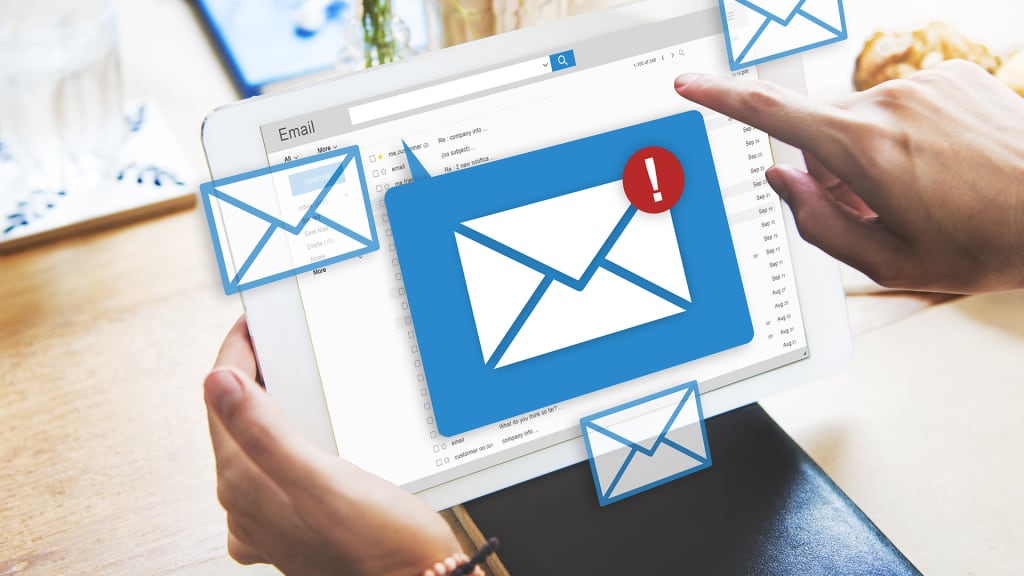
Email is a double-edged sword, offering both advantages and disadvantages in accordance with the GDPR principles. On one hand, it provides the benefit of fast and convenient communication, along with the ability to maintain an audit trail of conversations, promoting transparency and accountability. On the other hand, email poses a substantial information security risk, potentially violating the principles of data protection outlined in the GDPR. In recent years, numerous significant fines imposed by the Information Commissioner's Office (ICO) have been the result of basic human errors in email communication, highlighting the importance of implementing appropriate safeguards and adhering to the GDPR principles to mitigate such risks.
While email allows for quick and efficient correspondence, it is essential to recognize the potential risks associated with mishandling sensitive information or inadvertently sharing confidential data. These risks can lead to severe consequences, including regulatory penalties and damage to an organization's reputation.
Organizations must prioritize proper training and awareness regarding information security best practices when it comes to email usage. This includes educating employees about the importance of double-checking email recipients, avoiding sharing sensitive information through insecure channels, and implementing strong authentication measures to prevent unauthorized access to email accounts.
By promoting a culture of responsible email usage and implementing robust security measures, organizations can mitigate the risks and ensure the confidentiality, integrity, and availability of sensitive information transmitted through email.
What are Some of the Email Risks?
Email communication carries various risks, with one of the most significant being the sending of emails containing personal data to the incorrect email address. This can occur due to several factors, including:
• Typo in the recipient's email address stored in the organization's CRM database.
• Transcription error by the sender when manually entering the email address.
• Selection of an incorrect addressee suggested by the email system's autofill predictive text feature.
• Accidental inclusion of other recipients in the visible "cc" line instead of utilizing the "bcc" (blind copy) option, making them visible to all recipients.
• Risk of sensitive information being forwarded within the email trail by an individual.
These errors become particularly critical when the email contains highly sensitive personal data, such as delicate medical information. The consequences of such seemingly "simple" oversights can be catastrophic, affecting both the individuals involved and the organization sending the email.
The potential impact includes breaches of privacy, violation of data protection regulations, reputational damage, financial penalties, and loss of trust from individuals affected by the data breach. Therefore, it is crucial for organizations to implement robust measures to mitigate these risks, including thorough validation of recipient email addresses, promoting a culture of double-checking before sending sensitive information, and providing regular training on data protection and email security protocols.
How Can We Reduce the Risks?
Indeed, technological solutions can play a vital role in minimizing the risk of staff members causing email data breaches. For instance, some email systems incorporate features that identify unfamiliar or unrecognized email addresses in the "To" field before sending the email. These tools can help catch errors such as database typos or incorrectly addressed emails.
However, it is important to note that these solutions may not address all types of misdirected email risks. For example, they may not detect cases where the sender mistakenly clicks on an autofill suggestion or inadvertently uses the "cc" (visible copy) line instead of the "bcc" (blind copy) line. In these scenarios, the email addresses themselves may be valid, but they have been unintentionally entered in the wrong email or in the wrong line within the email.
To mitigate these risks effectively, organizations need to adopt a multi-faceted approach that combines technological solutions with comprehensive employee training and awareness programs. Such training should educate employees about potential pitfalls related to email communication, emphasize the importance of double-checking recipients and email addresses, and promote best practices for using the "bcc" field when appropriate.
By combining technological safeguards with ongoing education and reinforcement of proper email practices, organizations can significantly reduce the risk of misdirected emails and potential data breaches, safeguarding sensitive information and protecting both individuals and the organization itself.
Need for ‘People’ and ‘Process’ Controls
When technology alone cannot completely eliminate a risk, organizations must focus on the other critical elements of risk management: people and processes. This involves implementing measures to address potential risks through training and establishing proper procedures.
One effective approach is to provide training sessions aimed at emphasizing the importance of pausing for a few seconds before pressing the "Send" button. The goal is to instill a habit among users of double-checking recipient email addresses to ensure accuracy. This approach, often referred to as the "check twice, send once" principle, helps prevent messages from being delivered to unintended recipients due to typos or incorrect addresses, which could lead to unauthorized disclosure of personal data.
Furthermore, users should be reminded to review the entire email trail to ensure that no sensitive information or personal data is inadvertently disclosed within the conversation history. This serves as a reminder to exercise caution when forwarding or replying to emails containing confidential information.
By delivering targeted training sessions and continuously reinforcing these practices, organizations can promote a culture of responsibility and attentiveness among employees when it comes to email communication. This human-centric approach, combined with robust processes and technological safeguards, significantly reduces the risk of data breaches and unauthorized disclosures, ultimately protecting the privacy and security of sensitive information.
Second Pair of Eyes
In organizations that frequently send emails containing sensitive personal information to external recipients, implementing a procedure known as a "second pair of eyes" can be beneficial for mitigating the risk of incorrect addressing. This process involves having an appropriate colleague, such as the email writer's line manager, review the intended sender's email before sending it to ensure that all recipients are correctly specified and the appropriate "cc" or "bcc" line has been used.
The feasibility of adopting a "second pair of eyes" protocol in your organization will depend on various factors. These factors include the volume and frequency of emails containing sensitive personal information being sent, the availability of suitable reviewers, and any existing technical solutions in place. For instance, some automated email software packages allow bulk emails to be sent to individual addressees, eliminating the need to use the "cc" or "bcc" fields and reducing the risk of human error.
It is important to assess the specific needs and circumstances of your organization to determine whether implementing a "second pair of eyes" procedure is practical and effective. This may involve evaluating the workflow, resource availability, and considering any alternative technical solutions that can help minimize the risk of misaddressed emails and protect the confidentiality of sensitive personal information.
Satisfy GDPR Requirements
Principle 6 and Article 32 of the UK GDPR emphasize the importance of implementing appropriate technical and organizational security measures to protect personal data and ensure GDPR compliance. These measures should be proportionate to the level of risk associated with the processing of personal data. When it comes to email security controls, two simple yet effective organizational measures can significantly reduce data risks and contribute to GDPR compliance. These measures can be summarized as "Take a second, or use a second pair of eyes."
By incorporating these measures into your organization's practices, you can enhance email security, protect personal data, and meet the requirements outlined in the UK GDPR. These measures should complement your organization's email acceptable use policy and contribute to an overall framework of data risk reduction in accordance with GDPR compliance.
The first measure, "Take a second," encourages individuals to pause and review their emails before sending them, promoting attention to detail and accuracy. This includes verifying the accuracy of recipient email addresses and ensuring that sensitive information is not inadvertently disclosed in the email content or attachments, thereby aligning with the GDPR's data minimisation principle.
The second measure, "Use a second pair of eyes," involves having an appropriate colleague, such as a line manager, review critical emails containing sensitive personal information before they are sent. This additional level of review helps mitigate the risk of misaddressed emails and provides an opportunity for a fresh perspective to identify any potential errors or omissions, reinforcing the GDPR's emphasis on accountability and risk reduction.
By implementing these practices and aligning them with the principles of the UK GDPR, your organization can enhance email security controls, minimize data risks, and promote a culture of diligence and responsibility when handling personal data, thereby demonstrating GDPR compliance.
About the Creator
Emily Martin
I'm a longstanding GDPR/data protection/privacy specialist with huge experience of both in-house and private practice, gained working across a range of sectors including hi-tech science, media, publishing, higher education, and IT.
Keep reading
More stories from Emily Martin and writers in Education and other communities.
In-house Resource vs Virtual DPO
When considering the resourcing of a Data Protection Officer (DPO), organizations have two main options: the in-house route or the outsourcing route. Each option has its pros and cons, and the choice depends on various factors specific to the organization. Let's explore the advantages and considerations of each option in alignment with the GDPR principles:
By Emily Martin3 years ago in Education
Staying Active at the Gym: How to Avoid Burnout and Stay Consistent
Staying active at the gym offers many physical and mental benefits, but maintaining consistency can be challenging, especially when burnout appears. Many people start with excitement and strong motivation, yet after a few weeks, the pressure to perform or the demands of a busy life can lead to fatigue, boredom, or frustration. Avoiding burnout is essential for long-term success. A healthy fitness routine should support your well-being, not drain your energy or enthusiasm. With the right strategies, you can stay consistent, maintain a positive mindset, and enjoy your workouts for years to come.
By Keith Brautigam7 days ago in Education
The Healing Frontier Russia Medical Tourism Hub in 2026
For decades, medical tourism was a map dominated by the sterile clinics of Switzerland, the bustling hospital hubs of Thailand, and the dental centers of Hungary. However, as we move through 2026, a new titan has emerged in the East. Russia, once seen primarily as a destination for history and culture, has successfully pivoted into a world-class destination for high-quality, cost-effective, and technologically advanced medical care. Driven by massive state investment in the "Healthcare Export" national project and a favorable exchange rate, Russia is drawing millions of patients from across Central Asia, the Middle East, and increasingly, Western Europe. In 2026, the story of Russian medical tourism is one of a "Red Renaissance"—where Soviet-era medical traditions meet 21st-century robotic surgery and luxury wellness.
By Neeraj kumar4 days ago in Education



Comments
There are no comments for this story
Be the first to respond and start the conversation.