
Around 3000 Years Ago: A Glimpse into the World of 1000 BCE
"Across the Continents: Human Civilization 3000 Years Ago"

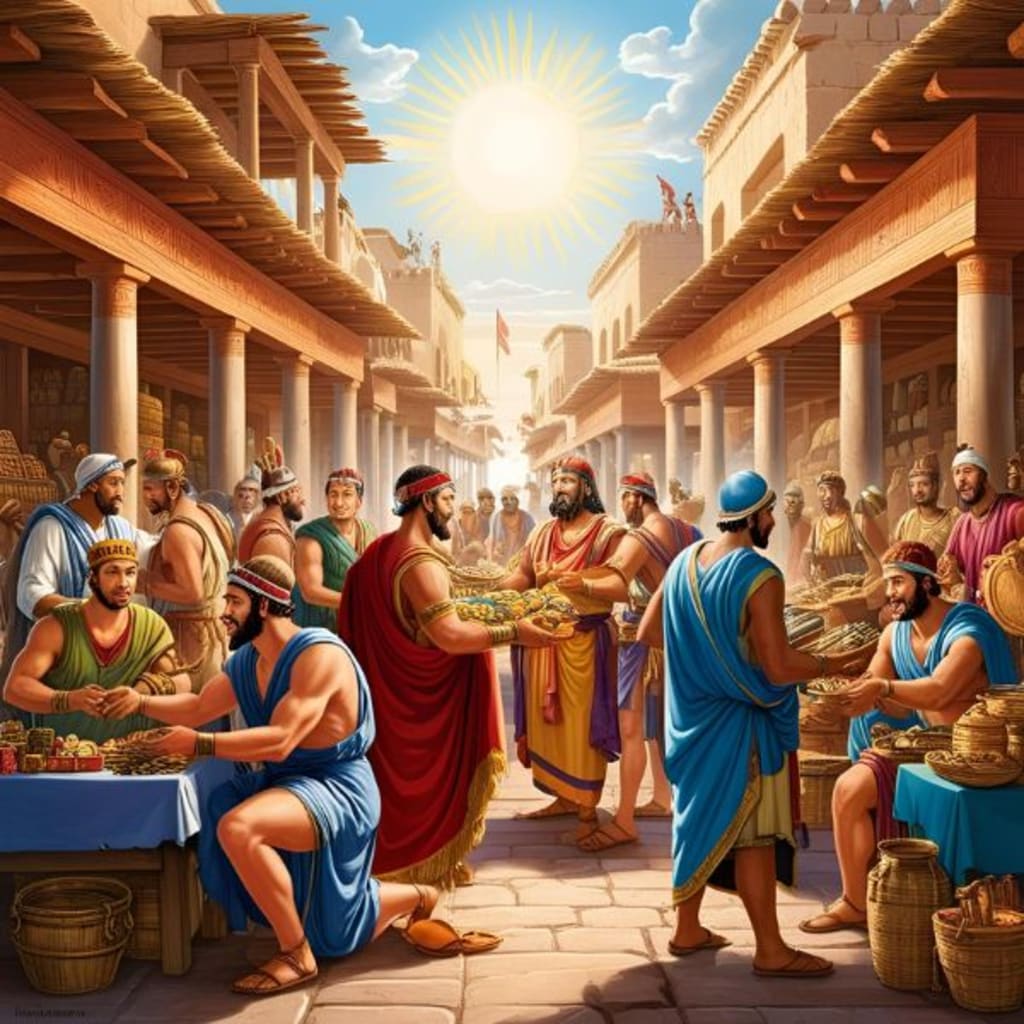
Around 3000 Years Ago: A Glimpse into the World of 1000 BCE
Around 1000 BCE, the world stood at a fascinating crossroads. This was an age of monumental change, transition, and formation. Across continents, civilizations were rising, empires were forming, and the human story was branching out in complex and meaningful ways. Though these societies were separated by vast distances and often had no knowledge of one another, they were all shaping the human experience in ways that would echo for millennia.
The Ancient Near East: Power, Religion, and Innovation
The cradle of civilization, the Ancient Near East, remained one of the most vibrant centers of human activity around 1000 BCE. In Mesopotamia — the fertile land between the Tigris and Euphrates rivers — power had shifted from the once-mighty Sumerian and Akkadian empires to the Assyrians and Babylonians.
The Assyrian Empire was on the rise, known for its formidable military and efficient administration. Around 1000 BCE, Ashur and Nineveh were becoming centers of political and cultural life. The Assyrians would later become known for their brutal conquests, but at this point, they were laying the groundwork for their future dominance.
Babylon, once the jewel of Hammurabi’s domain centuries earlier, had gone through cycles of power but remained culturally and religiously important. Babylonian priests refined astronomical records, developing a calendar and studying the stars — a foundation for later scientific thought.
To the west, the Canaanite city-states thrived along the eastern Mediterranean. These included powerful trading cities like Tyre and Sidon, part of the greater Phoenician world. The Phoenicians were expert shipbuilders and traders, and around 1000 BCE, they were beginning to establish colonies across the Mediterranean, including the early settlement of what would become Carthage.
In the southern Levant, the Kingdom of Israel was either forming or had recently been established, depending on interpretations of historical and biblical sources. King Saul and later King David are traditionally dated to this time, and Jerusalem, the future capital, was gaining political and religious importance.
Egypt: A Civilization in Transition
To the south, Egypt was entering the Third Intermediate Period, a time of political fragmentation and internal struggle. The once-mighty New Kingdom, which had seen the reign of famous pharaohs like Ramses II and Hatshepsut, had collapsed just decades earlier.
Around 1000 BCE, the pharaohs of the 21st Dynasty ruled from Tanis in the north, while powerful High Priests of Amun wielded influence from Thebes in the south. Despite the decentralization of power, Egyptian culture remained resilient. Temples still stood tall, and religious life flourished, especially the cult of Amun.
Meanwhile, Egyptian influence abroad waned. Their control over Canaan and Syria had diminished, allowing other powers — like the rising Israelites and Phoenicians — to fill the vacuum.
Anatolia and the Fall of the Hittites
North of the Levant, in what is modern-day Turkey, the powerful Hittite Empire had collapsed by around 1200 BCE due to a combination of internal strife, invasions, and possibly climate change. By 1000 BCE, the vacuum left by the Hittites had been filled by smaller kingdoms and city-states, such as the Neo-Hittites and the Phrygians.
These new polities continued to use elements of Hittite culture and script, but none could match the scale and coordination of the former empire. Nevertheless, this region remained a crossroads of culture and trade between Mesopotamia, the Aegean, and the Levant.
Greece: The End of the Dark Age
To the west, in the Aegean, Greece was emerging from its own collapse. The Mycenaean civilization, known for its grand palaces and role in the Trojan War myths, had fallen around 1200 BCE. What followed was a period often called the Greek Dark Age — a time of reduced population, loss of writing, and fewer large-scale constructions.
But by around 1000 BCE, signs of recovery were evident. New settlements were forming, iron tools were replacing bronze, and oral traditions — such as the Homeric epics — were beginning to be composed. These epics, including the Iliad and the Odyssey, would later become foundational texts of Greek culture.
This period also saw the beginnings of the Greek polis, or city-state — a structure that would dominate the political landscape of Greece for centuries to come.
Italy and the Etruscans
In Italy, around 1000 BCE, the ancestors of the Etruscans were beginning to organize into more complex societies. The Villanovan culture — the earliest phase of Etruscan civilization — was marked by distinctive pottery and burial customs. This culture laid the groundwork for the later Etruscan civilization, which would greatly influence Rome.
Rome itself did not yet exist as a city, though the Latin people, along with other Italic tribes like the Sabines and Samnites, were settling the area. The Tiber River valley was fertile and promising, but the great Roman legacy was still centuries away.
The Indus Valley: After the Collapse
In South Asia, the Indus Valley Civilization had long since declined. Its major cities like Mohenjo-daro and Harappa had been abandoned by around 1700 BCE. By 1000 BCE, the Indian subcontinent was in a phase often called the Vedic period, named after the Vedas — sacred hymns and texts passed down orally by Indo-Aryan migrants.
These people brought a new language, Sanskrit, and a complex religious system that would evolve into what we now recognize as Hinduism. The caste system began taking shape during this time, and small kingdoms, or janapadas, were forming across northern India.
The Vedic period was not heavily urban but rich in oral culture, ritual, and philosophical thought. Cattle were central to their economy and symbolism, and society was patriarchal and hierarchical.
China: The Shang and the Rise of Zhou
To the east, in China, the Shang Dynasty was nearing its end. The Shang were among the first Chinese dynasties with a written record — mainly on oracle bones, which provide insight into their religious practices, royal lineages, and military campaigns.
Their capital at Anyang was a major center of culture, with impressive bronze work, walled cities, and elaborate tombs. By around 1046 BCE, the Shang were overthrown by the Zhou, who justified their conquest with the concept of the “Mandate of Heaven” — a divine right to rule, conditional upon just governance.
This concept would become a central feature of Chinese political philosophy for centuries. The early Zhou period saw a continuation and expansion of Shang practices but with new ideas about kinship, governance, and cosmic order.
Mesoamerica: The Olmec Horizon
Far across the globe, in the dense jungles of Mesoamerica, the Olmec civilization was reaching its height. Known as the “Mother Culture” of Mesoamerica, the Olmecs inhabited areas along the Gulf Coast of modern-day Mexico.
By 1000 BCE, cities like San Lorenzo had already been built with massive stone heads and ceremonial platforms. The Olmecs developed early writing systems, practiced complex rituals, and may have played the Mesoamerican ballgame — a tradition that would continue for millennia.
Their influence would spread to later civilizations like the Maya and Aztec, and their cultural legacy — from calendar systems to religious iconography — remains one of the most enduring in the Americas.
Sub-Saharan Africa and the Bantu Expansion
South of the Sahara, many societies were still organized in small kinship-based groups, but change was underway. Around 1000 BCE, the Bantu migration — a slow but massive movement of people — was beginning to spread across central and southern Africa.
These Bantu-speaking peoples carried with them ironworking skills, agriculture, and language. Over the centuries, they would shape the cultural and linguistic landscape of sub-Saharan Africa.
In West Africa, the Nok culture, known for its terracotta sculptures, was beginning to form. This early civilization would thrive in what is today Nigeria, producing some of the first known art in sub-Saharan Africa.
The Bronze to Iron Transition
One of the most important technological shifts of this era was the transition from the Bronze Age to the Iron Age. Bronze — an alloy of copper and tin — had long been used for tools and weapons, but its production depended on the availability of tin, which was rare and difficult to trade.
Iron, on the other hand, was more abundant, and around 1200–1000 BCE, iron smelting began to spread widely. Iron tools were harder and more durable, giving advantages in farming and warfare. By 1000 BCE, iron technology had reached much of the Eastern Mediterranean and parts of South Asia and Africa.
This transition had huge consequences: it enabled larger populations to be fed, changed the dynamics of warfare, and allowed new powers to rise that were not dependent on bronze-based trade networks.
Conclusion: A Connected Yet Isolated World
Around 1000 BCE, the world was a tapestry of emerging and collapsing civilizations, rich in diversity, tradition, and innovation. While there was little direct contact between distant regions like Mesoamerica and China, or Africa and Europe, humanity was on parallel paths — building cities, organizing religions, mastering metallurgy, and telling stories.
It was a world in motion. The foundations of many modern cultures, belief systems, and languages were being laid. From the ritual fires of the Vedic priests to the oracle bones of the Shang, from the grand temples of Thebes to the vast forests traversed by Bantu speakers, the echoes of this era still resonate today.
About the Creator
Kazi Mirajul Islam
I am expert in digital Marketing .I am also E- book writer & story writer. I am committed to delivering high-quality content.Also create social media account like Facebook,twitter account ,Instagram ,you tube account create and mained.
Keep reading
More stories from Kazi Mirajul Islam and writers in Education and other communities.
Threads of Frost: How Climate Change Wove a New World
The Strange Beauty That Emerged When the Seasons Broke: We were used to odd weather patterns, of course—spring rains in winter, summer droughts, even the occasional out-of-season hailstorm—but nothing quite like that day. The sun had risen over our small farming town just like it always did, stretching lazy fingers of golden light across the fields of soy and wheat. But by noon, the sky had darkened, and the first snowflakes began to fall.
By Kazi Mirajul Islam9 months ago in Education
Miss Persephone's Manual to a Seemingly Ordinary Life
Miss Persephone was found at the dining table, her blue eyes swollen, her tears arriving and retreating like the tides of the ocean. Earlier that day, her family had visited her in the retirement home where she had lived for eight years. It was her eightieth birthday.
By Imola Tóth2 days ago in Fiction



Comments
There are no comments for this story
Be the first to respond and start the conversation.