
An Alarming Surge in Hearing Loss Across Africa:
A Silent Crisis in Urgent Need of Action
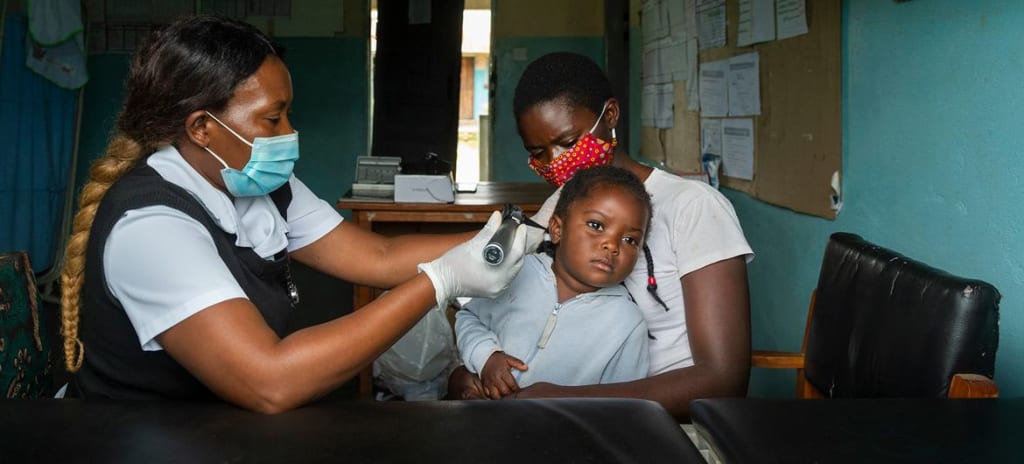
The World Health Organization (WHO) has raised the alarm on a burgeoning crisis, forecasting that the number of individuals in Africa suffering from hearing impairment could escalate to 54 million by 2030 unless swift, decisive action is taken.
In a recent report published on Monday, WHO disclosed that hearing loss, which presently affects 40 million people, exacts an annual toll of $27 million on the continent—severely impacting livelihoods and economies alike.
The report, unveiled at the African Summit on Hearing Impairment in Nairobi, Kenya, emphasizes that the prevalence of hearing impairment overwhelmingly affects impoverished and marginalized communities. Without timely intervention, this growing crisis threatens to deepen existing disparities in access to essential healthcare services.
WHO underscores that the consequences of untreated hearing loss are especially devastating for children, often resulting in significant delays in language acquisition and development. This, in turn, exacerbates the likelihood of poor academic performance and restricted career opportunities later in life.
Adults, on the other hand, frequently face isolation, a heightened risk of depression, and an increased susceptibility to cognitive decline, including dementia.
The report meticulously details the myriads of factors contributing to the escalating rates of hearing loss across WHO’s African Region, which encompasses 47 countries. Paramount among these factors is the glaring shortage of Ear and Hearing Care (EHC) professionals. The distribution of the already scarce workforce is uneven, heavily concentrated in urban centers.
“For instance, over 56 percent of African nations have just one ear, nose, and throat (ENT) specialist for every million inhabitants, whereas Europe boasts an average of 50 specialists per million,” the report elaborates. Moreover, over three-quarters of African countries have fewer than one audiologist and one speech and language therapist per million people.
Although approximately 33 million Africans could benefit from hearing aids, only a paltry 10 percent of the population has access, primarily due to the exorbitant costs associated with EHC and the limited financial support available.
WHO further highlights that in lower-income countries, as much as 75 percent of hearing loss among children is attributable to preventable causes such as infections, congenital ear diseases, and birth complications. Despite this, many nations lack systematic hearing screenings for newborns.
The report points out that even in countries with established EHC frameworks, these services are often not integrated into broader public health initiatives such as school or workplace wellness programs. The situation is further compounded by the absence of comprehensive national policies or their inadequate implementation where they do exist.
An alarming 35 percent of countries, the report reveals, do not allocate any budget for EHC activities, leaving the financial burden squarely on patients’ shoulders.
To mitigate this impending crisis, the report calls on governments to act decisively by using its findings to spur high-level action and craft robust policies that prioritize EHC services. It also advocates for integrating EHC into existing healthcare programs to optimize limited resources. Furthermore,
WHO recommends exploring public-private partnerships as a means of bolstering EHC services, alongside the necessity for dedicated funding to equip facilities and provide critical hearing care technologies.
This rapidly worsening issue, if left unchecked, threatens to not only exacerbate healthcare disparities but also consign millions of individuals to a life of avoidable suffering and diminished opportunity. Urgent action is imperative.
About the Creator
Keep reading
More stories from writers in Education and other communities.
Coaching Leaders to Become Educators: A Strategy for Sustainable Team Development
In today's fast-paced, innovation-driven world, the expectations placed on leaders have grown significantly. No longer is it enough for leaders to make decisions and delegate tasks. Organizations now expect leaders to teach, mentor, and develop others in ways that strengthen long-term team performance. This transition marks a significant shift from authority-based leadership toward a collaborative, growth-focused model.
By Thomas Kuriakose, MD2 days ago in Education
Choose Your Own Adventure: St Helena Station
*****Preface***** I have been obsessed with Choose Your Own Adventure stories since I was a kid. I credit them with my love of reading and writing. I've been struggling to get my own kids to embrace words the same way I have but they love video games and our occasional Dungeon's and Dragon's game... which gave me an idea. I'll write an interactive story. So far its working; my middle son loves it and can't wait for the next section to come out.
By Sandor Szaboa day ago in Fiction


Comments
There are no comments for this story
Be the first to respond and start the conversation.