
Albert Einstein: Unraveling the Life of a Scientific Luminary
Einstein's Journey: From Intellectual Curiosity to Scientific and Humanitarian Legacy
Introduction:
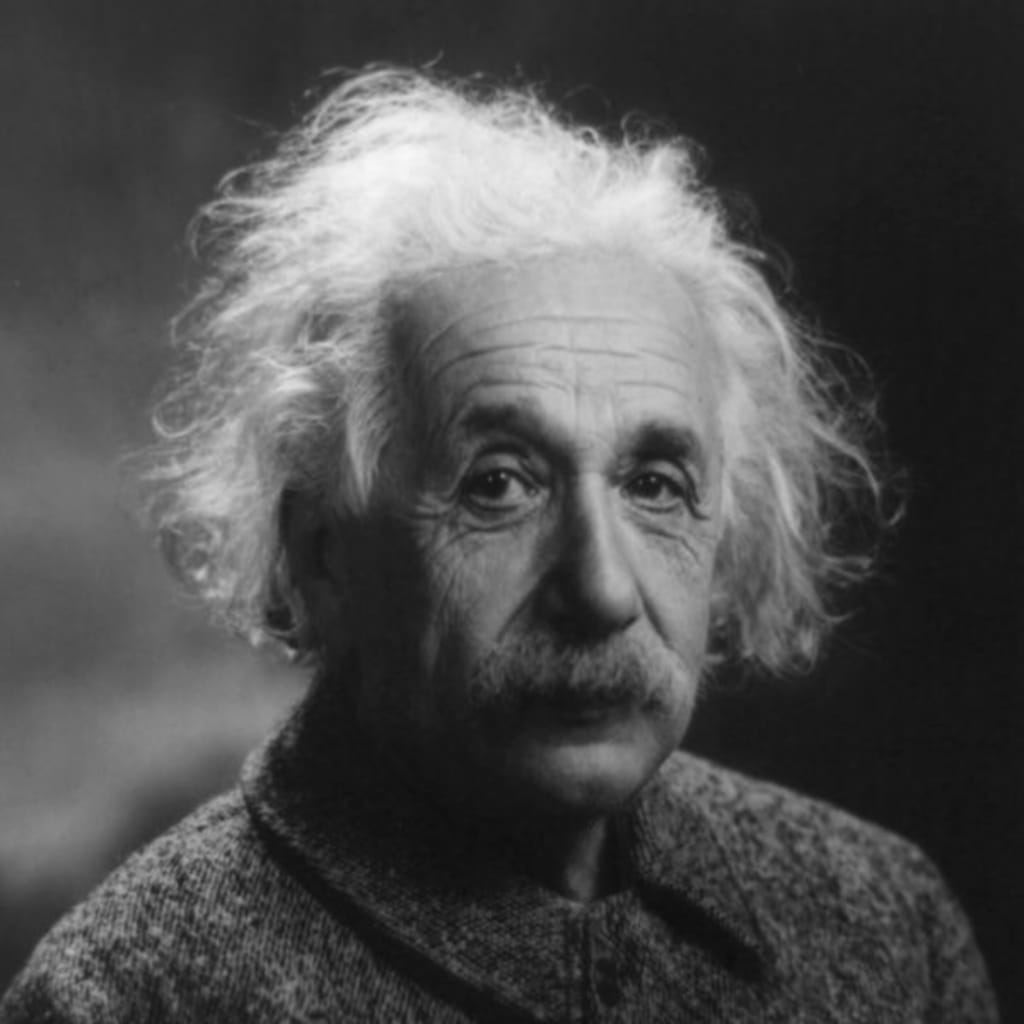
Albert Einstein, born on March 14, 1879, in Ulm, Germany, was a scientific luminary whose remarkable life journey revolutionized our understanding of the universe. From his early years of intellectual curiosity to his groundbreaking scientific discoveries, Einstein's life was marked by unwavering dedication, unparalleled brilliance, and a passion for unraveling the mysteries of the physical world. In this essay, we explore the various stages of Einstein's life, shedding light on his formative years, scientific achievements, and enduring legacy.
Formative Years and Early Intellectual Curiosity:
Einstein's early years were characterized by an insatiable thirst for knowledge and a deep curiosity about the natural world. As a child, he displayed an exceptional aptitude for mathematics and physics, which set the foundation for his future endeavors. Despite facing challenges in his education, Einstein's relentless pursuit of intellectual growth eventually led him to the Swiss Federal Polytechnic in Zurich, where he would embark on his path to scientific greatness.
The Annus Mirabilis Papers and the Theory of Relativity:
In 1905, famously known as Einstein's annus mirabilis (miracle year), he published four groundbreaking papers that reshaped the world of physics. Among these papers was his special theory of relativity, which introduced the concept of the constancy of the speed of light and the equivalence of energy and mass encapsulated in the iconic equation E=mc². This theory revolutionized our understanding of space, time, and motion, propelling Einstein to international acclaim.
General Relativity and the Nature of Gravity:
Einstein's scientific journey continued with the development of his general theory of relativity, presented in 1915. This theory offered a new understanding of gravity by postulating that massive objects curve the fabric of spacetime, causing the force we perceive as gravity. General relativity not only provided a more comprehensive explanation of gravitational phenomena but also predicted the existence of black holes and gravitational waves. It was a testament to Einstein's brilliance that many of his predictions were later confirmed by empirical evidence.
Quantum Mechanics and the Einstein-Podolsky-Rosen Paradox:
While Einstein's work on relativity propelled him to scientific stardom, he maintained a skeptical stance on certain aspects of quantum mechanics. In collaboration with Boris Podolsky and Nathan Rosen, Einstein formulated the famous Einstein-Podolsky-Rosen (EPR) paradox in 1935. The EPR paradox challenged the completeness of quantum mechanics, suggesting that it might not provide a complete description of physical reality. Although Einstein's viewpoint did not prevail, the paradox remains a fundamental concept in ongoing debates about the foundations of quantum theory.
Social Activism and Humanitarian Engagement:
Beyond his scientific achievements, Einstein was a passionate advocate for social justice and human rights. Throughout his life, he utilized his platform to speak out against war, racism, and authoritarianism. Einstein's belief in the power of education and the importance of global cooperation led him to advocate for nuclear disarmament and the establishment of a world government. His tireless efforts earned him admiration and respect as both a scientific genius and a humanitarian.
Conclusion:
Albert Einstein's life was a testament to the transformative power of intellectual curiosity and unwavering dedication to unraveling the mysteries of the universe. His scientific achievements, including the theory of relativity and contributions to quantum mechanics, reshaped the field of physics and continue to inspire new generations of scientists. Moreover, Einstein's commitment to social justice and human rights reminds us of the profound impact one individual can have on the world. His legacy serves as a guiding light, encouraging us to embrace curiosity, critical thinking, and the pursuit of knowledge to push the boundaries of human understanding.
About the Creator
Effective App Site Design: Tips & Best Practices
In today's digital age, an engaging and effective app site design is crucial for capturing and retaining user interest. The right design not only showcases your app but also enhances user experience, making it crucial for converting casual visitors into loyal users. This article explores various aspects of app site design, from UI design ideas to responsive layouts, and provides actionable tips to help your app stand out.
By nandbox support7 days ago in Education




Comments
There are no comments for this story
Be the first to respond and start the conversation.