
AI vs ML for Modern Innovation in 2024
AI and ML
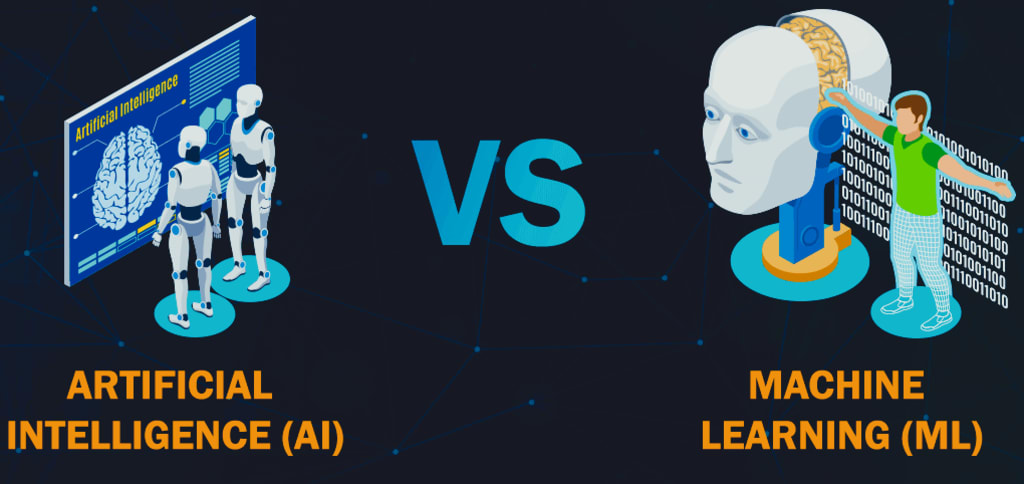
Artificial Intelligence (AI) and Machine Learning (ML) are not only dominating the technology scene in 2024 but also transforming nearly every sector imaginable, from healthcare to finance and education. Both AI and ML have unique characteristics, benefits, and applications, yet many still confuse the two terms. Thus the distinct roles of AI and ML, how they drive innovation today, and what the future holds for each in various industries.
Understanding AI and ML: Definitions and Differences
Artificial Intelligence (AI) is a broad field in computer science focused on creating systems that can perform tasks that usually require human intelligence. AI encompasses everything from natural language processing to robotics, and its applications can be rule-based or learning-based.
Machine Learning (ML) is a subset of AI that enables systems to learn from data, identify patterns, and make decisions with minimal human intervention. ML relies heavily on large datasets and algorithms, training models to improve their accuracy over time without needing to be explicitly programmed for each scenario.
AI for Innovation in 2024
In 2024, AI has emerged as a strategic driver of innovation, creating intelligent systems that provide human-like capabilities and automation:
Generative AI for Content Creation: AI systems like ChatGPT and DALL-E are transforming content creation in writing, visual art, and video, pushing the boundaries of creativity. These tools allow businesses and individuals to generate content on demand, reducing production time and increasing efficiency.
Healthcare Advancements: AI-driven systems analyze patient data to predict outcomes, detect anomalies, and even provide virtual health assistance. AI applications in healthcare range from advanced diagnostic imaging to personalized treatment plans, making healthcare more precise and accessible.
Finance and Fraud Detection: AI is increasingly used to analyze real-time transaction data and detect fraudulent activities. It also enhances personalized banking, providing customers with tailored investment options based on spending and saving habits.
AI in Education: Personalized learning powered by AI has opened up new ways of teaching. Adaptive learning platforms analyze each student's learning pace and provide custom educational resources, helping students achieve better outcomes and engage with their studies.
ML's Role in Driving Industry-Specific Solutions
Machine learning contributes significantly to modern innovation, enabling personalized, predictive, and autonomous solutions across sectors:
Data-Driven Decision-Making: In the business sector, ML is invaluable for analyzing vast amounts of data helping companies make informed, data-driven decisions. ML systems improve efficiencies and enhance decision-making processes by predicting customer behaviour and optimizing supply chains.
Autonomous Vehicles: ML powers the algorithms used in self-driving cars, allowing these vehicles to learn from their surroundings, predict obstacles, and make quick decisions. The transportation sector heavily relies on ML algorithms for safety and operational efficiency.
Enhanced Cybersecurity: ML is fundamental in cybersecurity, where algorithms detect unusual activity and flag potential security breaches. ML models can continuously adapt to new cyber threats, keeping systems safer and data secure.
Retail and E-commerce Personalization: ML algorithms help retail platforms recommend products based on user preferences, shopping history, and trends, delivering personalized shopping experiences that increase user satisfaction and loyalty.
Critical Differences in Use Cases for AI and ML
CategoryArtificial Intelligence (AI)Machine Learning (ML)
Scope: Broader applications, including robotics, NLP, and vision Subset focused on data-driven learning
Decision Making Based on programmed rules and sometimes autonomous Learns patterns to make predictive decisions
Examples: Chatbots, virtual assistants, robotics Recommendation systems, fraud detection
Industries: Healthcare, finance, education, customer service, E-commerce, cybersecurity, logistics
AI vs. ML in 2024: The Path Forward
While AI and ML overlap, their distinction is crucial in defining their roles in future innovation. Here's what we can expect from each technology in 2024 and beyond:
AI for Enhanced Autonomy: AI systems are becoming more autonomous, handling complex processes without continuous human oversight. In healthcare and customer service, we'll see AI making decisions that improve operational flow and user satisfaction.
ML for Precision and Efficiency: ML's strength lies in analyzing and learning from data. Industries focused on big data—such as marketing, logistics, and financial services—will continue to leverage ML to optimize their processes, improve predictions, and reduce costs.
Integration of AI and ML for Hybrid Solutions: Hybrid solutions that combine the power of AI with the adaptability of ML are also on the rise. These systems are particularly beneficial in scenarios requiring continuous learning and real-time decision-making, such as autonomous driving or personalized digital marketing.
Challenges and Ethical Considerations
The rapid growth of AI and ML also brings ethical challenges and requires significant data security measures. Ensuring data privacy, managing algorithm biases, and addressing employment displacement concerns are essential to harnessing these technologies' potential responsibly.
Conclusion
AI and ML are central to modern innovation in 2024, transforming industries' operations and enhancing everyday life. AI's broad capabilities and ML's data-driven insights create robust systems that will continue to advance sectors ranging from healthcare to retail. As we move forward, the fusion of AI and ML will fuel innovation and set the stage for new technologies, making the modern world more efficient, predictive, and personalized.
In this age of rapid technological growth, understanding the unique capabilities of AI and ML helps us appreciate their impact on today's world—and anticipate their role in the future of intelligent innovation.
About the Creator
AI Current Affair
about AI tools, tech and starups with AI
Keep reading
More stories from AI Current Affair and writers in Education and other communities.
The 11 Best Generative AI Tools in 2024
Generative AI tools are transforming how we work, create, and innovate. From writing blog posts and generating stunning visuals to automating code and producing videos, AI-powered tools have become indispensable in industries like marketing, design, technology, and entertainment. In 2024, these tools continue to evolve, offering more power, flexibility, and creativity. Here’s a look at the 11 best generative AI tools in 2024 that are shaping the future of creation and productivity.
By AI Current Affairabout a year ago in Writers
A Practical Guide to Choosing the Perfect Lens for Portrait Photography
Selecting the right lens is one of the most important decisions in portrait photography because it influences perspective, sharpness, background blur, and overall image style. A good lens enhances your creative vision and helps you capture flattering portraits that highlight the subject’s features. Beginners often feel overwhelmed by the many lens options available, but understanding how different focal lengths and lens types affect your results makes the choice much easier. With the right information, you can confidently choose a lens that supports your portrait goals.
By Jeremy Berman Findlay Ohioabout 3 hours ago in Education
What Caused the Big Bang?
Understanding the Big Bang Theory The Big Bang does not describe an explosion in space. Instead, it describes an expansion of space itself. At the beginning, all matter, energy, space, and time were compressed into an extremely small, hot, and dense state.
By shahkar jalalabout 5 hours ago in Education



Comments
There are no comments for this story
Be the first to respond and start the conversation.