
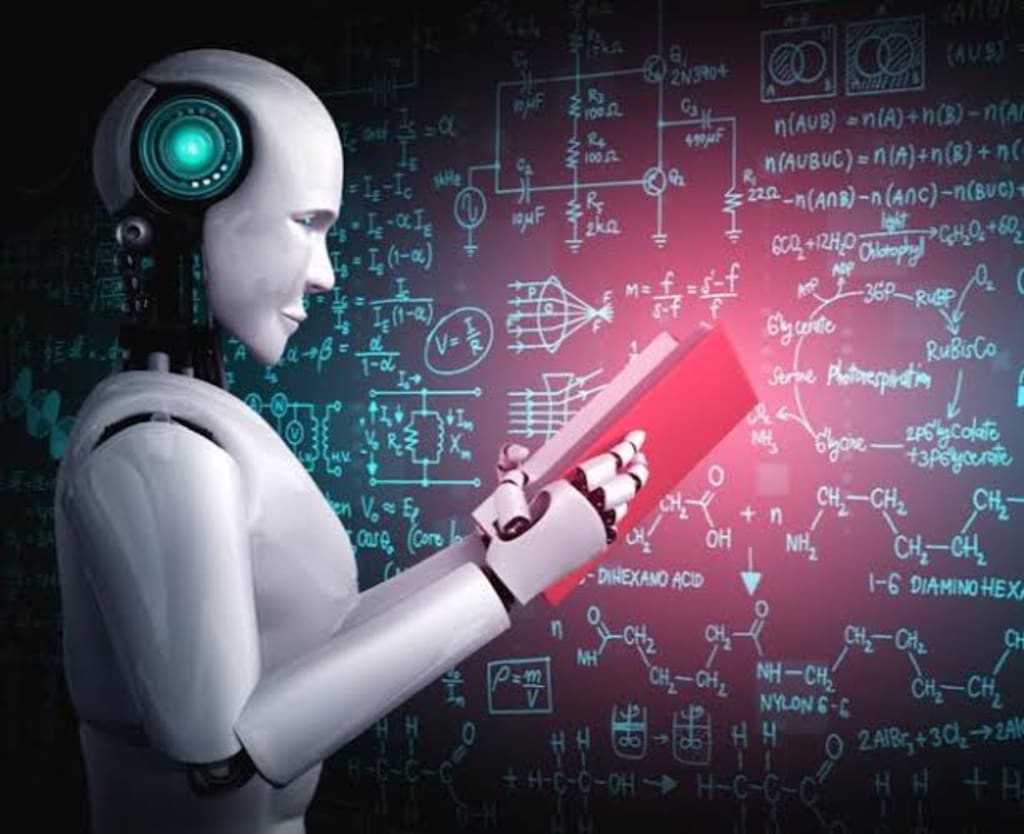
All you need to know about ai technology
Artificial intelligence, also known as AI, has been one of the most sensationalized topics in the world for the past decade. AI technology is currently being used in a wide range of industries, and it is considered to be one of the most transformative technologies of our time. In this article, we will take a closer look at AI technology and how it has impacted our lives. What is AI Technology? AI technology is the creation of intelligent machines that can think and perform tasks that usually require human intelligence, such as problem-solving, decision making, and natural language processing. AI uses complex algorithms to learn from data, patterns, and experiences and improve its accuracy, speed, and efficiency over time. AI technology can be categorized into three types: narrow or weak AI, general or strong AI, and superintelligence. Narrow or weak AI is designed to perform a specific task, such as voice recognition or image classification. General or strong AI is capable of performing any intellectual task that a human can do, and superintelligence is beyond human intellectual capabilities. Uses of AI in Our Lives AI technology is used in a wide range of applications, from personal to commercial. Some examples of how AI has impacted our lives include: 1. Personal assistants: AI-powered personal assistants, such as Siri, Alexa, and Google Assistant, help us manage our daily tasks, schedule appointments and reminders, and even answer questions. 2. E-commerce: Many e-commerce websites use AI algorithms to recommend products based on our browsing history and purchase behavior. 3. Healthcare: AI is used in the healthcare industry to improve disease diagnosis, drug development, and patient care. 4. Agriculture: AI has been used in the agriculture industry to improve crop yields, manage soil health, and predict weather conditions. 5. Transportation: Self-driving cars use AI technology to make decisions and navigate roads safely. Challenges and Risks While AI technology has brought significant benefits to our lives, it also poses some risks and challenges. Some of the challenges associated with AI include: 1. Bias: AI algorithms can perpetuate bias and discrimination if they are trained on biased data or designed without considering the diverse needs of users. 2. Job displacement: AI technology may replace or automate jobs, leading to unemployment and income inequality. 3. Security and privacy: AI systems may be vulnerable to cyber attacks, and the use of personal data in AI algorithms raises privacy concerns. 4. Ethics: There are ethical concerns associated with the use of AI in areas such as autonomous weapons, surveillance, and decision making. AI technology is still in its early stages, and its impact on our lives is expected to grow exponentially in the coming years. As we continue to develop and use AI, it is crucial to address the challenges and risks associated with this technology and ensure that it benefits society as a whole. Artificial Intelligence (AI) technology has come a long way since its inception in the mid-20th century. Today, AI is quickly transforming the way we live and work, and its use is set to continue growing in the future. In this article, we will examine some of the key trends driving the future of AI technology. 1. Increasing automation One of the most significant trends in AI technology is the increasing automation of tasks that were previously performed by humans. This is being driven by a few factors, including the desire to reduce costs and increase efficiency in industries ranging from manufacturing to healthcare. As automation continues to become more prevalent, it will reshape the job market, with some roles becoming obsolete and others requiring new skills. 2. Growth in machine learning capabilities Machine learning is a type of AI that allows computer systems to learn from data and improve their performance without being explicitly programmed. As more data becomes available, machine learning capabilities are expected to continue growing at an exponential rate, enabling computers to perform more complex tasks and make more accurate predictions. This will have implications across a wide range of industries, from marketing to healthcare. 3. Advancements in natural language processing Natural language processing (NLP) is a subfield of AI that focuses on teaching computers to understand and interact with human language. NLP has applications in a wide range of areas, from virtual assistants like Siri and Alexa to customer service chatbots. As NLP technology continues to advance, we can expect to see more complex and sophisticated applications that make human-computer interaction more seamless and intuitive. 4. Increase in personalized solutions As AI technologies become more sophisticated, it will become easier to create personalized solutions that cater to individual needs and preferences. This has implications in healthcare, where personalized medicine is becoming increasingly important, as well as in marketing, where companies can create bespoke experiences for customers based on their individual interests and behaviors. 5. Concerns around ethics and bias As AI technology continues to grow and mature, it is becoming increasingly important to consider the ethical implications of its use. For example, there are concerns around the potential for AI systems to perpetuate biases and discrimination if the data used to train them is inherently biased. As AI becomes more widespread, it will be essential to embed ethical considerations into its development and use. In conclusion, AI technology is set to continue transforming the way we live and work in the coming years. From increasing automation to advancements in natural language processing and machine learning, AI will enable us to solve problems and improve our lives in new and exciting ways. However, as its use becomes more widespread, it will be crucial to consider its ethical implications and ensure that it is developed and used in a responsible and safe manner. AI technology has been developed by a large number of researchers and organizations over several decades. Some pioneers in the field of AI include John McCarthy, Marvin Minsky, and the early members of the Dartmouth Conference, who first coined the term "artificial intelligence" in the 1950s. In recent years, major technology companies such as Google, Facebook, and IBM have also invested heavily in AI research and development. Artificial intelligence (AI), which refers to machines and systems that can perform tasks that would normally require human intelligence, has become a ubiquitous part of modern life. From voice assistants like Siri and Alexa to self-driving cars and recommendation algorithms, AI is all around us. But have you ever wondered where it all began? The first AI was created back in the 1950s, when computer scientist John McCarthy coined the term "artificial intelligence" and began to develop the field as we know it today. The earliest AI systems were created using a technique called rule-based systems, which involved coding a set of rules and actions that a machine could follow in order to make decisions. These systems were limited in their capabilities and could only perform tasks within a narrow domain. In the 1960s, researchers began to explore the idea of machine learning, which involves using algorithms to analyze data and learn from it without being explicitly programmed. This approach led to the creation of neural networks, which attempt to mimic the way the human brain works by breaking down information into smaller pieces and processing it in parallel. Despite these early breakthroughs, progress in AI was slow for many decades. It wasn't until the late 1990s that deep learning, a form of machine learning that uses multiple layers of interconnected nodes to process information, began to gain traction in the research community. Today, deep learning is responsible for many of the most impressive AI breakthroughs, from image recognition to natural language processing. AI systems can now beat humans at complex games like chess and Go, write poetry and music, and even create art. Of course, there are still many challenges ahead for AI. These include issues around bias, privacy, and accountability. As AI becomes more powerful and integrated into our daily lives, it's important for researchers and policymakers to work together to ensure that these systems are safe, ethical, and beneficial for all. But for now, let's marvel at the amazing technological feats that AI has accomplished since its humble beginnings over six decades ago. The first AI may have been simple and limited, but it paved the way for a future where machines can do things that were once the exclusive domain of humans
About the Creator
Keep reading
More stories from writers in Education and other communities.
Understanding PMP Certification in Pakistan: A Guide for Project Professionals
As industries in Pakistan continue to expand and modernize, the need for skilled project managers is becoming increasingly clear. From IT and telecom to construction, healthcare, and finance, organizations rely on structured project leadership to deliver results on time and within budget. One credential that frequently enters this conversation is the PMP certification in Pakistan, a globally recognized qualification for experienced project managers.
By James Mburu5 days ago in Education
Off the Book
It ended like every other stupid idea: badly, and by himself. He stated, “I’m researching digital confession ethics.” A tech ethics expert. He pointed at floating data I couldn’t see, then pulled out a physical notebook. Real paper. A fountain pen. He held it up like scripture.
By Silent Truth 4 days ago in Education
~ Fired ~
— Ai Intrusion ~ Are you Next ~ Is Ai Evolution after your job? — Few workplaces haven't been affected. Ai is in supermarkets, at doctors' offices, and even monitoring farms. I just can't think of anything this machine is not getting into, can you? For instance: Education ~ Law and Tech jobs will one day have a major influence or be taken over by these inanimate machines, with accuracy and vigor. From mechanics' diagnoses to a wide variety of everyday jobs, including fast food workers, with this input having the ability to cut their unnecessary work hours. I'm certain all of us have been touched by this with our short stories and colorful headings, have you? Even comments are very questionable 'Non-Robot' insertions.
By Jay Kantor2 days ago in Journal


Comments (2)
Beautiful ❤️
A very good and very understanding article on Ami technology