
AI Revolutionizes Data Compression: Doubling Efficiency Across Media
The Future of Data Storage: AI's Role in Advanced Compression Algorithms

In a significant leap forward for data storage and transmission, artificial intelligence (AI) has revolutionized data compression algorithms, achieving performance levels previously thought unattainable. Recent advancements have demonstrated that AI-powered compression techniques can outperform traditional methods by substantial margins, offering enhanced efficiency across various data types.
The Evolution of Data Compression
Data compression is essential for reducing the size of digital files, facilitating faster transmission and efficient storage. Traditional compression algorithms, such as Huffman coding, Lempel-Ziv-Welch (LZW), and DEFLATE, have been the backbone of data compression for decades. While effective, these methods rely on predefined rules and often struggle with complex, unstructured data.
The advent of AI, particularly large language models (LLMs), has introduced a paradigm shift. By leveraging deep learning, AI can identify intricate patterns and redundancies in data, enabling more effective compression strategies.

Introducing LMCompress: A Breakthrough in AI Compression
A team of researchers from institutions including the Central China Institute of Artificial Intelligence and the University of Waterloo has developed LMCompress, an AI-driven lossless data compression algorithm. Utilizing LLMs, LMCompress has demonstrated the ability to double compression rates compared to traditional methods across various data types, including text, images, audio, and video.
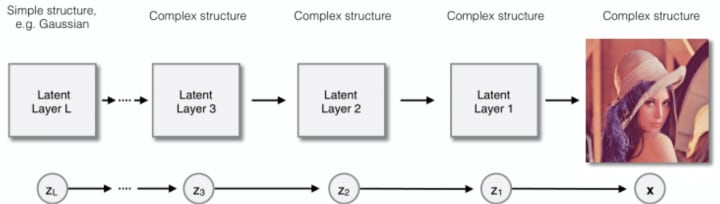
The core innovation of LMCompress lies in its predictive capabilities. By understanding the structure and semantics of the data, the AI model can anticipate subsequent information, reducing the need to store redundant data. This approach not only enhances compression efficiency but also maintains data integrity, a critical aspect of lossless compression.
Comparative Performance: AI vs. Traditional Methods
In rigorous testing, LMCompress consistently outperformed established compression algorithms. For instance, in text compression, it achieved more than twice the efficiency of classical algorithms. Similar improvements were observed in image and audio compression, with video compression also showing significant gains .
These advancements are not limited to theoretical scenarios. The practical applications of AI-driven compression are vast, impacting industries ranging from telecommunications to cloud storage, where efficient data handling is paramount.
The success of AI in data compression has far-reaching implications. Enhanced compression algorithms can lead to reduced bandwidth usage, lower storage costs, and improved data transmission speeds. This is particularly beneficial in areas with limited connectivity, where efficient data handling can bridge digital divides.
Moreover, the principles underlying AI compression techniques could inform advancements in other domains, such as data encryption and error correction, further enhancing the robustness and efficiency of digital communications.
Performance Across Data Types
LMCompress has demonstrated superior performance in compressing various data types:
Text: Achieves up to four times better compression ratios compared to traditional methods like bzip2.
Images: Surpasses JPEG-XL by achieving double the compression efficiency
Audio: Outperforms FLAC, offering twice the compression capability.
Video: Exceeds H.264 standards with nearly double the compression rates .
These improvements are particularly noteworthy given that even a 1% enhancement in compression efficiency is considered significant in the field.
Implications and Future Prospects
The adoption of AI-driven compression algorithms like LMCompress has far-reaching implications:
Storage Efficiency: Enhanced compression reduces the need for extensive storage infrastructure, leading to cost savings.
Bandwidth Optimization: Smaller file sizes facilitate faster data transmission, improving network efficiency.
Energy Conservation: Reduced data volumes contribute to lower energy consumption in data centers.
Enhanced Data Security: Efficient compression can complement encryption methods, bolstering data security protocols.
As data generation continues to accelerate, the integration of AI in compression algorithms like LMCompress will be crucial in managing and utilizing data effectively
Conclusion
The integration of AI into data compression marks a transformative moment in digital technology. By surpassing the limitations of traditional algorithms, AI-driven methods like LMCompress offer unprecedented efficiency and open new avenues for innovation. As research continues to evolve, we can anticipate even more sophisticated compression solutions, fundamentally reshaping how we store and transmit data in the digital age.
About the Creator
Pearl
1980 something. we all hung out at Pearl and you and i were nothing special, or so i thought. i mean we all danced, drenched in our own sweat, our own saline solution of fear, too many beers, shots, laughter, tears, fucks in the bathroom and i don't know when we began to be afraid. do you?
By ROCK aka Andrea Polla (Simmons)4 days ago in Fiction




Comments
There are no comments for this story
Be the first to respond and start the conversation.