
AI Revolution
How Artificial Intelligence is Transforming the World

Auther Name (Hazratullah)
Artificial Intelligence, mostly known as AI, has become one of the most powerful forces of the twenty–first century. What was once considered imagination in science fiction is now part of our daily routines. AI is not just improving machines; it is reshaping the foundations of human society. From the hospitals that treat patients, to the banks that run economies, to the classrooms that teach children, AI is leaving a deep mark on almost every corner of the world.
To understand this revolution, it is important to realize that AI is not a single tool but a wide collection of technologies. Machine learning, natural language processing, robotics, and computer vision all fall under this umbrella. Together, they allow computers to learn from experience, analyze huge amounts of data, and make decisions faster than any human could. This ability has introduced both great opportunities and new challenges.
One of the most striking examples of AI’s influence can be seen in healthcare. In the past, diagnosis was a slow and often uncertain process. Today, AI systems can scan medical images in seconds and highlight details that might be invisible to human eyes. Early detection of diseases like cancer or heart problems has saved countless lives. AI–driven robots are even assisting surgeons in operating rooms, performing precise movements that reduce the risks of human error. On top of that, predictive models are helping doctors design personalized treatment plans tailored to each patient’s unique history.
The financial sector has also undergone a dramatic transformation. Banks and investment companies now rely heavily on AI algorithms to detect fraud, track suspicious transactions, and analyze stock market movements. These tools allow financial experts to make decisions with a higher degree of accuracy. Automated trading systems, driven by AI, execute thousands of transactions in milliseconds, shaping markets in ways that were unthinkable just a few decades ago. For ordinary people, AI provides smart banking apps that manage spending, suggest savings strategies, and even offer financial advice.
Education is another area experiencing rapid change. Traditional classrooms, where a single teacher delivered the same lesson to all students, are slowly being replaced by hybrid models. AI–powered learning platforms can evaluate a student’s progress and design lessons that match their personal needs. A child who struggles with mathematics can receive extra practice problems, while another who excels in literature may be given more advanced texts. Teachers benefit as well, since AI tools can grade assignments, prepare reports, and free up time for them to focus on creativity and mentorship.
Outside of specialized sectors, AI is deeply woven into the daily life of ordinary people. Digital assistants like Siri, Alexa, and Google Assistant have become trusted companions for millions, helping with reminders, entertainment, and even home management. Online shops use recommendation systems to suggest products customers are most likely to purchase. Streaming platforms guide users toward movies and music they will enjoy. Social media networks rely on AI to organize feeds, target advertisements, and connect users with new communities. Every click, search, or swipe is quietly influenced by machine intelligence.
But this revolution also raises serious concerns. One major debate surrounds the impact of AI on jobs. Machines are now capable of doing tasks once reserved for humans—driving vehicles, answering customer service calls, and even writing articles. While this leads to efficiency, it can also result in unemployment if societies fail to adapt. Another pressing issue is privacy. Since AI depends on massive amounts of data, personal information can easily be misused if not properly protected. Governments and companies face the challenge of building policies that balance innovation with security and ethics.
Despite these worries, the potential benefits of AI are extraordinary. Environmental scientists are using AI models to predict climate change patterns, analyze pollution, and suggest solutions for renewable energy. In agriculture, intelligent systems monitor soil conditions and recommend the best times for planting and harvesting, increasing crop production and reducing waste. During global health crises, AI helps track the spread of disease, design vaccines, and coordinate emergency responses faster than ever before.
Creativity, once thought to be uniquely human, is also being reshaped by AI. Writers use AI programs to brainstorm new ideas or check the flow of their narratives. Musicians compose songs with the help of smart tools that generate melodies. Painters and digital artists experiment with AI–generated images that push the boundaries of imagination. These collaborations are not about replacing human creativity, but about expanding its limits.
At the same time, society must remain cautious. AI systems are only as reliable as the data fed into them. Biased or incomplete data can result in unfair decisions, whether in hiring processes, law enforcement, or healthcare. Overreliance on machines might also weaken human problem–solving skills if people stop questioning the outcomes AI produces. Building a responsible future requires transparency, accountability, and continuous human oversight.
The AI revolution, therefore, is a double–edged sword. On one side, it brings progress, innovation, and solutions to humanity’s greatest challenges. On the other, it carries risks that could reshape society in harmful ways if left unchecked. What will matter most is how humans choose to guide this technology. Instead of asking whether AI will control the future, we should be asking how wisely we are willing to use it.
In conclusion, Artificial Intelligence is not just a passing trend; it is the backbone of a new era. It is changing how we live, work, learn, and dream. The world is entering a stage where humans and intelligent machines will exist side by side. By building ethical standards, promoting education, and encouraging innovation, humanity can ensure that this revolution becomes a source of collective progress rather than division. The story of AI is ultimately the story of how humans decide to write their future—with wisdom, balance, and vision.
About the Creator
Keep reading
More stories from Asmatullah and writers in Education and other communities.
Thirst of the Crow
It was a hot summer day. The sun blazed high in the sky, and the land was burning like fire. In the middle of a dry and empty field, a crow flew slowly, his wings heavy with exhaustion. He had been searching for water for days, but every stream had dried, every pond had turned to dust, and the green fields had become barren.
By Asmatullah6 months ago in Education
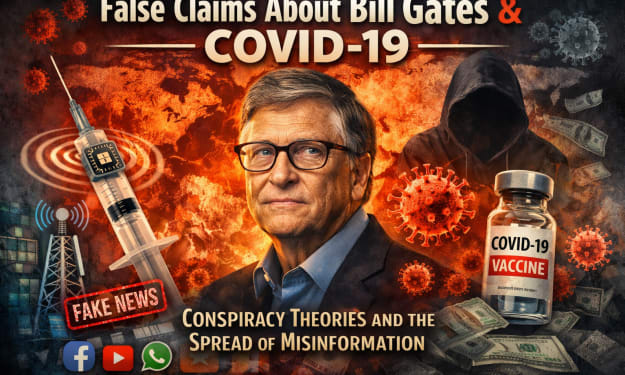
How False Claims About Bill Gates and COVID-19 Spread Online
The COVID-19 pandemic was one of the most disruptive global events in recent memory. With fear, uncertainty, and rapidly changing science driving public discourse, misinformation spread almost as quickly as the virus itself. Among the many unfounded claims that circulated, one of the most persistent involved Microsoft co-founder Bill Gates — wrongly accused of using the pandemic for personal gain, control, or even population manipulation. But why did such false narratives take hold, and how did Bill Gates become a focal point of COVID-related conspiracy theories?
By Irshad Abbasi 4 days ago in Education
The Future of Hospitality Distribution: Marketplaces as the Central Hub
The hospitality industry has always depended on distribution to connect properties with travelers. For decades, hotels relied on direct bookings, travel agents, and later online travel agencies to reach global audiences. However, the digital transformation of travel has reshaped this landscape. Today, marketplaces are evolving into central hubs that unify visibility, pricing, guest engagement, and transaction management. As technology advances and traveler expectations rise, marketplaces are set to play an even more dominant role in hospitality distribution.
By Jason Nissen3 days ago in Education



Comments
There are no comments for this story
Be the first to respond and start the conversation.