
AI-Powered MCAT Tutoring: Is It Better Than Traditional Methods?
Comparing Technology-Driven Learning with Expert Human Guidance for MCAT Success
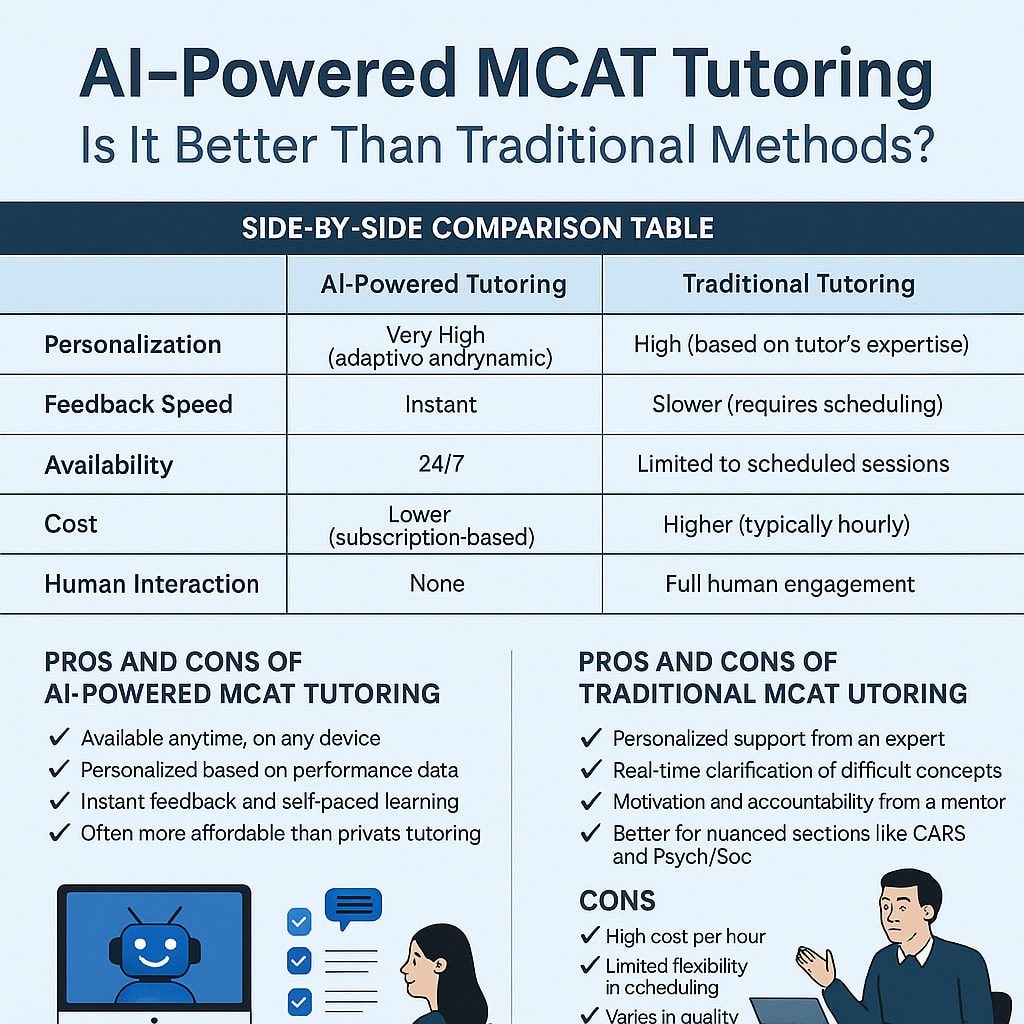
In recent years, artificial intelligence has rapidly changed the way students prepare for standardized exams and the MCAT is no exception. As pre-med students face increasing pressure to achieve competitive scores, many are turning to AI-powered tutoring platforms as a modern alternative to traditional one-on-one instruction. But with so many new tools on the market, one big question remains: Is AI-powered MCAT tutoring actually better than traditional methods?
Traditional MCAT tutoring has long been considered the gold standard offering personalized feedback, real-time support, and a structured learning environment. However, these services often come at a steep price and require rigid scheduling. By contrast, AI-driven platforms promise round-the-clock access, adaptive learning paths, instant feedback, and more affordable pricing. They use machine learning algorithms to tailor study sessions to a student's specific strengths and weaknesses, creating a highly personalized experience without the need for a live tutor.
The appeal of AI-based tutoring is clear, especially for self-motivated learners and those on tight budgets. But not every section of the MCAT or every type of student may benefit equally. For instance, can an algorithm truly teach the nuance required for the CARS section? And what about the human motivation and emotional support many students rely on?
In this article, we’ll dive deep into the differences between AI-powered and traditional MCAT tutoring, comparing their features, pros and cons, pricing, and ideal use cases. Whether you’re just starting your MCAT journey or looking to boost your score in the final weeks, this guide will help you decide which method or combination is best for your goals.
What Is AI-Powered MCAT Tutoring?
Artificial intelligence-powered MCAT tutoring uses AI technologies to generate individualized learning programs that base their operations on student performance data for Medical College Admission Test preparation. The tools process student performance data through algorithms which detect patterns and forecast weak points while modifying the content delivery based on student needs. AI tutors modify their instruction according to student learning characteristics and individual pace along with their understanding of concepts. The system enhances its biochemistry test questions by increasing their complexity and frequency until students achieve mastery of amino acid concepts. The customized study approach eliminates unnecessary study hours by directing students toward essential topics that require improvement.
The AI-supported MCAT preparation platforms which students can choose from include Blueprint's Smart Study Planner and Kaplan's adaptive Qbank and UWorld's AI-based analytics. Students access these platforms through a single system that integrates practice questions with passage-based drills and content reviews and performance dashboards.
AI tools deliver immediate feedback together with thorough answer explanations as well as predictive scoring functions. The test simulation platform combined with precise progress tracking enables students to develop their confidence while they track their development.
While AI-powered tutoring does not include face-to-face interaction with a human expert, it makes up for it with accessibility, scalability, and precision. For students who prefer learning independently or have unpredictable schedules, AI tutoring offers a flexible and affordable path to MCAT readiness.
Pros and Cons of AI-Powered MCAT Tutoring
Pros:
- Available anytime, on any device
- Personalized based on performance data
- Instant feedback and self-paced learning
- Often more affordable than private tutoring
Cons:
- No human interaction or real-time discussion
- Limited emotional support or encouragement
- May not handle complex reasoning questions well
- Requires self-discipline and motivation
Pros and Cons of Traditional MCAT Tutoring
- Pros:
- Personalized support from an expert
- Real-time clarification of difficult concepts
- Motivation and accountability from a mentor
- Better for nuanced sections like CARS and Psych/Soc
Cons:
- High cost per hour
- Limited flexibility in scheduling
- Varies in quality based on tutor’s experience
- Not ideal for budget-conscious students
What Do Students Say?
Student experiences with both AI and traditional tutoring are varied but insightful. Many pre-meds report using a hybrid approach. They use AI tools like UWorld, Blueprint, or ChatGPT-based platforms for regular practice and content review, and reserve live tutoring sessions for strategy or clarification.
Users on Reddit and pre-med forums show appreciation for the flexibility that AI tools provide. Several students demonstrated significant score enhancements within weeks particularly in the science-intensive sections. The majority agree that AI tools served as helpful tools for material review but proved insufficient to fully master CARS or maintain consistent motivation.
A typical perspective indicates that AI provides excellent support for starting points and material review yet students require a tutor for developing effective test strategies and managing time efficiently.
Best Use Cases for Each
AI Tutoring Works Best For:
- Independent learners who prefer studying on their own schedule
- Students looking for affordable review tools
- Early-phase learners building foundational knowledge
- Repetition-heavy sections like Biology or General Chemistry
Traditional Tutoring Works Best For:
- Students who need accountability or structure
- Those struggling with high-level reasoning or strategy
- Learners aiming for score boosts in the final phase of prep
- CARS section, which often requires nuanced feedback
Cost Breakdown
AI-powered platforms typically charge between $50 to $300 per month, depending on features and access level. Many include diagnostic tools, full-length exams, and practice questions in that price.
Traditional tutoring often costs between $75 and $250 per hour. A comprehensive program may involve 10 to 30 sessions, bringing the total to several thousand dollars.
Some companies offer hybrid programs, combining AI with live coaching sessions. These models offer the flexibility of AI with the human touch of personalized mentoring, often at a lower total cost than private tutoring alone.
Final Verdict
There is no one-size-fits-all answer. The better option depends on your goals, learning style, schedule, and budget.
Students who have an independent learning approach and strong base knowledge can benefit greatly from AI-based tutoring because it delivers efficient affordable educational solutions. The value of traditional tutoring remains high when students require organized learning frameworks and extra motivation and assistance with advanced reasoning challenges.
Most students should pick a learning approach that merges both methods. Students should employ AI tools to develop content understanding and monitor their progress before arranging human tutoring appointments to address difficult questions and improve strategic approaches.
About the Creator
Keep reading
More stories from Cynthia Williams and writers in Education and other communities.
Top MCAT Tutoring Strategies to Boost Your Score
If you’re aiming for med school, you already know the MCAT is no ordinary exam. It’s long, tough, and often the single biggest hurdle between you and that white coat. That’s why more and more students are turning to MCAT tutoring and expert-led prep classes to get ahead.
By Cynthia Williams6 months ago in Education
A Complete Guide to Monitoring and Automating Managed Infrastructure Performance
Modern IT environments are complex, fast-moving, and unforgiving. If your systems slow down, fail, or scale poorly, the business pays the price. That’s why monitoring and automation are not optional—they are survival tools in Managed Infrastructure.
By Prateek Sharmaa day ago in Education
The Path to Salvation
The late autumn evening air filled the monk's lungs, but it wasn't the season that chilled his bones. The heavy-handed presence of evil he had sensed upon entering the woods surrounding this mountain village had not bothered to conceal itself from him.
By Made in DNA4 days ago in Fiction




Comments (1)
Valuable content