
If We Stop Eating Sugar for a Year, What Will Happen?
Weight Loss Was Easy. Living With It Wasn’t.


If We Stop Eating Sugar for a Year, What Will Happen?
I didn’t quit sugar because I hated it.
I quit because I wanted to see what would happen if I took it out of my life completely—no bread, no rice, no noodles, no desserts, no sneaky added sugars hiding in labels I used to trust. Just fruit, fiber, protein, and fat.
I told myself it would be an experiment. One year. Nothing dramatic. Just curiosity.
Four months in, I was sixteen kilograms lighter.
The weight loss didn’t feel heroic. There were no grueling workouts or white-knuckled hunger battles. In fact, hunger mostly disappeared. Meals became simple. My appetite shrank. My energy was steady in a way I’d never experienced before. No crashes. No afternoon fog. My body felt calm, like it had finally stopped shouting for fuel.
For the first time in years, food wasn’t the loudest voice in my head.
People noticed. Compliments arrived daily. “You look amazing.” “What’s your secret?” I smiled and said, “I stopped eating sugar,” like it was a casual choice, like it didn’t feel a little revolutionary every time I passed a bakery without looking twice.
It felt like I’d cracked a code no one talked about honestly.
Then something else happened.
It started quietly. A strange sharpness in my sweat. At first, I thought it was my deodorant. Then the weather warmed. Summer came. I sweated more. And the smell didn’t fade—it intensified.
It was ammonia. Strong. Unmistakable.
I checked my clothes. I checked myself obsessively. I showered more. Nothing helped. It followed me to work, into rooms, into conversations. I could smell it before anyone else said a word, which somehow made it worse. You don’t need confirmation when embarrassment arrives early and stays late.
A doctor later explained it simply: I had changed my body’s chemistry.
With almost no carbohydrates coming in, my body had switched fuels. Fat and protein became the primary energy sources. Excess nitrogen—byproducts of protein breakdown—had to go somewhere. Some of it left through sweat. Through breath. Through me.
For some people, this barely registers. For others, it announces itself.
I tried to fix it without quitting. I added light carbs. I stayed under fifty grams a day. I negotiated with my own metabolism like it was a stubborn roommate. Nothing worked. My body had chosen a lane, and it wasn’t interested in compromise.
Then COVID arrived. Structure disappeared. Social life shrank. And eventually, so did my resolve.
I went back to carbs.
The smell faded. My body relaxed. My social anxiety eased. And slowly, predictably, the weight returned—every kilogram, as if it had been waiting patiently for its invitation back.
People frame stories like this as failures. Before-and-after photos with a silent judgment in the middle. But that’s not how it felt to live it.
What I learned isn’t that sugar is evil or that cutting it is a miracle cure. What I learned is that the human body is deeply individual, and the internet hates that fact.
When you stop eating sugar for a year, a few things *might* happen. You may lose weight effortlessly. You may feel more energetic than you ever have. Your hunger signals may quiet down. Inflammation might drop. Your relationship with food could fundamentally change.
And you may also discover costs no one puts in the headline.
You may learn that biology doesn’t care about aesthetics. That metabolism has side effects. That a way of eating can be “healthy” on paper and socially unlivable in practice. That being able to sit next to coworkers without fear matters as much as what the scale says.
Health isn’t just numbers. It’s comfort in your own body. It’s being able to exist in public without calculating exits or apologies.
If I could go back, would I still do it?
Yes. Without hesitation.
Because now I know what my body can do. I know how powerful dietary change can be. I know sugar isn’t harmless background noise—it’s a driver. And I know my limits.
That year—or almost-year—taught me something more valuable than permanent weight loss. It taught me that the “best” diet is the one you can live inside, not the one that looks impressive from the outside.
Quitting sugar showed me a version of myself that was lighter, sharper, and strangely freer. Coming back taught me something else: sustainability is a form of wisdom.
If you’re thinking about stopping sugar for a year, don’t ask only what will happen to your body.
Ask what will happen to your life.
The answer matters just as much.
About the Creator
How Evan Roderick Wins Over New Audiences While Keeping Longtime Fans Engaged
Evan Roderick draws in new viewers because his acting feels genuine from the very first scene. He creates an immediate sense of honesty that helps audiences relax into the story. Instead of pushing emotion, he allows it to emerge naturally. Because of this approach, first-time viewers feel comfortable and curious. That strong first impression often encourages them to keep watching and learn more about his work.
By Evan Roderick3 days ago in Education
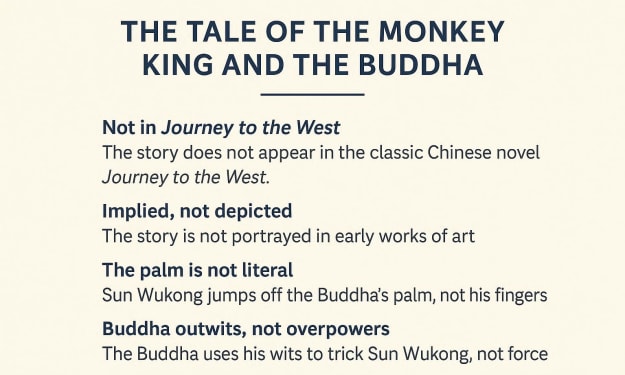
The tale of the monkey king and the buddha
After wreaking havoc across the heavens and pilfering the potion of immortality, the Monkey King was captured. He was placed in a white-hot prison cell, a punishment meant to break him. Yet, the sweltering cage only inflamed his strength and resolve. Finally free, he was more powerful and defiant than ever.
By Munesh Yadavabout 14 hours ago in Education
The Path to Salvation
The late autumn evening air filled the monk's lungs, but it wasn't the season that chilled his bones. The heavy-handed presence of evil he had sensed upon entering the woods surrounding this mountain village had not bothered to conceal itself from him.
By Made in DNA3 days ago in Fiction



Comments
There are no comments for this story
Be the first to respond and start the conversation.