
AI in Wearable Health Tech
Monitoring Wellness with Smart Devices

Introduction
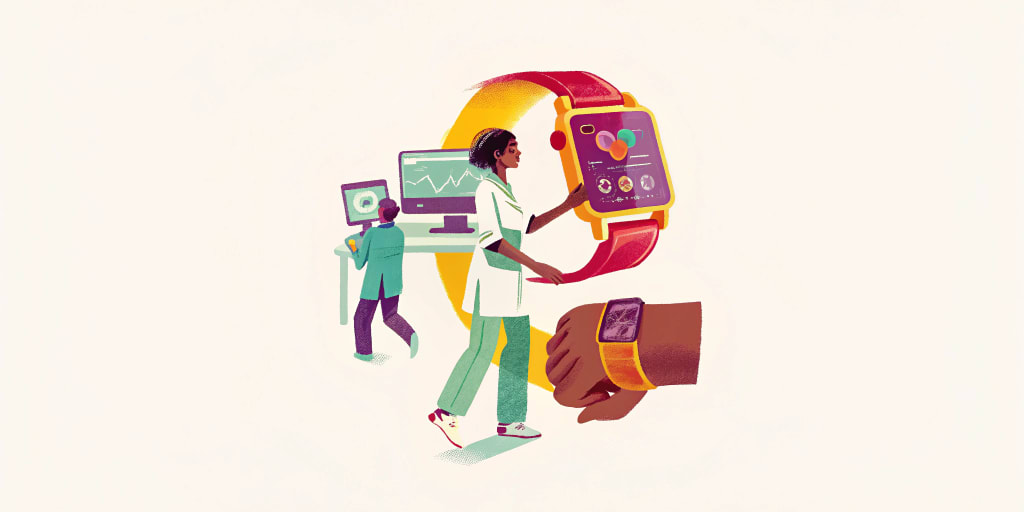
The integration of artificial intelligence (AI) into wearable health technology has revolutionized how we monitor and manage our well-being. These smart devices, ranging from fitness trackers to advanced medical sensors, continuously collect and analyze health data, offering real-time insights and personalized recommendations. This transformation not only enhances preventive healthcare but also empowers individuals to take a more proactive role in managing their health.
Real-Time Health Monitoring
AI-powered wearable devices excel at real-time health monitoring, tracking vital signs such as heart rate, blood pressure, oxygen saturation, and physical activity levels. For instance, devices like the Oura smart ring can detect early signs of illnesses like COVID-19 within 24 hours using AI techniques. This capability allows for timely interventions, potentially preventing the worsening of health conditions.
Disease Prediction and Diagnosis
AI algorithms analyze vast datasets to identify patterns indicative of various health conditions. Wearable biosensors equipped with AI can detect diseases like diabetes, heart disease, and even certain cancers by analyzing biomarkers and physiological signals. For example, AI-based techniques have achieved high accuracy in detecting prostate cancer through urinary biomarkers. This predictive ability enables earlier diagnosis and more effective treatment.
Personalized Health Insights
AI transforms raw data into actionable insights, offering personalized health recommendations. Devices like Google's AI-powered Fitbit app provide users with customized advice on diet, exercise, and sleep based on their unique health metrics. Users can ask questions about patterns in their data, and the AI chatbot delivers summarized, relevant answers. This personalization helps individuals optimize their health routines and achieve specific wellness goals.
Remote Patient Monitoring
In healthcare settings, AI and wearables facilitate remote patient monitoring, reducing the need for hospital visits. Healthcare providers can track patients' vital signs and health metrics in real-time, enabling early detection of potential issues. This approach improves patient outcomes, reduces healthcare costs, and allows medical professionals to prioritize care for those who need it most.
Integration with Telehealth
The combination of AI, wearable technology, and telehealth creates a powerful trio for modern healthcare. During remote consultations, doctors can access real-time data from patients' wearables, making diagnoses more accurate and timely. This integration streamlines the healthcare process, saving time for both patients and providers.
Challenges and Considerations
Despite these advantages, challenges remain. Data privacy and security are critical concerns, especially with the integration of third-party apps and wireless connectivity. Ensuring the accuracy and reliability of health data collected by wearables is also essential, requiring rigorous sensor calibration and validation processes. Additionally, balancing sophisticated AI processing with practical battery life constraints presents an ongoing technical challenge.
Future Outlook
The future of AI in wearable health technology holds tremendous promise. Advancements in AI algorithms, sensor technology, and integration with other technologies like IoT and cloud computing will further enhance the capabilities of these devices. As they evolve, AI-powered wearables will play an increasingly vital role in preventive healthcare, chronic disease management, and personalized medicine.
Conclusion
AI-powered wearable health technology represents a significant leap forward in healthcare innovation. By enabling real-time monitoring, predictive analytics, and personalized health insights, these devices help individuals maintain better health and allow healthcare providers to deliver more effective care. As technology continues to advance, the potential for AI and wearables to transform healthcare grows, promising a future where health monitoring is more proactive, precise, and patient-centered.
Recommended books
Genesis: Artificial Intelligence, Hope, and the Human Spirit
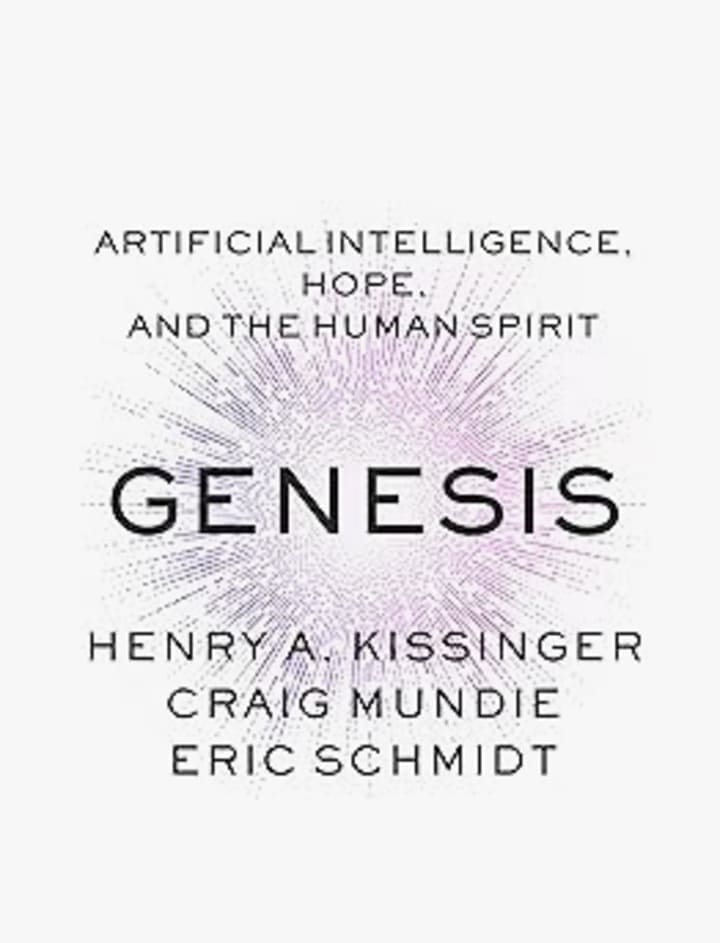
As Artificial Intelligence (AI) becomes more dynamic and ubiquitous, it is dramatically empowering people in all walks of life while also giving rise to urgent questions about the future of humanity—a historic challenge whose contours and consequences are revealed by three eminent thinkers in Genesis.
About the Author: With over a decade of experience as an internet product architect, I’ve spent my career crafting innovative application solutions that bridge technology and real-world needs. Now, as a passionate advocate for artificial intelligence, I focus on exploring its transformative applications. I’m committed to pushing the boundaries of AI to empower lives and shape a smarter future. Join me on this exciting journey as we uncover the endless possibilities of intelligent technology.
About the Creator
roc chiang
I'm a tech enthusiast and entrepreneur based in Vancouver. I share original articles on technology, business and other related topics on social media to showcase my passion and insights.
Editor-in-Chief:fengtou.ca
Keep reading
More stories from roc chiang and writers in Education and other communities.
AI and Drug Discovery: Speeding Up Innovation
Introduction The integration of artificial intelligence (AI) into drug discovery is revolutionizing the development of new medicines, offering unprecedented speed and precision. This transformative technology is not only accelerating the identification of potential drug candidates but also optimizing the entire research and development process.
By roc chiang10 months ago in Education
Understanding Ductwork Airflow Distribution for Modern Homes
Ductwork airflow distribution is the system that moves heated or cooled air through a building. Many homeowners hear the word ductwork but do not fully understand what it does or why it matters. This guide explains the basics in a clear and simple way. By the end, you will know how air moves, why design matters, and how small issues can affect comfort and energy use.
By Lickety Split36 minutes ago in Education
Smart Ways to Prevent AI From Taking Your Job
Artificial intelligence is changing the workplace faster than almost any technology before it. From automated customer service to AI-generated reports, images, and code, it’s natural to wonder: Will AI take my job?
By Anthony Bahamondea day ago in Education
So You Decided To Become a Nurse Practitioner:
So you decided to become an "Advanced Practice" nurse. Congratulations!... is what I would say if this was a good idea. Grad school? In this economy? What were you thinking? Likely it was something along the lines of either 1) “I've seen these other chucklefucks do it— Why can't I?” or even 2) “I've got a nice career, I should shake it up. I miss feeling like I have no clue what I'm doing.”
By Sandor Szabo4 days ago in Fiction


Comments
There are no comments for this story
Be the first to respond and start the conversation.