
AI in the Stock Market: How Artificial Intelligence is Shaping Share Trading
Stock Market
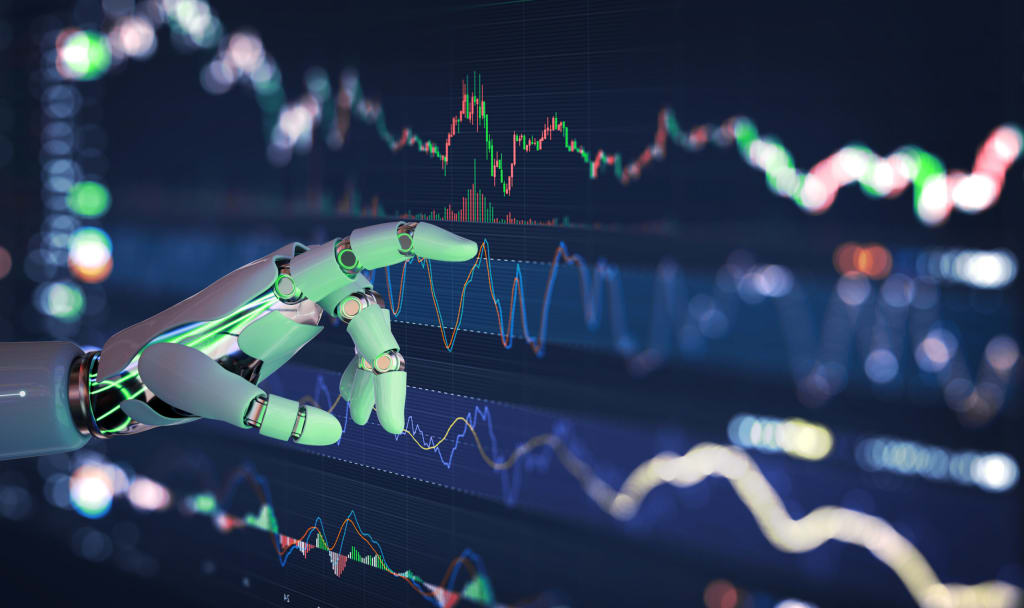
Artificial Intelligence (AI) has rapidly transformed the way financial markets operate, particularly in the stock market or share market. AI is being used to optimize trading strategies, analyze massive datasets, and provide predictive insights, making it a crucial tool for traders, investors, and financial institutions. Here's an in-depth look at how AI is influencing the stock market.
1. Key Applications of AI in the Share Market
A. Algorithmic Trading
High-Frequency Trading (HFT): AI-powered systems execute a large number of orders at extremely high speeds, capitalizing on minute price fluctuations in milliseconds. These systems use AI algorithms to make decisions based on complex datasets, often identifying patterns that human traders cannot.
Predictive Analytics: AI is used to analyze historical market data, news sentiment, and various other factors to make predictions about future price movements. Machine learning algorithms learn from past data and adjust strategies over time to improve accuracy.
B. Sentiment Analysis
AI analyzes market sentiment by scanning news articles, social media platforms (such as Twitter and Reddit), and financial reports. This allows investors to gauge public and expert opinions about a stock or sector, influencing market decisions.
Natural Language Processing (NLP) tools, a subset of AI, can process vast amounts of unstructured text and extract sentiment data in real-time, helping traders make faster and more informed decisions.
C. Robo-Advisors
AI-powered robo-advisors provide automated, algorithm-driven financial planning services with minimal human supervision. These services manage portfolios for retail investors, recommending stock purchases and sales based on the user's risk tolerance and financial goals.
Companies like Betterment, Wealthfront, and Robinhood use AI to optimize investment portfolios for individual clients using asset allocation, risk management, and automatic rebalancing.
D. Portfolio Management and Risk Assessment
AI systems help fund managers and institutional investors by automating portfolio management and reducing risks. AI tools provide advanced risk modeling by analyzing past events and stress testing portfolios under various market conditions.
AI can identify portfolio inefficiencies, suggest diversification strategies, and alert investors to risks that human analysts might miss.
E. Fraud Detection
In the stock market, AI systems are being deployed to detect insider trading, fraud, and other illegal trading practices. By analyzing trading patterns and behaviors, AI can flag suspicious activities that deviate from normal market behavior.
Regulatory bodies and financial institutions use AI to combat financial crimes, reducing market manipulation and increasing transparency.
2. AI Models Used in the Stock Market
A. Machine Learning Models
Supervised Learning: Algorithms like linear regression, decision trees, and random forests are used to predict stock prices based on labeled datasets (historical data with known outcomes).
Unsupervised Learning: Models such as K-means clustering can identify patterns and clusters in the data, such as grouping stocks with similar price movements, without prior knowledge of the dataset's structure.
Reinforcement Learning: This AI model learns optimal trading strategies by interacting with the market. It improves itself over time by maximizing rewards (profit) and minimizing risks (losses).
B. Deep Learning Models
Neural Networks: Deep neural networks (DNNs) can process complex datasets and learn intricate relationships between various market indicators. They are used to predict stock prices, analyze news sentiment, and identify patterns not visible to traditional algorithms.
Recurrent Neural Networks (RNNs) and Long Short-Term Memory (LSTM) models are especially effective in forecasting stock price movements based on time-series data, like historical stock prices and volumes.
C. Natural Language Processing (NLP)
NLP models are used to parse news articles, social media feeds, earnings reports, and more. By understanding the sentiment behind this content, NLP models help traders identify potential market-moving news before it impacts stock prices.
3. Benefits of AI in the Stock Market
Speed and Efficiency: AI systems can process vast amounts of data in real-time, far faster than human traders. This speed gives AI-driven trading systems a significant edge, especially in markets where timing is critical.
Data-Driven Decisions: AI removes human emotions from trading, making decisions based solely on data. This reduces biases, such as fear and greed, which often influence human traders' decisions.
Improved Accuracy: AI's ability to detect patterns in stock market data can lead to better predictions of market movements, helping traders make more profitable decisions.
Cost Reduction: Automating portfolio management and trading strategies can significantly reduce operational costs, especially for institutional investors and hedge funds. AI systems can manage portfolios 24/7 without the need for human intervention.
4. Challenges and Risks of AI in the Stock Market
A. Market Volatility
AI-driven high-frequency trading systems can contribute to market volatility. Algorithms responding to the same data may act simultaneously, causing rapid price swings. For example, the 2010 Flash Crash was partially caused by automated trading systems that triggered large sell orders.
B. Overfitting
Machine learning models may become too reliant on historical data, leading to overfitting, where the model performs well on past data but fails to predict future market movements accurately.
C. Regulatory Scrutiny
As AI becomes more integrated into financial markets, regulatory agencies are paying close attention. There is concern that AI systems might be used to manipulate markets or engage in unethical practices.
D. Data Quality
AI models depend heavily on the quality of the data they are trained on. Inaccurate, incomplete, or biased data can lead to poor trading decisions and financial losses.
5. Future Trends in AI and Stock Trading
A. AI-Powered ETFs and Index Funds
Several companies are creating AI-powered exchange-traded funds (ETFs) that use machine learning to select and manage stock portfolios. These funds continuously adjust their holdings based on AI algorithms rather than human decision-making.
B. Quantum Computing
Quantum computing has the potential to revolutionize AI models used in stock trading by exponentially increasing computing power. Quantum AI could enable far more complex financial modeling, real-time risk analysis, and trading predictions.
C. Ethical AI in Finance
As AI systems increasingly take over decision-making processes in finance, there will be a push for ethical AI models to ensure fairness, transparency, and accountability in stock market practices.
D. Democratization of AI Tools
AI-driven trading platforms are becoming more accessible to retail investors. Tools that were once exclusive to hedge funds and institutional investors are now available to individuals, allowing more people to benefit from AI-enhanced trading.
6. Key Players and Platforms in AI Stock Trading
Several companies and platforms are leading the charge in applying AI to the stock market:
Kavout: A fintech platform using AI and machine learning to provide stock insights and predictions.
Numerai: A hedge fund that uses AI models crowdsourced from data scientists around the world to make stock market predictions.
SigOpt (Acquired by Intel): A platform that optimizes AI-driven trading strategies and improves the performance of financial models.
Alpaca: An API-first stock brokerage platform offering AI-based trading bots and algo trading tools to individual traders.
Conclusion
AI has revolutionized the stock market, making trading faster, more efficient, and more data-driven. While it brings significant benefits, such as improved accuracy and reduced costs, AI also presents challenges, such as market volatility and overfitting. As AI continues to evolve, it will play an even more central role in shaping the future of stock trading, with advancements in quantum computing, ethical AI, and democratization of trading tools likely to lead the way.
About the Creator
Suresh Devendran
Tech writer exploring AI's impact on startups and innovation. Dive into stories of transformation and success in the tech world.
Keep reading
More stories from Suresh Devendran and writers in Education and other communities.
How Artificial Intelligence is Accelerating Revenue Growth Across Industries
Artificial Intelligence (AI) is reshaping the business landscape, empowering companies to grow their revenue in ways that were previously unimaginable. From automating processes and enhancing customer experiences to enabling data-driven insights, AI is providing a competitive edge that’s hard to ignore. This article explores how businesses are leveraging AI to improve efficiency, innovate, and ultimately, boost their bottom line.
By Suresh Devendranabout a year ago in Education
Watching Wings Up Close, A Simple Guide to Garden Discovery
Learning how to identify lepidoptera species in your garden can turn a quiet moment outdoors into an exciting discovery. Butterflies and moths are more than colorful visitors. They are signs of a healthy space and active seasons. With a calm approach and a little practice, anyone can learn to notice their patterns and habits. This butterfly identification guide approach begins with slowing down and paying attention to small details that often go unseen.
By Akito Kawahara6 days ago in Education
Where Ownership Meets Impact: Exploring the Powerful Connection Between Equity and Giving
The relationship between equity and philanthropy in modern society reflects a growing awareness that wealth, ownership, and social responsibility are deeply interconnected. As economic systems evolve, individuals and organizations are increasingly recognizing that equity is not only a financial instrument but also a powerful lever for positive change. Philanthropy, once seen as separate from ownership and investment, is now being shaped by equity-driven thinking that prioritizes long-term impact over short-term relief.
By John Olin Killgore4 days ago in Education


Comments
There are no comments for this story
Be the first to respond and start the conversation.