
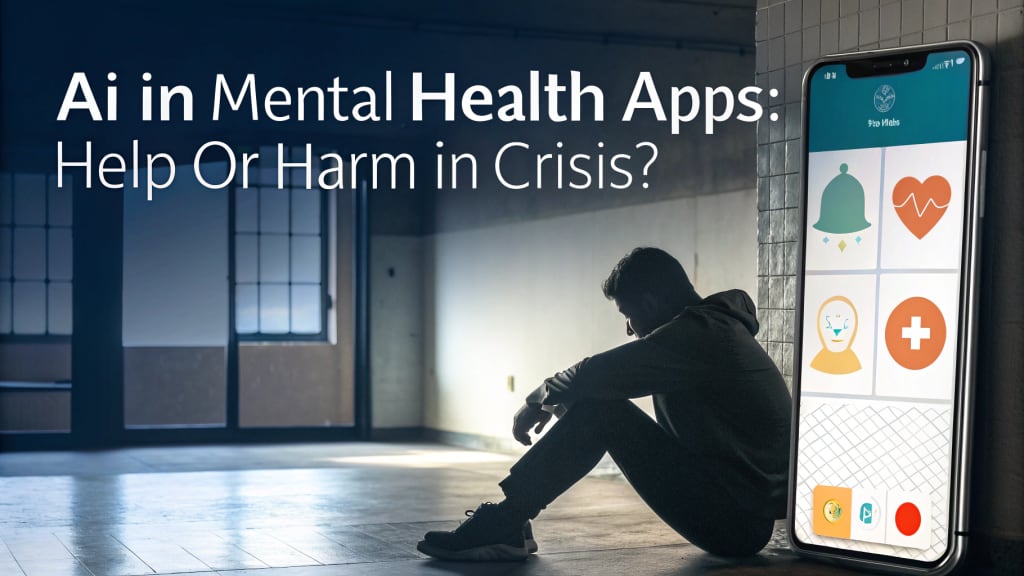
AI in Mental Health Apps: Help or Harm in Crisis?
Can Machines Truly Support Emotional Well-Being?

Introduction
The integration of artificial intelligence (AI) into mental health care has emerged as a transformative solution to address the growing global mental health crisis。With around 85% of individuals with mental health issues unable to access treatment due to a shortage of providers and resources,AI-driven apps and tools are stepping in to fill the gap. However, as these technologies become more prevalent, questions arise about their reliability, effectiveness, and potential risks in supporting emotional well-being。
The Promise of AI in Mental Health Apps
Enhanced Accessibility and Engagement
AI-powered mental health apps offer unprecedented accessibility, providing support to individuals who may not have access to traditional mental health services。For example, AI chatbots like Wysa have demonstrated significant improvements in user-reported mental health symptoms, with high engagement leading to a 64% greater reduction in depression symptoms compared to control groups。These apps leverage natural language processing and machine learning to provide personalized therapeutic interactions, making mental health support more accessible and engaging。
Early Detection and Intervention
AI's ability to analyze vast amounts of data enables early detection and intervention for mental health conditions。Predictive models have achieved impressive accuracy rates, such as identifying suicide risks within a week with 92% accuracy。By analyzing patterns in user interactions, AI can flag potential mental health issues and provide timely support, potentially preventing crises。
Personalized Support and Treatment
AI-driven apps can tailor interventions to individual needs, enhancing the effectiveness of mental health care。These apps can adapt to user feedback and adjust support strategies dynamically, ensuring that users receive the most relevant and effective assistance。
Challenges and Risks
Ethical Considerations and Data Privacy
The use of AI in mental health apps raises significant ethical concerns, particularly regarding data privacy and algorithm transparency。Ensuring that user data is securely stored and used ethically is crucial to building trust and protecting individuals' privacy。
Algorithmic Bias and Fairness
AI algorithms are only as good as the data they are trained on. If the training data is biased, the resulting AI models can perpetuate or even exacerbate existing inequalities。Ensuring fairness and transparency in AI decision-making processes is essential to prevent discrimination。
Effectiveness and Methodological Rigor
While AI in mental health shows promise, the effectiveness of these apps varies. Some studies exhibit moderate quality, suggesting that more rigorous methodologies are needed to validate AI applications。Involving stakeholders in the creation of AI technologies is essential for building trust and tackling ethical issues。
Future Outlook
Integration with Emerging Technologies
The future of AI in mental health lies in its integration with emerging technologies such as wearables, virtual reality, and the Internet of Medical Things (IoMT)。These advancements will enhance the capabilities of mental health apps, making them more connected and data-driven。
Policy and Implementation Frameworks
The growth of AI in mental health also requires the development of sustainable reimbursement models and regulatory frameworks that support these services。Policymakers must work with healthcare providers and technology companies to create an ecosystem that fosters innovation while ensuring patient safety。
Conclusion
AI-powered mental health apps have the potential to revolutionize mental health care by enhancing accessibility, personalizing support, and enabling early intervention。However, addressing challenges related to data privacy, algorithmic bias, and ethical considerations is crucial to ensuring that these technologies benefit all users。By fostering collaboration between healthcare providers, policymakers, and technology companies, we can harness the full potential of AI to create a more accessible and effective mental health care system。
Recommended books
Genesis: Artificial Intelligence, Hope, and the Human Spirit
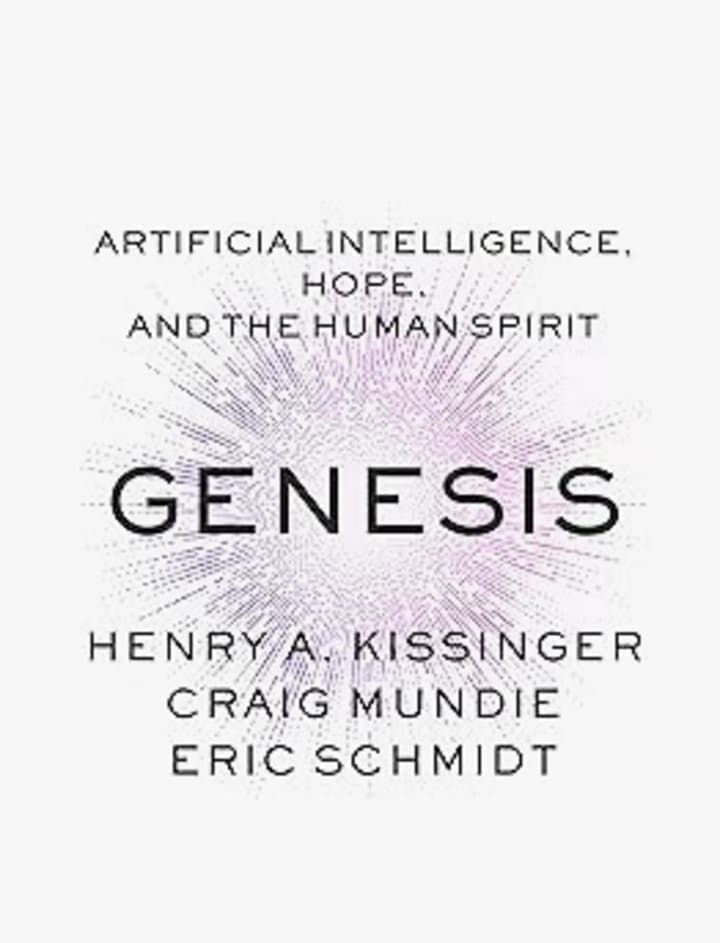
As Artificial Intelligence (AI) becomes more dynamic and ubiquitous, it is dramatically empowering people in all walks of life while also giving rise to urgent questions about the future of humanity—a historic challenge whose contours and consequences are revealed by three eminent thinkers in Genesis.
About the Author: With over a decade of experience as an internet product architect, I’ve spent my career crafting innovative application solutions that bridge technology and real-world needs. Now, as a passionate advocate for artificial intelligence, I focus on exploring its transformative applications. I’m committed to pushing the boundaries of AI to empower lives and shape a smarter future. Join me on this exciting journey as we uncover the endless possibilities of intelligent technology.
About the Creator
roc chiang
I'm a tech enthusiast and entrepreneur based in Vancouver. I share original articles on technology, business and other related topics on social media to showcase my passion and insights.
Editor-in-Chief:fengtou.ca
Keep reading
More stories from roc chiang and writers in Education and other communities.
AI in Global Trade: Power Play or Partnership?
Introduction The integration of artificial intelligence (AI) into global trade has transformed how countries negotiate and execute trade agreements. The recent minerals deal between the United States and Ukraine serves as a prime example of how AI can facilitate complex trade negotiations and enhance economic cooperation. This article examines the role of AI in the US-Ukraine minerals deal, discussing its impact on global trade dynamics and the broader economic implications.
By roc chiang8 months ago in Education
Managing Anxiety During Exams: A Student’s Guide
Exams are one of the most common sources of stress for students at every level. Even the most prepared individuals often feel nervous before or during a test. Exam anxiety is natural — it’s the body’s way of preparing for a challenge — but excessive stress can interfere with focus, memory recall, and overall performance. Understanding the causes of anxiety and learning effective coping strategies can make a significant difference. This guide provides practical, evidence-based techniques to manage stress before, during, and after exams.
By Games Mode On2 days ago in Education
Best Tools and Tips for Project Managers to Manage Projects Effectively
Project management plays a critical role in ensuring that business goals are achieved on time and within budget. In today’s fast-paced and competitive environment, project managers must balance multiple responsibilities, manage diverse teams, and adapt to constant changes. Using the right tools along with proven management techniques can significantly improve project efficiency and success.
By Muhammad Hussain2 days ago in Education



Comments
There are no comments for this story
Be the first to respond and start the conversation.