
AI in Healthcare: Revolutionising the Industry with Promise and Challenges
Machine learning, deep learning, and natural language processing to improve patient care

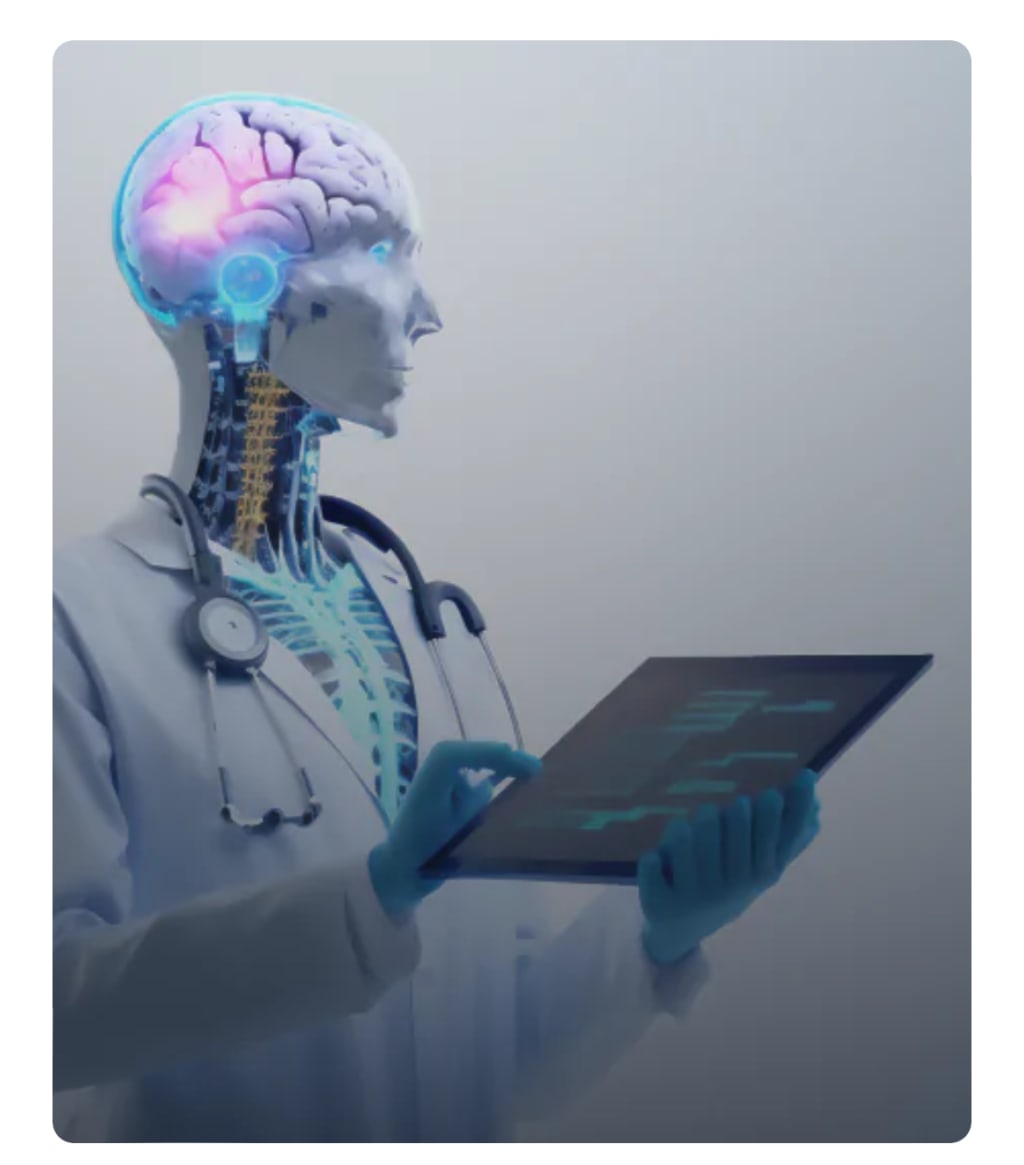
Artificial Intelligence (AI) has been a transformative force across many sectors, and one of the most promising and impactful areas where AI is making significant strides is healthcare. The integration of AI technologies into healthcare systems offers groundbreaking opportunities to improve patient outcomes, streamline medical processes, and reduce costs. However, with these advances come challenges related to ethics, data privacy, bias, and the potential for job displacement. This essay will explore the positive and negative aspects of AI in healthcare, discussing its potential benefits and the ethical, practical, and regulatory concerns that must be addressed as AI continues to shape the future of medicine.
The Positive Impacts of AI in Healthcare
1. Improved Diagnostics
One of the most promising applications of AI in healthcare is in diagnostics. Machine learning algorithms have been developed that can analyze medical images—such as X-rays, MRIs, and CT scans—with a level of accuracy that sometimes surpasses that of human doctors. AI models can detect abnormalities, such as tumors or fractures, at earlier stages, leading to faster and more accurate diagnoses. For instance, AI-powered tools like Google’s DeepMind have demonstrated the ability to diagnose eye disease and detect breast cancer with a level of precision comparable to or better than experienced radiologists. Early detection allows for timely treatment, improving the chances of successful outcomes.
2. Personalized Treatment Plans
AI also holds the potential to revolutionize personalized medicine. By analyzing vast amounts of data from various sources—patient histories, genetic information, lifestyle factors, and clinical studies—AI can identify the most effective treatments for individual patients. AI-powered predictive models can forecast how a patient might respond to certain medications or therapies, allowing doctors to tailor treatment plans accordingly. This individualized approach has the potential to reduce trial and error, minimize side effects, and enhance the overall effectiveness of treatments.
3. Operational Efficiency and Cost Reduction
AI can significantly improve the efficiency of healthcare systems. Automated administrative tasks, such as scheduling, billing, and processing insurance claims, can be streamlined with AI, reducing administrative burdens on healthcare providers. AI-driven chatbots and virtual assistants can handle patient inquiries and follow-up questions, freeing up healthcare professionals to focus on more complex tasks. Moreover, AI tools can optimize hospital resource allocation, ensuring that equipment and staff are utilized effectively, thereby reducing wait times and operational costs. The potential for AI to reduce healthcare costs is especially relevant in the context of rising healthcare expenditures worldwide.
4. Remote Monitoring and Telemedicine
The COVID-19 pandemic accelerated the adoption of telemedicine, and AI has played a crucial role in making remote healthcare more effective. AI-powered wearable devices can continuously monitor vital signs such as heart rate, blood pressure, and glucose levels. These devices can alert healthcare providers to any potential issues in real time, enabling timely interventions. This technology is particularly useful for patients with chronic conditions who require constant monitoring, as it allows them to stay at home while still receiving high-quality care. Furthermore, AI can enhance telemedicine consultations by analyzing patient data and providing real-time insights to doctors during virtual visits.
The Negative Aspects and Ethical Challenges of AI in Healthcare
1. Bias and Inequality
One of the most significant concerns with AI in healthcare is the potential for algorithmic bias. AI models are trained on historical data, and if that data is not representative of diverse populations, the model may perpetuate biases. For example, AI systems trained predominantly on data from one ethnic group may perform poorly when diagnosing individuals from other racial or demographic backgrounds. Studies have shown that certain AI algorithms, particularly in healthcare, can exhibit racial, gender, and socio-economic biases, leading to unequal treatment and outcomes for disadvantaged groups. Addressing these biases requires careful, inclusive training data and rigorous testing to ensure that AI systems serve all patients equitably.
2. Data Privacy and Security Concerns
AI’s reliance on vast amounts of data—often personal and sensitive—raises significant concerns about data privacy and security. Healthcare data breaches are already a serious issue, and AI’s data-heavy nature exacerbates these risks. If patient data is not properly anonymized or protected, there is the potential for misuse, hacking, or unauthorized access. Moreover, there is the question of who owns and controls patient data. As AI models become more integrated into healthcare, the issue of data governance becomes increasingly complex. Without robust privacy protections and clear regulations, patients may feel uneasy about the sharing and use of their medical data.
3. Lack of Human Touch and Accountability
Despite AI’s impressive capabilities in diagnostics and treatment planning, it cannot replace the human elements of care. Empathy, intuition, and patient-provider relationships are integral parts of healthcare that AI cannot replicate. A machine may be able to analyze medical data and suggest the most effective treatment, but it cannot understand the emotional and psychological needs of a patient, nor can it provide the compassion that is often needed in difficult medical situations. Additionally, if an AI system makes an error in diagnosis or treatment, it can be challenging to assign accountability. Who is responsible when a machine makes a mistake? This lack of clear accountability raises legal and ethical concerns about the use of AI in critical healthcare settings.
4. Job Displacement and Resistance to Change
As AI technologies continue to improve, there is the potential for job displacement among healthcare workers. Tasks that were once performed by humans, such as interpreting medical images, administering medication, or managing administrative processes, could be automated, leading to concerns about job losses. For instance, radiologists may find their roles diminished as AI tools become more proficient in analyzing medical images. While AI has the potential to free up healthcare workers to focus on more complex tasks, there is a risk of creating a workforce imbalance if jobs are lost faster than new roles are created. Additionally, some healthcare professionals may resist adopting AI technologies, either due to fear of job loss or skepticism about AI’s capabilities.
Conclusion
AI in healthcare holds immense promise, offering the potential for improved diagnoses, personalized treatment, cost savings, and enhanced patient care. However, the ethical challenges—such as bias, privacy concerns, loss of human touch, and job displacement—are substantial and must be addressed. The successful integration of AI into healthcare will require a careful balance between innovation and ethics, with a focus on transparency, inclusivity, and patient-centered care. If managed responsibly, AI can not only revolutionize healthcare but also ensure that it is more equitable, efficient, and accessible for everyone. As this technology evolves, it is crucial that we continue to question, evaluate, and refine its applications to ensure that it serves the best interests of patients, providers, and society at large.
About the Creator
Trina Tuthill
Journlaist and radio presnter, podcast host - Passionate about social justice, feminism, family issues, culture, and music opinions and reviews.
Tips welcome
Keep reading
More stories from Trina Tuthill and writers in Education and other communities.
Rising Student Debt: The Ethical Dilemma of Making Education a Financial Burden
The rising costs of higher education have become one of the most pressing issues in the UK, the US, and other parts of the world. While the financial burden of student loans and tuition fees is nothing new, in recent years, the increasing financial demands placed on students have brought about significant ethical concerns. In this essay, we will explore the ethical implications of increasing student finances, particularly the issue of tuition fees and student loans, and compare the situation with countries where education is free or heavily subsidised, such as in parts of Europe.
By Trina Tuthill12 months ago in Education
How Neuroscience Is Changing the Way We Learn
In recent decades, advances in neuroscience have reshaped our understanding of human learning. Rather than viewing learning as merely memorizing facts, researchers now see it as a biological process that physically and functionally changes the brain. This shift in perspective — from teaching content to understanding how the brain learns — is transforming educational theory, classroom practice, and lifelong learning strategies across the globe.
By Games Mode Onabout 11 hours ago in Education




Comments
There are no comments for this story
Be the first to respond and start the conversation.