
AI in Education: Will ChatGPT Replace Homework?
How schools, teachers, and students are adapting to the rise of AI-powered learning

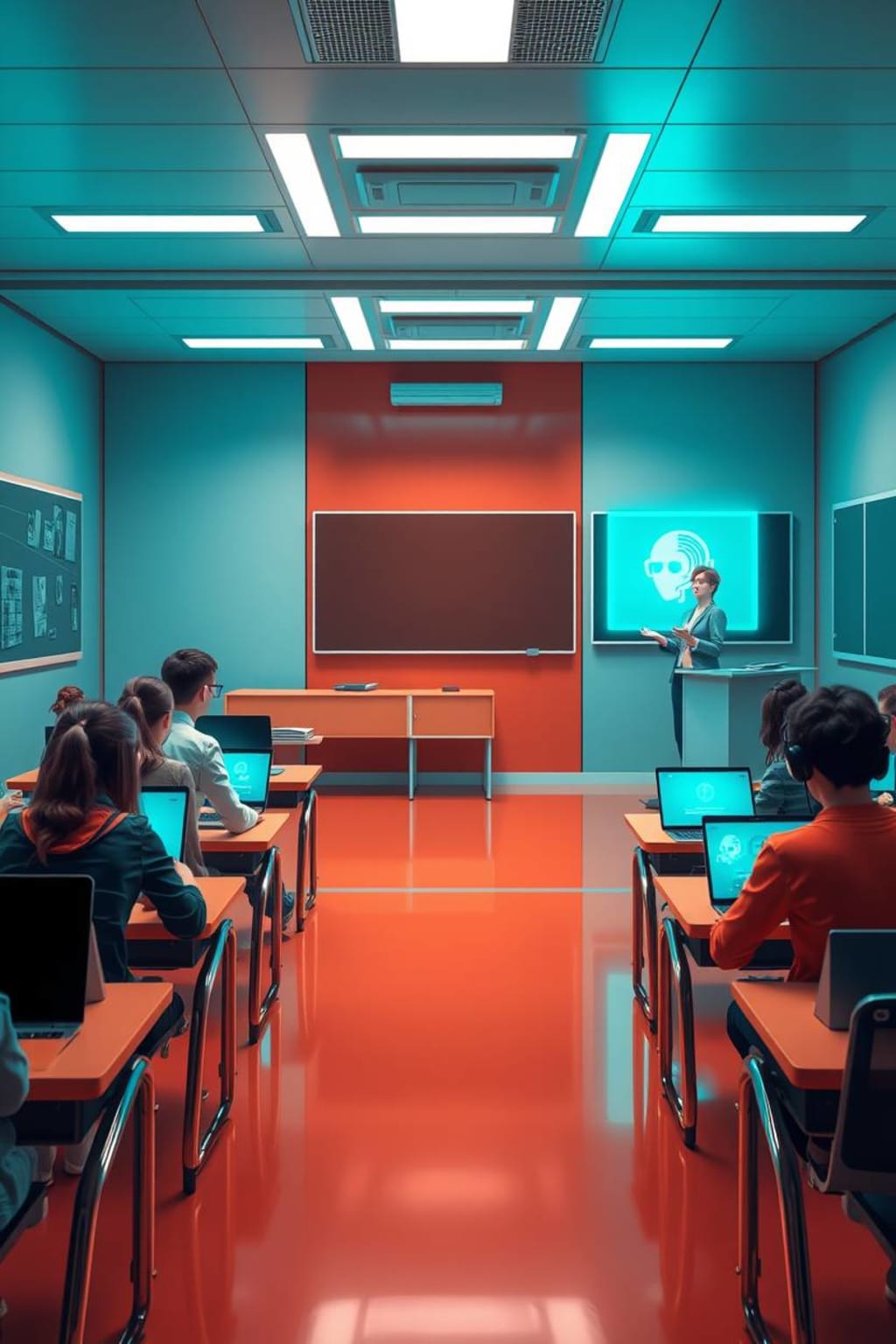
In a quiet bedroom late at night, a student opens their laptop and stares at a blank page. The essay deadline is tomorrow. Instead of panicking, they open ChatGPT, type in the prompt, and within minutes they have a draft. For some, this feels like a dream come true. For others, it feels like the end of education as we know it.
Artificial intelligence is no longer a futuristic concept. It’s here, in classrooms, homes, and libraries. ChatGPT and other AI tools can write essays, solve math problems, and even tutor students on complex topics. But as this technology spreads, it raises a pressing question: will AI make homework obsolete, or simply change the way students learn?
A New Reality in Classrooms
Teachers around the world are facing a challenge they’ve never encountered before. In early 2023, educators began noticing essays that were a little too polished, a little too “robotic.” Soon it became clear: students were using AI to complete their assignments.
Some schools responded by banning AI outright. Others tried detection software designed to spot machine-written text, but the tools proved unreliable. AI can rewrite itself in human-like ways, and false positives risk unfairly accusing students of cheating. The result is a tug-of-war: students discovering new ways to use AI, and teachers scrambling to adapt.
The Benefits: A New Kind of Tutor
Despite the fears, many argue that AI can actually improve learning if used responsibly. For students who struggle, ChatGPT can act as a patient tutor, explaining algebra step by step or breaking down a Shakespeare passage in plain English. Unlike a teacher with limited time, AI is available 24/7.
Language learners also find AI helpful. Students practicing English can ask ChatGPT to rephrase their sentences or expand their vocabulary. Others use it for brainstorming ideas, creating outlines, or overcoming writer’s block.
In this sense, AI doesn’t have to replace education—it can supplement it, offering guidance that some students might not otherwise have access to.
The Concerns: Shortcuts or Skills?
The biggest worry is that AI encourages shortcuts. If a student lets ChatGPT write their essay, are they really learning to think critically, analyze, and express ideas in their own words? Homework has always been about more than just producing answers—it’s about building skills.
Another concern is over-reliance. Students may lean on AI so much that they lose confidence in their own abilities. Instead of wrestling with a tough problem, they may take the easy way out, letting the tool do the hard thinking for them.
There’s also the issue of fairness. Not every student has access to reliable internet or the latest AI tools. This could widen the gap between students who can afford the technology and those who can’t.
How Teachers Are Responding
Educators are divided. Some believe banning AI is the only way to preserve academic integrity. Others think bans are pointless—after all, calculators were once controversial too, and now they’re a standard part of learning math.
Forward-thinking teachers are redesigning assignments. Instead of take-home essays, they assign in-class writing, oral presentations, or group projects that AI can’t easily complete. Some encourage students to use AI as a starting point, then refine and critique the responses to show understanding.
In a few schools, AI is even being formally integrated into the curriculum. Students are taught not only how to use it, but how to question it. Since AI sometimes produces errors or misleading information, learning to fact-check and think critically is part of the lesson.
A Familiar Pattern
History suggests that education has always been reshaped by technology. When calculators entered classrooms, critics worried students would lose the ability to do mental math. When the internet became widespread, many feared plagiarism and copy-paste learning would ruin education.
Instead, schools found ways to adapt. Calculators allowed students to focus on higher-level math. The internet opened doors to research and global knowledge. AI may follow the same path, becoming another tool in the educational toolkit rather than a replacement for it.
The Bigger Question
The real challenge may not be stopping students from using AI, but rethinking what education is for. If AI can write an essay or solve a math problem, maybe the purpose of homework isn’t to produce the final answer. Instead, it might be to develop skills like critical thinking, creativity, and problem-solving—skills that machines still struggle with.
A teacher in New York recently summed it up: “We don’t need to teach kids how to outwrite ChatGPT. We need to teach them how to ask better questions.” In other words, the future of education might not be about competing with AI, but learning how to use it wisely.
Conclusion
So, will ChatGPT replace homework? Not exactly. Homework, like education itself, will evolve. Essays and assignments may change shape, but the core mission remains the same: helping students grow into thoughtful, capable adults.
AI is not the end of learning—it’s the beginning of a new chapter. The question is whether schools, teachers, and students can adapt fast enough to make the most of it.
About the Creator
Keep reading
More stories from arsalan ahmad and writers in Education and other communities.
The Bicycle Repairman
In the middle of a busy neighborhood, tucked between a corner grocery shop and a tiny tea stall, stood a shed barely wide enough to fit a bicycle. Its faded sign read: “Repairs Done Here.” Most people hardly noticed it anymore. They walked past it on their way to bigger shops, louder markets, or shinier workshops that promised “quick service” for the right price.
By arsalan ahmad7 months ago in Education
How Astronomers Study the Sun Safely: Methods, Tools, and Technologies
Why Studying the Sun Is Important The Sun is the closest star to Earth, making it an ideal laboratory for studying stellar physics. By observing the Sun, astronomers learn about processes that occur in other stars across the universe.
By shahkar jalal7 days ago in Education
Reel Cap Components in Aerospace Electronics: History, Function, and Aviation Applications
Introduction: My Experience Exploring Reel Cap Components When I started researching aerospace electronic components, I discovered that even the smallest hardware pieces play a crucial role in aircraft systems. One such component that caught my attention was the Reel Cap, an often overlooked but essential element in electronic component packaging, aviation circuitry, and aerospace manufacturing systems.
By Beckett Dowhan5 days ago in Education




Comments
There are no comments for this story
Be the first to respond and start the conversation.