
AI in Education: Empowering or Controlling Students?
The Fine Line Between Guidance and Surveillance

Introduction
The integration of artificial intelligence (AI) into education has transformed traditional learning environments, offering unprecedented opportunities for personalized learning and efficiency. However, this technological advancement also raises critical ethical concerns, particularly regarding student privacy, autonomy, and the potential for surveillance. This article explores the dual nature of AI in education, examining its benefits and risks, and questioning whether AI is truly empowering students or subtly controlling them.
AI's Benefits in Education
Personalized Learning and Support
AI-driven educational tools offer significant advantages by tailoring learning experiences to individual student needs. These systems can adapt content delivery, provide real-time feedback, and identify learning patterns, enhancing engagement and outcomes. For example, AI-powered platforms help students achieve better results with less frustration and cognitive load, while educators benefit from deeper insights into student performance.
Enhanced Accessibility and Efficiency
AI democratizes access to education by providing advanced tools to a broader range of students. This is particularly beneficial for those with disabilities or limited resources, enabling greater independence and participation in learning.
Risks of Over-Surveillance
Privacy and Data Security
AI systems in education often require extensive data collection, including academic performance, behavioral patterns, and even biometric information. This raises significant privacy concerns, especially since much of this data pertains to minors. The potential for data breaches or misuse threatens student well-being and raises ethical questions about long-term storage and dual-use of this information.
Threats to Student Autonomy
Predictive analytics and algorithmic recommendations can limit students' ability to act on their own interests and values. By making assumptions about a student's abilities or potential based on data, AI systems risk perpetuating biases and limiting educational opportunities. This undermines the development of critical thinking and independent decision-making skills.
Surveillance and Control
AI-powered surveillance systems embedded in educational settings can monitor student actions and predict future behaviors. While these systems aim to enhance safety and academic performance, they can also create an environment of constant oversight. This surveillance can inhibit student participation and make them feel unsafe in expressing their ideas, raising questions about whether AI is fostering learning or controlling behavior.
Ethical and Pedagogical Considerations
Algorithmic Bias and Equity
AI systems are not inherently neutral; they reflect the values and biases of their creators. In educational contexts, where AI is used for high-stakes decisions like admissions or course recommendations, algorithmic bias can exacerbate existing inequalities. Ensuring fairness and mitigating bias is an ethical imperative in educational settings.
Transparency and Explainability
Many AI algorithms operate as "black boxes," making decisions that are not easily interpretable by humans. In education, where decisions significantly impact students' futures, the lack of transparency in AI decision-making is problematic. Students, parents, and educators have a right to understand how educational decisions are made, especially when AI systems play a role.
Cultivating Student Autonomy
While AI can enhance learning, it must not replace the human elements of education. Teachers play a crucial role in modeling behaviors, fostering empathy, and developing social skills. AI should be used to complement, not replace, these vital human interactions.
Conclusion
AI in education offers remarkable opportunities to enhance learning and accessibility but also poses significant risks to student privacy and autonomy. By fostering transparency, addressing algorithmic bias, and prioritizing ethical considerations, educators and policymakers can harness AI's benefits while safeguarding student well-being. The future of education lies in creating a balanced approach where technology enhances rather than replaces the human experience of learning.
Recommended books
Genesis: Artificial Intelligence, Hope, and the Human Spirit
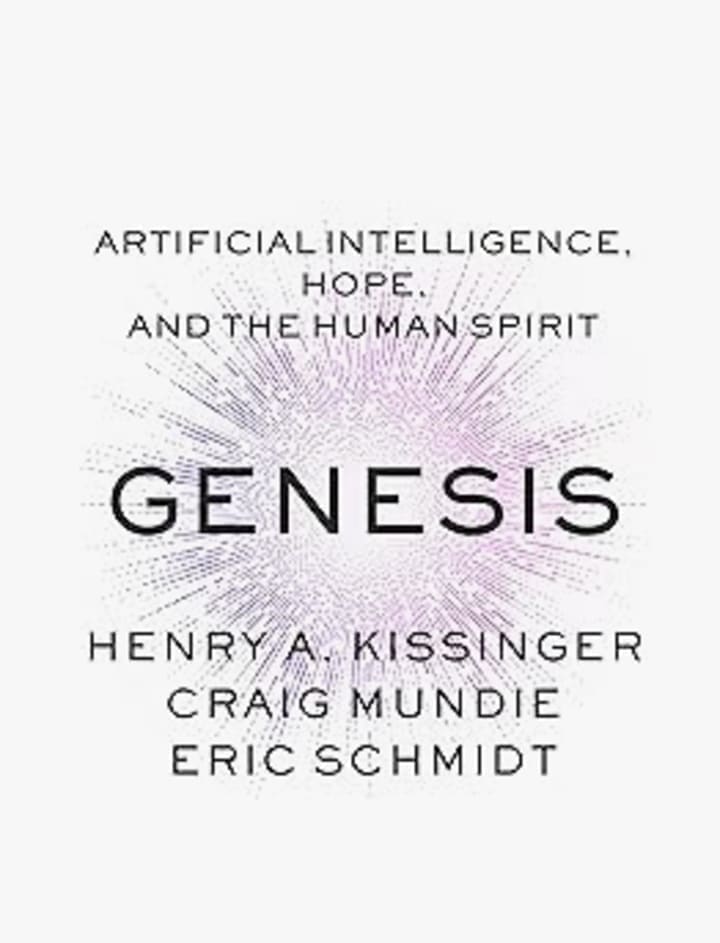
As Artificial Intelligence (AI) becomes more dynamic and ubiquitous, it is dramatically empowering people in all walks of life while also giving rise to urgent questions about the future of humanity—a historic challenge whose contours and consequences are revealed by three eminent thinkers in Genesis.
About the Author: With over a decade of experience as an internet product architect, I’ve spent my career crafting innovative application solutions that bridge technology and real-world needs. Now, as a passionate advocate for artificial intelligence, I focus on exploring its transformative applications. I’m committed to pushing the boundaries of AI to empower lives and shape a smarter future. Join me on this exciting journey as we uncover the endless possibilities of intelligent technology.
About the Creator
roc chiang
I'm a tech enthusiast and entrepreneur based in Vancouver. I share original articles on technology, business and other related topics on social media to showcase my passion and insights.
Editor-in-Chief:fengtou.ca
Keep reading
More stories from roc chiang and writers in Education and other communities.
AI and Job Loss: Progress or Peril?
Introduction The integration of artificial intelligence (AI) into the workforce has sparked intense debate about its impact on employment. While AI promises to enhance productivity and innovation, it also raises concerns about job displacement and economic inequality. This article examines the evidence and ethical considerations surrounding AI's effect on jobs, discussing both the risks and opportunities.
By roc chiang9 months ago in Education
What causes cavities
When a team of archaeologists recently came across some 15,000-year-old human remains, they made an interesting discovery. The teeth of those ancient humans were riddled with holes. Their cavities were caused by the same thing that still plagues us today: specific tiny microbes that live in our mouths.
By Munesh Yadavabout 23 hours ago in Education
How Business Coaching Helps Founders Scale With Clarity and Control
Business coaching assists founders to scale since hustle and reactivity are substituted with structure, systems and strategic leadership. Strategic coaching provides clarity in the marketing, operations, leadership, and decision-making roles of the business, eliminating the need to use the owner as the bottleneck, instead enabling the business to expand without havoc, burnout, or firefighting.
By Alice Adams5 days ago in Education
Center Stage with Paul Stewart
*** I'm keen to republish the interviews I did for my series with Vocal creators. It's been a few years and I thought it might be nice to revisit these wonderful conversations. I'll be releasing them one at a time for a few weeks/months.
By Heather Hubler6 days ago in Interview


Comments
There are no comments for this story
Be the first to respond and start the conversation.