
AI and Data Privacy in Education: Safe or Invasive?
What Happens to Student Data in Smart Classrooms?


Introduction
The rapid integration of artificial intelligence (AI) into educational settings has transformed how students learn and how educators teach. However, this technological advancement also raises significant concerns about student data privacy. As AI-driven tools become more prevalent in smart classrooms, understanding how these systems handle sensitive student data is crucial for maintaining trust and ensuring ethical use.
The Benefits of AI in Education
AI offers numerous advantages in educational settings, including personalized learning experiences and efficient administrative processes. AI tools can adapt to each student’s needs, making lessons more effective and engaging. For example, AI-driven platforms can analyze data to identify a student’s strengths and weaknesses, providing customized learning materials and feedback. This not only enhances educational outcomes but also allows teachers to focus more on student interaction and tailored instruction.
Data Privacy Concerns in Smart Classrooms
Extensive Data Collection
AI-driven educational tools require vast amounts of student data to function effectively. This includes personal information, academic performance, and even behavioral data. The extensive collection and processing of such data raise significant concerns about privacy and the potential for data breaches. Schools must ensure that personal data is stored securely and used appropriately, complying with data protection laws such as the Family Educational Rights and Privacy Act (FERPA) and the Children’s Online Privacy Protection Act (COPPA) in the United States.
Algorithmic Bias and Fairness
AI algorithms can inadvertently exhibit bias, leading to unequal educational opportunities. If the data used to train AI systems is biased, these biases can be perpetuated and even amplified. For example, an AI system might unfairly predict lower performance for certain groups of students based on biased training data, leading to inaccurate feedback and potentially disadvantaging students from underrepresented groups.
Ethical Considerations
The use of AI in education also raises ethical questions about the balance between technological innovation and student privacy. Continuous monitoring and data collection can create a sense of distrust among students and parents. Additionally, the potential for misuse of student data by third parties or unauthorized access poses significant risks.
Mitigating Privacy Risks
Robust Data Protection Measures
Schools must implement robust data protection measures to safeguard student information. This includes encrypting data, ensuring secure storage, and employing AI tools that comply with data protection regulations. Clear policies on data usage and consent are essential to ensure transparency and build trust.
Privacy-Preserving Techniques
Advancements in privacy-preserving AI, such as federated learning and differential privacy, can help mitigate privacy risks. Federated learning trains models locally on student devices or edge servers, reducing the need to transmit raw data to central servers. This approach not only enhances data security but also respects student privacy by minimizing data exposure.
Ethical Frameworks and Oversight
Developing ethical frameworks for AI use in education is crucial to ensure fairness and accountability. Schools should involve diverse stakeholders, including educators, students, and parents, in the development and implementation of AI policies. Regular audits and assessments of AI systems can help identify and mitigate biases, ensuring equitable educational outcomes.
Conclusion
AI-driven educational tools offer significant benefits in terms of personalized learning and administrative efficiency. However, the extensive data collection and potential for algorithmic bias pose significant risks to student privacy and fairness. By implementing robust data protection measures, adopting privacy-preserving techniques, and developing ethical frameworks, educational institutions can harness the power of AI while safeguarding student data. The future of AI in education depends on balancing innovation with responsibility to create a safe and equitable learning environment for all students.
Recommended books
Genesis: Artificial Intelligence, Hope, and the Human Spirit
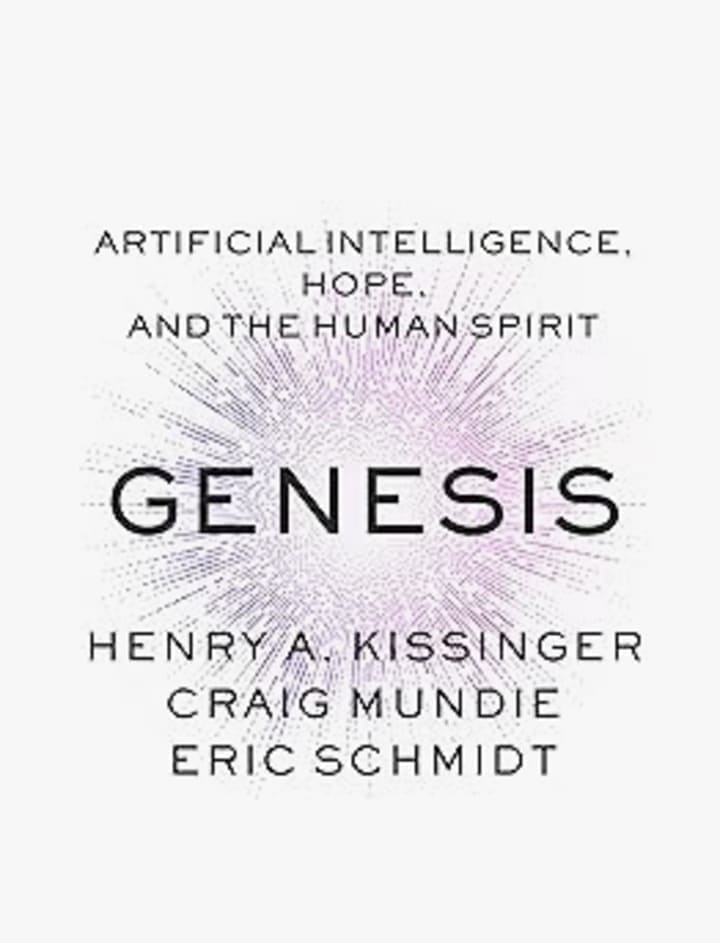
As Artificial Intelligence (AI) becomes more dynamic and ubiquitous, it is dramatically empowering people in all walks of life while also giving rise to urgent questions about the future of humanity—a historic challenge whose contours and consequences are revealed by three eminent thinkers in Genesis.
About the Author: With over a decade of experience as an internet product architect, I’ve spent my career crafting innovative application solutions that bridge technology and real-world needs. Now, as a passionate advocate for artificial intelligence, I focus on exploring its transformative applications. I’m committed to pushing the boundaries of AI to empower lives and shape a smarter future. Join me on this exciting journey as we uncover the endless possibilities of intelligent technology.
About the Creator
roc chiang
I'm a tech enthusiast and entrepreneur based in Vancouver. I share original articles on technology, business and other related topics on social media to showcase my passion and insights.
Editor-in-Chief:fengtou.ca
Keep reading
More stories from roc chiang and writers in Education and other communities.
AI in Political Campaigns: Democracy at Risk?
Introduction The integration of artificial intelligence (AI) into political campaigns has transformed the landscape of modern elections. While AI offers unprecedented opportunities for voter engagement and campaign efficiency, it also poses significant threats to democratic processes. The 2025 South Korean presidential election, particularly the campaign of Han Duck-soo, highlights the dual nature of AI in political campaigns, raising critical questions about its impact on democracy.
By roc chiang9 months ago in Education
Karen Solie’s Wellwater Wins the TS Eliot Poetry Prize: A Quiet Triumph of Modern Verse
In a literary world often dominated by loud headlines and fast-moving trends, poetry still finds ways to stop time. That pause arrived powerfully with the announcement that Karen Solie’s poetry collection Wellwater has won the TS Eliot Poetry Prize, one of the most prestigious honors in contemporary poetry. The award is not only a personal milestone for Solie but also a reminder of poetry’s enduring ability to explore the human condition with depth, restraint, and emotional clarity. A Prize That Shapes the Poetry World The TS Eliot Poetry Prize, awarded annually in the United Kingdom, is considered one of the highest accolades a poet can receive. It recognizes the best new poetry collection published in the UK or Ireland, often setting the tone for literary discussions in the year ahead. Past winners have included some of the most influential poetic voices of modern times, making Solie’s victory a significant cultural moment. What sets this prize apart is its emphasis on craft, originality, and emotional intelligence—qualities that Wellwater embodies fully. Who Is Karen Solie? Karen Solie is a Canadian poet known for her sharp intellect, grounded observations, and emotionally resonant language. Over the years, she has earned respect for writing poetry that feels both deeply personal and socially aware. Her work often navigates themes such as place, memory, climate anxiety, labor, aging, and quiet resilience, avoiding grand statements in favor of carefully observed truths. Solie’s poetry does not shout; it listens. That listening quality is precisely what makes Wellwater stand out. Inside Wellwater: Poetry of Depth and Reflection Wellwater is a collection that moves deliberately, inviting readers to slow down and pay attention. The title itself suggests hidden depths—water drawn from below the surface, shaped by time and pressure. This metaphor runs throughout the collection, as Solie explores lives shaped by unseen forces: economic uncertainty, environmental change, personal history, and emotional endurance. The poems are rooted in everyday experiences, yet they carry philosophical weight. Solie writes about landscapes both natural and human-made, finding meaning in small moments: a shift in weather, a conversation overheard, a memory resurfacing unexpectedly. Her language is precise but never cold, intellectual without being inaccessible. Why Wellwater Resonated With Judges The TS Eliot Prize judges praised Wellwater for its quiet authority and emotional honesty. In a time when many works aim for immediacy or spectacle, Solie’s collection was recognized for its patience and depth. The poems do not rush toward conclusions; instead, they allow complexity to remain unresolved, mirroring real life. This approach reflects a broader shift in contemporary poetry, where subtlety and reflection are gaining renewed appreciation. Solie’s work demonstrates that poetry can be powerful without being performative, political without being loud, and personal without being confessional. Poetry in a Restless World The success of Wellwater also speaks to the role of poetry in today’s fast-paced, digitally saturated culture. As attention spans shrink, poetry offers a counterbalance—a space where readers can slow down, sit with uncertainty, and engage with language thoughtfully. Solie’s poems address modern anxieties without sensationalism. Climate change, economic instability, and emotional fatigue are present, but they are woven into lived experience rather than treated as abstract concepts. This grounding makes Wellwater especially relevant to contemporary readers seeking meaning rather than noise. What This Win Means for Contemporary Poetry Karen Solie’s TS Eliot Prize win reinforces the idea that poetry still matters, even—perhaps especially—in uncertain times. It highlights the value of work that prioritizes depth over trendiness and reflection over reaction. For emerging poets, Solie’s success is encouraging. It suggests that careful craftsmanship, intellectual honesty, and emotional restraint can still find recognition in a competitive literary landscape. For readers, Wellwater offers an invitation: to read slowly, to think deeply, and to reconnect with the quieter aspects of being human. A Lasting Literary Moment Karen Solie’s Wellwater winning the TS Eliot Poetry Prize is more than an award announcement—it is a celebration of poetry’s ability to endure, adapt, and illuminate. In drawing from the deep wells of observation and experience, Solie has created a collection that will likely be read and discussed for years to come. In an age hungry for instant answers, Wellwater reminds us that some truths are best discovered slowly.
By Fiaz Ahmed Brohia day ago in Education
How Strong Company Culture Builds Better Homes From the Inside Out
When people think about what makes a well-built home, they often focus on materials, design, or location. While those factors matter, they are only part of the story. The fundamental foundation of a quality home begins with the people who build it and the environment in which they work. That is why company culture in homebuilding has become an essential topic for buyers who want homes built with care, consistency, and honesty.
By Fischer Homesabout 20 hours ago in Education



Comments (1)
Thank you so much for being transparent about using AI 😊