
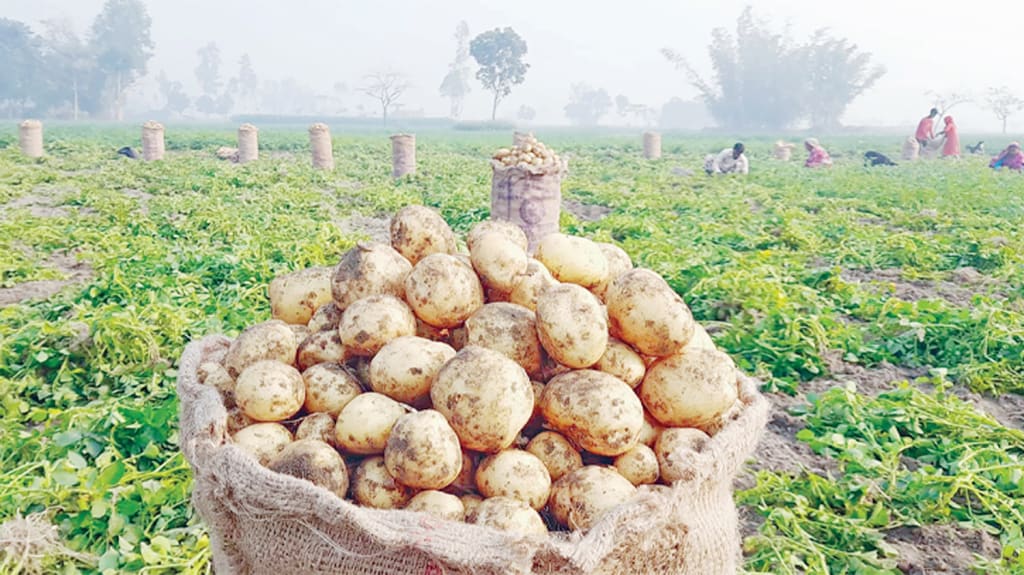
Agriculture is the backbone of Bangladesh’s economy. Despite rapid urbanization and industrial development in recent decades, the agricultural sector continues to play a vital role in the country’s GDP, employment, food security, and rural development. With around 70% of the population living in rural areas, agriculture is not just a profession but a way of life for millions of Bangladeshis.
Importance of Agriculture
Agriculture contributes approximately 13% to the national GDP and employs nearly 40% of the labor force. It is also crucial for ensuring food security in a densely populated country like Bangladesh, where over 170 million people depend on domestic food production. Rice, jute, vegetables, wheat, maize, sugarcane, tea, and various fruits are among the major agricultural products of the country.

Major Crops and Production
Rice is the most important and widely cultivated crop in Bangladesh, covering more than 70% of the total cropped area. There are three rice seasons—Aus, Aman, and Boro—among which Boro contributes the highest yield. Jute, once known as the golden fiber of Bangladesh, is still a significant cash crop, though its global demand has decreased.
In recent years, vegetable and fruit production has grown due to increased demand and export opportunities. The country has also seen significant improvements in fish and poultry farming, further diversifying the agricultural sector.
Agricultural Practices
Bangladeshi farmers primarily practice subsistence farming, although commercial farming is gradually increasing. The country has benefited from the Green Revolution, with the widespread use of high-yielding varieties (HYV) of seeds, fertilizers, pesticides, and irrigation.
The government, along with NGOs and international organizations, provides training, subsidies, and agricultural loans to support farmers. Mechanization is also improving, with the use of power tillers, irrigation pumps, and harvesters becoming more common, especially in northern and central Bangladesh.
Challenges Facing Agriculture
Despite its importance, agriculture in Bangladesh faces several challenges:
Climate Change and Natural Disasters: Bangladesh is highly vulnerable to floods, cyclones, droughts, and river erosion, all of which directly impact crop production. Rising temperatures and unpredictable rainfall also affect planting and harvesting cycles.
Land Fragmentation: Due to population pressure and inheritance laws, farmland is being divided into smaller, less economical plots, reducing overall productivity.
Lack of Modern Technology: Many farmers still rely on traditional farming methods. Limited access to modern tools, quality seeds, and storage facilities hampers efficiency.
Market Instability: Farmers often receive low prices for their produce due to lack of bargaining power and middlemen domination. Price volatility can discourage investment in agriculture.
Soil Degradation and Water Scarcity: Overuse of chemical fertilizers and pesticides has led to declining soil fertility, while groundwater levels are dropping due to excessive irrigation.

Government Initiatives and Reforms
To address these issues, the government of Bangladesh has taken various steps:
Subsidies and Programs of Support: Electricity for irrigation, fertilizer, seeds, and agricultural machinery are all subsidized. Digital Agriculture: Mobile-based agricultural services and information portals help farmers receive timely updates on weather, prices, and best practices.
Research and Innovation: Institutions like the Bangladesh Agricultural Research Institute (BARI) and Bangladesh Rice Research Institute (BRRI) are working to develop climate-resilient and high-yielding crop varieties.
Food Security Programs: To ensure food sufficiency, the government maintains grain reserves and supports distribution during natural disasters and market shortages.
Future Prospects
The future of agriculture in Bangladesh lies in sustainable and climate-resilient farming. Integrated farming systems that combine crop cultivation, livestock, fisheries, and agroforestry can enhance income and food security. Expansion of organic farming and export-oriented agriculture can also open new global markets.
Education and skill development for farmers, especially the youth, can transform the sector into a more profitable and respected profession. Moreover, private investment, public-private partnerships, and international cooperation will be essential to modernize agriculture and make it more competitive.
Conclusion
Agriculture remains the lifeblood of Bangladesh, feeding its people, fueling its economy, and preserving its rural heritage. By addressing the current challenges through innovation, investment, and inclusive policies, Bangladesh can transform its agricultural sector into a modern, efficient, and sustainable engine of growth. As the nation aspires to achieve developed status, agriculture must remain at the heart of its development journey.
About the Creator
The Human Guide Behind Technical Excellence
Mentorship of skilled technicians plays a decisive role in shaping strong careers and reliable work standards. Technical skill alone does not make a technician capable. Real growth comes from shared experience, steady guidance, and trust built over time. In many industries, mentorship fills the gap between classroom learning and real job demands. It helps technicians move from basic ability to confident performance. This article explores how mentorship supports learning, builds skills, and strengthens the future workforce.
By Michael Gastinel6 days ago in Education
Pioneering Therapies for Untreated Diseases
Medical science has made incredible progress in treating many illnesses. Yet, some diseases remain resistant to conventional therapy. These untreated diseases affect millions of people worldwide, causing long-term disability or shortened lifespans. Pioneering therapies for untreated diseases aim to fill this gap, offering hope where traditional treatments have failed. Scientists, clinicians, and biotech companies are working together to create therapies that are both innovative and effective.
By Dr. Janet Chollet7 days ago in Education
Smart phones, Humans and Aliens.
WARNING. I will be tapping into one of your favorite creative tensions: The absurdity of humans worshipping their glowing rectangles as if they were tiny oracles. There’s something deliciously poetic about that contradiction, and it lends itself beautifully to an instructive proviso.
By Novel Allen5 days ago in Poets


Comments
There are no comments for this story
Be the first to respond and start the conversation.