
African Culture & Languages
An Article on African Cultural Heritage & Languages

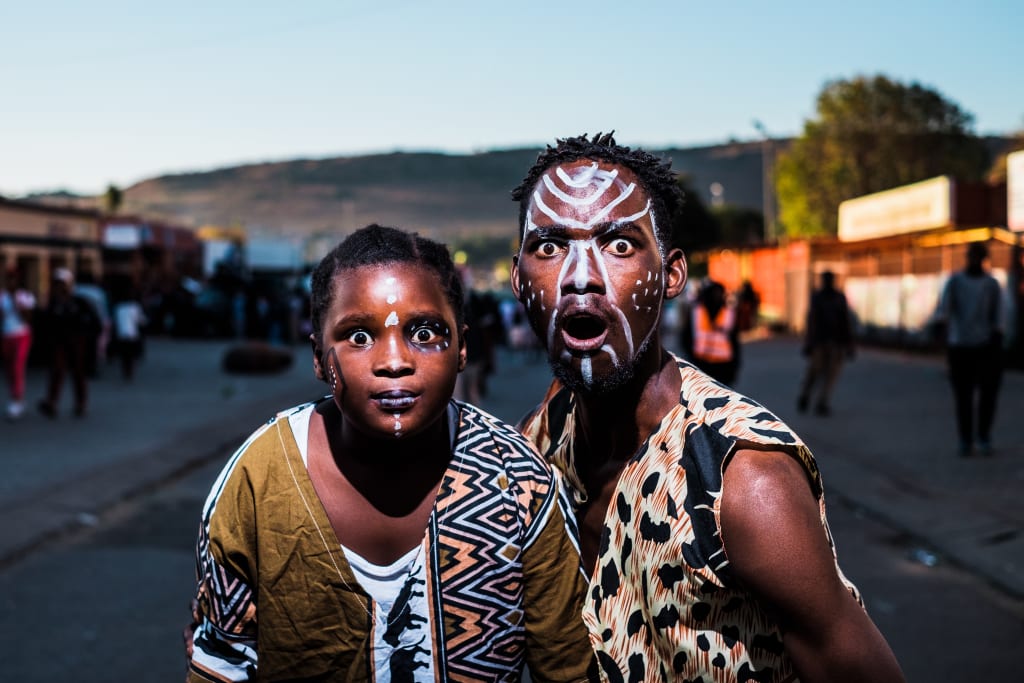
Africa is a continent that is rich in history, culture, and tradition. The diversity of African culture is best seen in the over 1,000 languages spoken across the continent. These languages are a testament to the diversity of African culture, which is characterized by a rich blend of traditions, customs, and beliefs.
African culture is deeply rooted in community and family values, with a strong emphasis on respect for elders and ancestors. Many African cultures place a strong emphasis on oral storytelling, passing down traditions and knowledge from one generation to the next through spoken word. In some African cultures, this oral tradition is so strong that written language is not used at all.
The diversity of African languages is truly remarkable. It is estimated that there are over 2,000 different languages spoken on the African continent, although many of these are considered to be dialects of larger languages. The most widely spoken languages in Africa include Swahili, Hausa, Yoruba, Amharic, and Zulu.
Swahili is spoken in East Africa and is considered to be the lingua franca of the region. It is a Bantu language with strong influences from Arabic and has become an important language in the business and diplomatic world in East Africa.
Hausa is spoken in West Africa, mainly in Nigeria and Niger, and is also a major language in the region. It is a member of the Chadic language family and is written in the Arabic script.
Yoruba is spoken in Nigeria and is a member of the Niger-Congo language family. It is notable for its rich literary tradition, which includes both written and oral forms of storytelling.
Amharic is the official language of Ethiopia and is a Semitic language with strong ties to Arabic. It is the second-most spoken Semitic language in the world, after Arabic.
Zulu is spoken in South Africa and is a member of the Bantu language family. It is notable for its use of click consonants, which are unique to the Khoisan language family but have been adopted into Zulu.
In addition to language, music and dance are also integral parts of African culture. Traditional African music is often characterized by rhythmic percussion and the use of instruments such as the djembe, mbira, and kora. Dance is used to celebrate important events, such as weddings and harvests, and often involves elaborate costumes and masks.
One of the most popular forms of African music is known as Afrobeats, which originated in Nigeria in the 2000s and has since spread throughout the continent and beyond. Afrobeats is a fusion of African rhythms, hip hop, and R&B
Africa is a vast and diverse continent with a wealth of cultures and languages. The continent is home to over 1.2 billion people and 54 countries, each with its own unique traditions, customs, and beliefs. In this article, we will explore the rich tapestry of African culture and languages, delving into the history, diversity, and complexity of this fascinating continent.
African Culture
African culture is a term that encompasses a broad range of traditions and customs, which vary greatly depending on the region and country. However, there are some common threads that run through African culture, such as a deep respect for community and family, a strong emphasis on oral storytelling, and a rich artistic heritage.
Family and Community
One of the defining characteristics of African culture is the importance of family and community. In many African societies, family is the most important unit of social organization. Family members are expected to support and care for each other, and elders are often held in high regard and treated with great respect.
Community is also an important part of African culture, with many traditions and customs centered around collective values and beliefs. In many African societies, people work together to achieve common goals, such as building homes or harvesting crops. This sense of community is often reflected in African music and dance, which often involves large groups of people performing together.
Oral Storytelling
Another important aspect of African culture is the tradition of oral storytelling. For centuries, African people have used storytelling to pass down their traditions, beliefs, and histories from one generation to the next. These stories are often told through music, dance, and theater, and are an important part of African identity.
Art and Craft
Art and craft are also an integral part of African culture, with many traditional art forms dating back centuries. African art is characterized by its vibrant colors, intricate designs, and strong symbolism. Many African art forms, such as masks, sculptures, and textiles, are used in ceremonial contexts or as expressions of cultural identity.
Music and Dance
Music and dance are also important elements of African culture, with a rich history of traditional music and dance styles. African music is characterized by its use of percussion, with drums, shakers, and bells often used to create complex rhythms. African dance is also highly diverse, with many styles featuring acrobatic movements and elaborate costumes.
African Languages
African languages are incredibly diverse, with over 1,000 different languages spoken across the continent. These languages are a testament to the diversity of African culture, which is characterized by a rich blend of traditions, customs, and beliefs.
Linguistic Diversity
Linguistic diversity is a hallmark of Africa, with many regions featuring a large number of languages spoken by different ethnic groups. In West Africa, for example, the Niger-Congo language family is one of the most widely spoken, with languages such as Yoruba, Igbo, and Swahili spoken by millions of people.
In addition to Niger-Congo languages, there are also several other language families spoken in Africa, including Afroasiatic, Nilo-Saharan, and Khoisan. The diversity of African languages is a testament to the continent's long and complex history, with many languages reflecting the influences of different cultures and civilizations.
Importance of African Languages
Despite the linguistic diversity of Africa, many African languages are at risk of being lost due to factors such as globalization and urbanization. As more people move to cities and adopt Western lifestyles, there is a growing trend towards using global languages such as English and French, which are seen as more useful for education and economic opportunities.
However, there are efforts being made to preserve African languages and promote their use. Many African countries have recognized the importance of preserving their linguistic heritage and have established language schools and cultural centers to promote the use
About the Creator
Rita Ekhator
A writer who loves nature, humanity, family, relationship and creativity
Keep reading
More stories from Rita Ekhator and writers in Education and other communities.
Parental love
Parental love is one of the most powerful and enduring forms of love. The bond between a parent and child is unique and special, forged through years of caring, nurturing, and sacrifice. Whether we are the child or the parent, the love between us is a constant source of strength, comfort, and inspiration.
By Rita Ekhator3 years ago in Families
Top 4 AI certifications to Land High-Paying Jobs in 2026
With artificial intelligence becoming a core business necessity in 2026, and organizations moving towards Agentic AI systems along with specialized infrastructure, the demand for professionals who can build, deploy, integrate, and even use these intelligent systems is growing.
By Anu shreya4 days ago in Education
UniversityGPT: In Defence of Gen-Z in the Age of Artificial Intelligence
Every generation is shaped—and judged—by the tools it adopts. From the printing press to the calculator, from the internet to smartphones, technological change has always been met with suspicion. Today, that suspicion has a new name: UniversityGPT. As AI-powered tools become increasingly common in academic spaces, Gen-Z finds itself under fire. Critics argue that students are “outsourcing thinking,” undermining academic integrity, and becoming intellectually dependent. Yet these arguments reveal more about the fear of change than about the realities of modern learning. Defending Gen-Z is not about excusing laziness—it is about recognizing evolution. Understanding Gen-Z: A Generation Born into Complexity Gen-Z, generally defined as those born between the mid-1990s and early 2010s, is the first generation to grow up in a fully digital, globally connected world. Unlike Millennials, who witnessed the rise of the internet, Gen-Z was born into it. But technology is only one part of their story. This generation came of age during: Global financial instability Climate change emergencies Political polarization A worldwide pandemic Rising tuition fees and student debt An unpredictable job market They inherited a world that is faster, harsher, and more demanding than ever before. To expect them to navigate this reality using outdated educational models is unrealistic. Gen-Z is not disengaged. They are overloaded. The Rise of UniversityGPT and Academic Anxiety UniversityGPT has become a lightning rod in debates about AI in education. For many educators and commentators, it represents everything that feels out of control: automation, speed, and the erosion of traditional authority. But history shows us a pattern. When calculators were introduced, students were accused of “forgetting math.” When Google became common, students were accused of “not researching properly.” When spell-checkers appeared, writing was said to be “dead.” None of these fears came true. Instead, expectations shifted. UniversityGPT is not the enemy of learning—it is the next phase of it. AI Does Not Replace Thinking—It Changes Where Thinking Happens One of the most persistent myths about AI tools is that they eliminate critical thinking. In reality, they reposition it. When students use UniversityGPT responsibly, they still must: Frame intelligent questions Assess the accuracy of responses Compare multiple viewpoints Edit, refine, and personalize ideas Apply concepts to real-world contexts AI generates information. Humans generate meaning. In fact, effective AI use requires higher-order thinking skills such as evaluation, synthesis, and judgment—skills that traditional rote learning rarely develops. Knowledge Is No Longer Scarce—Insight Is Previous generations learned in a world where access to information was limited. Libraries, textbooks, and lectures were gatekeepers of knowledge. Gen-Z lives in a different reality. Information is abundant. What is scarce is: Context Interpretation Ethical judgment Creativity UniversityGPT helps students move past mechanical tasks and focus on deeper understanding. This is not intellectual laziness—it is strategic efficiency. In a world driven by speed and complexity, efficiency is not a shortcut. It is survival. Outdated Education Systems Are the Real Crisis Much of the criticism aimed at Gen-Z ignores a fundamental truth: education systems have not evolved at the same pace as the world. Many universities still rely on: Memorization-based exams Rigid curricula One-size-fits-all assessments Minimal mental health support Underpaid and overworked faculty Students are expected to perform at elite levels within systems designed for a pre-digital era. Gen-Z did not create these contradictions—they exposed them. UniversityGPT gained popularity because it fills gaps left by institutional stagnation. Academic Integrity in the Age of AI The conversation around AI often centers on cheating. But cheating is not new—technology did not invent dishonesty. What AI does demand is new definitions of integrity. Instead of banning AI outright, institutions should be teaching: Ethical AI use Citation and transparency Critical evaluation of AI-generated content Responsible collaboration between human and machine Punishment-based approaches ignore reality. Education-based approaches prepare students for the future. Gen-Z understands that AI is not going away. They want guidance, not fear. Gen-Z and the Courage to Question Authority One reason Gen-Z unsettles traditional systems is simple: they ask uncomfortable questions. They question: Why education is increasingly expensive Why unpaid internships are normalized Why productivity is prioritized over wellbeing Why outdated traditions are protected without evidence UniversityGPT empowers this questioning by giving students faster access to knowledge and alternative perspectives. This is not rebellion—it is intellectual independence. Mental Health Awareness Is Not Weakness Another common criticism is that Gen-Z is “too sensitive.” In reality, they are simply more honest. They speak openly about: Anxiety Burnout Depression Emotional exhaustion Previous generations were taught to endure silently. Gen-Z chooses to address problems openly. UniversityGPT can reduce academic stress by: Helping organize thoughts Clarifying complex material Reducing time pressure Supporting non-native English speakers Using AI to manage cognitive load is not weakness—it is self-care. A healthy mind is essential for meaningful learning. Adaptation Is the Highest Form of Intelligence Human history favors those who adapt. Gen-Z is preparing for a future where: AI is embedded in every profession Jobs evolve constantly Lifelong learning is essential Collaboration with machines is normal Learning how to work with AI is not optional—it is foundational. UniversityGPT is not a threat to intelligence. It is a training ground for the future. The Real Question About AI in Education Instead of asking: “Why are students using AI tools like UniversityGPT?” We should be asking: “Why hasn’t education evolved to teach ethical, effective AI collaboration?” Blaming students for adapting faster than institutions is misplaced frustration. Gen-Z is not the problem. They are the preview. In Defence of Gen-Z Gen-Z is not lazy. They are overwhelmed—but resilient. Not entitled—but informed. Not disengaged—but redefining engagement. UniversityGPT does not weaken their minds. It reflects a world where intelligence is distributed, tools are powerful, and adaptability determines success. History is rarely kind to pioneers in the moment. But it is always shaped by them. When the future finally arrives, it will look remarkably like the world Gen-Z is already navigating—and mastering.
By Zahid Hussaina day ago in Education
Thoughts on Vocal and the way the world is
"Death cannot stop true love, only delay it." – Wesley in The Princess Bride. I decided to come back to Vocal on a very cold and dark night at the end of December. I had been, and still am, convalescing from a horrible staph infection that had gone misdiagnosed for months. This, paired with the increasing challenges of being healthy, making the best choices for my co-parented child, being a wife, and being a director at a new job, was a lot to manage.
By Jazzy 6 days ago in Confessions




Comments
There are no comments for this story
Be the first to respond and start the conversation.