
- ROLE OF A.I in our daily life:
Artificial Intelligence (AI) has become an increasingly ubiquitous part of our daily lives, impacting everything from the way we work and communicate to how we shop and access information. In the realm of personal technology, AI-powered virtual assistants, such as Siri and Alexa, have become essential tools for managing our daily tasks and schedules. AI algorithms also power the personalized recommendations we receive from online retailers and streaming services, and enable us to quickly search and find information on the internet.
- APPLICATIONS of A.I in our life:
AI is also revolutionizing many industries, from healthcare to transportation. In healthcare, AI is being used to diagnose and treat diseases more accurately and efficiently, while in transportation, it is being used to improve safety and efficiency on the roads. In the workplace, AI is transforming the way we work, enabling us to automate repetitive tasks and make more informed decisions based on data analysis.
- A.I and Creativity:
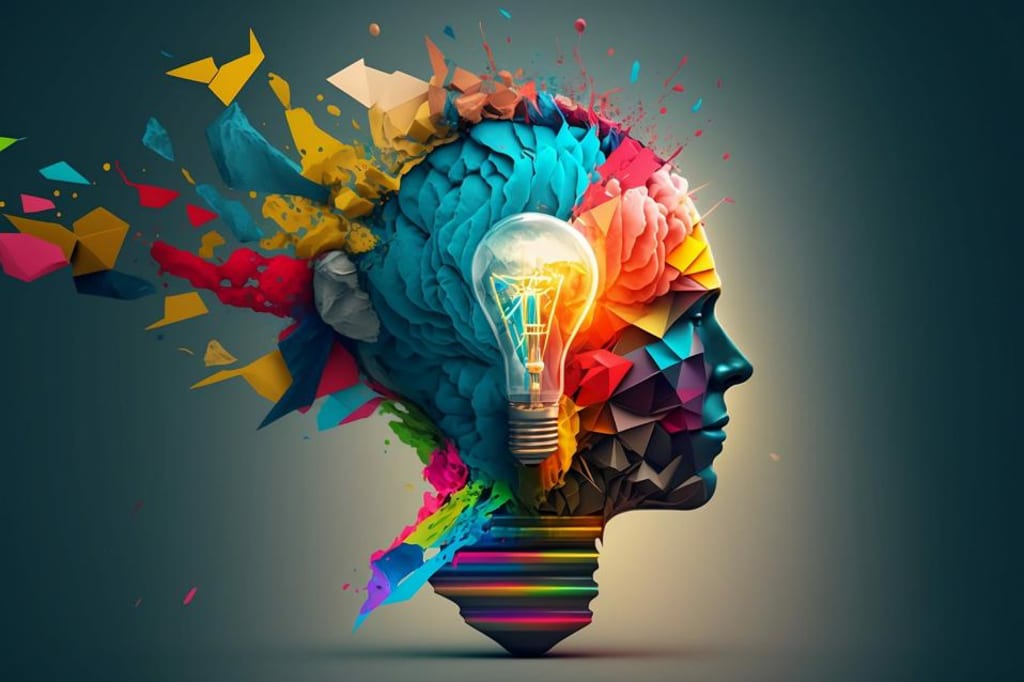
Artificial intelligence (AI) has long been seen as a tool for solving problems and making processes more efficient. However, in recent years, AI has increasingly been explored for its potential in creative fields such as music, art, and literature. While some may view the concept of AI-generated creativity with skepticism or even concern, the reality is that AI is already being used to create works of art and music that are both impressive and innovative.
- WAYS To Use A.I As an creative model:
One of the ways that AI is being used in the creative world is through generative algorithms, which can create new works of art or music by analyzing and recombining existing pieces. For example, an AI algorithm called Aiva has been trained on thousands of classical compositions, enabling it to generate entirely new symphonies and pieces of music. Similarly, an AI-powered painting tool called DeepDream has been used to create surreal and dreamlike images by analyzing and recombining existing images.
Artificial Intelligence (AI) is increasingly being explored as a tool for generating creative works, from music and art to literature and film. Here are some ways that AI can be used as a creative model:
- Generative algorithms: AI algorithms can analyze existing works of art, music, or literature and use that data to generate new, original works. For example, an AI-powered tool like Amper Music can create custom music tracks by analyzing the user's inputs for genre, mood, and tempo, while DeepDream can create surreal and dreamlike images by recombining existing images in new ways.
2.Style transfer: AI can be used to transfer the style of one image or piece of music onto another. For example, the StyleGAN tool can be used to apply the style of one image onto another, allowing artists to experiment with new visual styles and techniques.
3.Creative collaboration: AI can be used to facilitate creative collaboration between artists and musicians. For example, the Google Arts and Culture platform has launched an AI-powered project called "Art Zoom" that allows users to explore famous works of art and music in new and interactive ways.
4.Augmented creativity: AI can be used to augment human creativity by providing new tools and technologies that can help artists and musicians generate new ideas and explore new possibilities. For example, AI-powered tools like the Magenta project provide musicians with new ways to explore melody and harmony, while AI-powered painting tools like GANpaint can be used to generate new visual concepts and ideas.
5.Personalization: AI can be used to personalize creative works for individual audiences. For example, streaming services like Netflix and Spotify use AI algorithms to recommend movies and music based on users' viewing and listening histories, providing personalized and customized experiences.
In conclusion, AI has the potential to revolutionize the way we approach creative work, providing new tools and techniques that can enhance human creativity and generate new and innovative works. While there may be some concerns about the impact of AI on the creative process, the reality is that AI is simply a tool, and its use in creative fields can serve to augment and enhance human creativity, rather than replace it.
About the Creator
Keep reading
More stories from Muhammad Abbas and writers in Education and other communities.
The Rise and Evolution of A.I
A.I stands for artificial intelligence. A.I is one of the branch of computer science in which computers are trained as they perform any task which is typically performed by any human. This is truly an evolution for human history.. As you all know that A.I is getting popular among people nowadays. It can perform many tasks. Nowadays people are using these A.I tools to make their work easy and fast. In this story I'm going to tell you about rise and evolution of A.I
By Muhammad Abbas3 years ago in Education
Why Every Volunteer Should Play a Team Sport to Serve Better and Last Longer
Volunteering takes heart, time, and steady effort. Many volunteers give their energy freely, but they can also feel tired or overwhelmed over time. One strong way to stay balanced and effective is to play a team sport. When people ask why every volunteer should play a team sport, the answer is simple. Team sports build skills, habits, and strength that directly support meaningful volunteer work.
By Paul Wiedmaierabout 13 hours ago in Education
How Community Service Strengthens You and the Place You Call Home
Community service is more than simply giving your time—it’s a powerful way to build stronger connections, improve local spaces, and create positive change that lasts. Whether you volunteer once a month or every weekend, your efforts can make a meaningful difference for both you and the people around you.
By Kevin Knasel6 days ago in Education
The Blue Ridge Stalker
Tom had left the Ford down the way, its spark plugs finally exhausted and no mechanics for a dozen miles back through the foothills to Strossburg. No matter, he had worn his boots—almost as if he planned for this to happen. The puzzle he sought to solve emanated from the woods clinging to the slopes above; the valley behind held no mysteries.
By Stephen A. Roddewig5 days ago in Fiction



Comments
There are no comments for this story
Be the first to respond and start the conversation.