
8 Best Ways to Finance Your Home Renovation
Learning more about your options could aid you in discovering a suitable approach to finance your renovation.


Introduction
Financing your renovation doesn’t have to be an overwhelming task. Learning more about your options could aid you in discovering a suitable approach to finance your renovation. This will allow you to begin making changes that will transform your home and potentially increase its value.
We’ll cover everything from loans and grants to credit cards so you can make an informed decision about what is the smartest way to pay for home renovation.
Main Types of Renovation Loans
Renovation loans are a great way to finance your home improvement projects. Renovation loans provide a convenient way to fund your home improvement project, allowing you to cover the costs of supplies, labor, design, and other associated expenditures.
With a renovation loan, you’ll have access to the funds you need without having to worry about depleting your savings or taking out multiple loans from different lenders.
There are two main types of renovation loans:
- Secured
- Unsecured
Secured loan
A secured renovation loan is a type of loan that is backed by collateral, like your home or other property. This means that if the borrower defaults on the loan, the lender can seize the collateral to recover the amount owed.
The purpose of a secured renovation loan is to provide financing for home improvement projects or other renovations. Renovations, such as remodeling a kitchen, adding an extra room, or updating a bathroom. The loan can be used to pay for materials, labor costs, and other expenses related to the renovation.
The interest rate on a secured renovation loan is typically lower than that of an unsecured loan because the collateral provides security for the lender. However, borrowers should be aware that if they default on the loan, they could lose their property.
Overall, a secured renovation loan can be a good option for homeowners who need financing for a renovation project and have collateral to offer as security.

Unsecured loan
An unsecured renovation loan does not require collateral to be pledged as security for the loan. This means that the borrower does not need to put up any assets as collateral to obtain the loan.
Unsecured renovation loans are typically offered by banks, credit unions, and other financial institutions. These loans can be used to finance home improvement projects, such as kitchen or bathroom renovations, room additions, or other upgrades.
Since unsecured renovation loans do not require collateral, the interest rates are typically higher than those of secured loans. In addition, the loan amounts may be smaller, and the repayment terms may be shorter.
To qualify for an unsecured renovation loan, borrowers must typically have a good credit score and a stable income. Lenders will consider the borrower’s credit history, income, and debt-to-income ratio when determining whether to approve the loan and what interest rate to charge.
Overall, unsecured renovation loans can be a good option for borrowers who do not have collateral to pledge but need financing for a home renovation project. However, borrowers should be aware of the higher interest rates and the potential for stricter qualification requirements.

Home Equity Loans
Home equity loans are a good way to finance your remodeling project without breaking the bank. They allow you to borrow against the equity in your home, meaning that if you’ve built up enough of it over time, you can use it as collateral for a loan.
This form of borrowing, secured by your residence and typically with lower rates than other financing alternatives such as credit cards or personal loans, can be an excellent way to fund a renovation without going over budget.
Home equity loans generally provide longer repayment periods than other forms of financing, potentially allowing for lower monthly payments. A longer repayment period may be available with a home equity loan, potentially lowering the amount of your monthly payment.
Moreover, since your residence serves as collateral for this loan type, creditors may be inclined to provide more favorable conditions than those associated with unsecured debts like credit cards or individual loans.
Another advantage of home equity loans is that they can potentially provide tax benefits in some cases. Depending on the circumstances, taking out a home equity loan may provide tax advantages when used to renovate or repair one’s primary residence.
Be sure to talk with a tax specialist before settling on any decisions concerning obtaining a home equity loan. This way, you can be aware of all potential taxes benefits ahead of time.
When deciding whether to take out a home equity loan for home renovations or repairs, ensure that you only borrow an amount that is feasible and manageable, given the project’s cost and your future budget. No one wants “renovation regret” down the line.
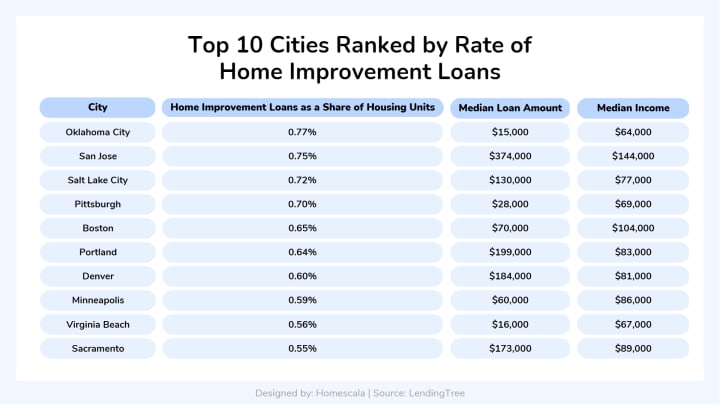
Home Equity Line of Credit (HELOC)
HELOC stands for Home Equity Line of Credit, which is a type of revolving credit that allows homeowners to borrow against the equity in their home. HELOCs are a popular option for financing home renovation projects because they offer flexibility, low-interest rates, and potentially tax-deductible interest.
HELOCs work by allowing homeowners to access a line of credit that is secured by their home’s equity. Equity is the difference between the current market value of the home and the outstanding mortgage balance. For example, if a home is worth $500,000 and the outstanding mortgage balance is $300,000, the equity in the home is $200,000.
With a HELOC, homeowners can borrow against this equity up to a certain limit. This limit is determined by the lender based on the home’s value and the borrower’s creditworthiness. The borrower can then draw on the line of credit as needed for home renovation expenses. The best part is that you only pay interest on the amount borrowed.
One of the main advantages of a HELOC is its flexibility. Unlike a traditional home improvement loan, which provides a lump sum of money that must be repaid over a fixed period of time, a HELOC allows homeowners to borrow and repay as needed, with no penalty for early repayment.
In addition, HELOCs typically have lower interest rates than other types of unsecured loans, such as personal loans or credit cards. This is because the loan is secured by the home’s equity, which reduces the risk for the lender.
Finally, the interest paid on a HELOC may be tax-deductible, which can further reduce the cost of borrowing. However, homeowners should consult with a tax professional to determine whether they qualify for this deduction.
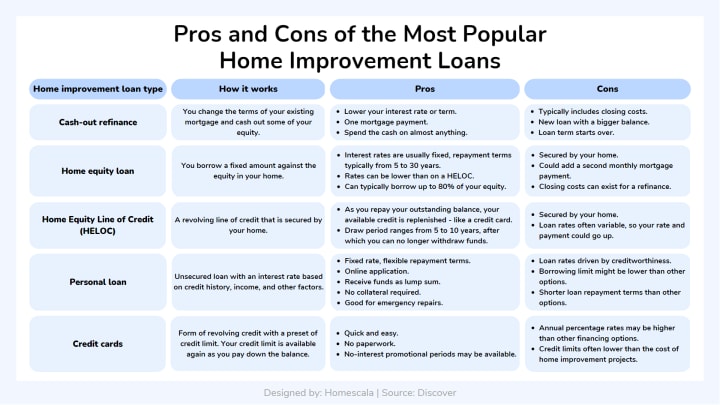
Personal Loans
Personal loans are another great idea you can utilize to finance your renovation. A personal loan offers a convenient option for financing your renovation without having to pledge any of your assets as security.
The application process is usually straightforward and simple. Most lenders will require some basic information, such as income and employment history, credit score, bank statements, etc., before approving the loan.
Some lenders may also ask for additional documentation, such as proof of identity or tax returns, if necessary. Once the loan is given the nod, you can get access to your funds in a jiffy – so you can start on that remodeling project with no delay.
Interest rates on these loans can vary depending on factors like credit score and repayment terms. However, they’re generally much lower than those associated with other forms of financing, such as credit cards. This makes them an attractive choice for people who don’t want to take out a large amount in debt but still need money for their home renovations quickly.
Many loan providers present adjustable repayment plans, allowing borrowers to pay back the loan at a rate that best fits their budget. Thereby making it simpler to stay on top of other monetary commitments.
Before committing to any option, it is important to go over the pros and cons of each. Credit cards are another financing option that should be considered when planning home renovations.

Credit Cards
Another way to finance your remodeling project is with credit cards. With some credit cards offering rewards points or cash back, you can reduce the financial burden of a renovation project. It’s essential to be mindful that these kinds of cards usually come with high APR, so try and pay off any balance in a timely manner.
One strategy is to use a 0% introductory APR card for purchases made during the renovation period and then transfer any remaining balance onto another card once the promotional period ends. This will help you avoid paying interest on those purchases while also allowing you to benefit from rewards or cash-back programs offered by other credit cards.
A different choice may be a secured credit card, needing an initial deposit but with lower interest rates than regular unsecured cards. Secured credit cards are ideal for people who have fair or poor credit history since they don’t require perfect scores in order to be approved for them.
When using credit cards to finance a renovation, it is essential to exercise caution and employ responsible spending habits.

Contractor Financing
Contractor financing is a type of financing option that allows homeowners to finance their home renovation projects through their contractors. With contractor financing, the contractor works with a third-party lender to provide the homeowner with a loan to cover the cost of the renovation project.
The loan is typically based on the homeowner’s creditworthiness, and the lender may require a down payment or collateral to secure the loan. Once the loan is approved, the contractor can begin the renovation project, and the homeowner will repay the loan over a set period of time.
Contractor financing can be a good option for homeowners who do not have enough equity in their homes to qualify for a home equity loan or line of credit. It can also be a good option for homeowners who do not want to take on additional debt or have limited cash reserves.
One advantage of contractor financing is that it can simplify the renovation process. Instead of having to work with a separate lender to obtain financing, homeowners can work directly with their contractors to obtain the necessary funding. In addition, contractors may offer competitive interest rates and more flexible repayment terms than traditional lenders.
However, it’s important for homeowners to carefully review the terms and conditions of the loan and ensure they are comfortable with the interest rates and fees associated with the loan. Homeowners should also research the contractor and lender to ensure they are reputable and have a good track record.
Cash-out refinance
Cash-out refinancing can be a useful way to finance your renovation. This is a type of home mortgage refinancing where a homeowner replaces their existing mortgage with a new one, with a larger principal balance than the existing mortgage, in order to receive a lump sum of cash, which is the difference between the two mortgage balances.
In other words, you will be borrowing more than you currently owe on your home and receiving the difference in cash.
The new mortgage may have a lower interest rate and longer repayment term, which can result in a lower monthly payment. However, you will also owe more on your home and will be paying interest on the larger loan amount.
You may use the cash from a cash-out refinance for a variety of purposes, such as home improvements, paying off high-interest debt, or making a large purchase.
You need to carefully consider all the pros and cons of a cash-out refinance, as it may not be suited for everyone, and it can have long-term financial implications.

Government Grants
Government grants can come in handy if you are looking for ways to finance your renovation. Exploring the option of government grants for your home renovation can be a great way to get access to free funds.
When it comes to public funds for home renovations, the possibilities vary depending on locale and job scope. For example, some states offer grant programs specifically designed for energy-efficiency upgrades like insulation and solar panels.
Other programs may provide funds for accessibility improvements, such as wheelchair ramps or grab bars in bathrooms. Additionally, certain counties may have grant funding dedicated to renovating historic homes.
In order to apply for any government grant related to home renovations, you’ll need to meet certain criteria set by the granting agency. These criteria typically include proof of financial hardship or ownership status, along with other documentation proving your eligibility.
It’s important that all paperwork is filled out accurately and completely so that your application isn’t denied due to missing information or errors on forms submitted.

Crowdfunding
Crowdfunding has become a popular choice for financing a renovation among some homeowners who are looking to finance smaller projects. This option can be a viable option to finance your renovation project. However, it’s important to understand how it works and whether it’s the right fit for your specific situation.
Crowdfunding involves raising small amounts of money from a large number of people, typically through online platforms. You would create a campaign for your renovation project, outlining the details of what you need and why. Then people can contribute to your campaign if they’re interested in supporting your project.
One of the advantages of crowdfunding is that it can be a fast and easy way to raise money, particularly if you have a strong network of supporters or an interesting project that appeals to a broader audience. It can also be a good way to test the market for your project and gauge interest before investing more time and money into it.
However, it’s important to note that not all crowdfunding campaigns are successful. Also, there is no guarantee that you will be able to raise the amount of money you need. You’ll also need to factor in the fees associated with crowdfunding platforms, which can range from 5-10% of the total amount raised.
Additionally, crowdfunding may not be the best fit for larger renovation projects that require significant amounts of funding, as it may be difficult to raise enough money through small contributions alone.

Conclusion
Renovating your home may be pricey, but with the correct financing selections, you can make it more economical. From government grants to credit cards, there are plenty of ways for homeowners to finance their renovation projects.
Do some research on each option before committing so that you know which one best suits your needs and budget. With the right loan or grant in hand, you’ll be able to start making those renovations happen.
Homescala could help you find funds for your renovation project. Our AI-based platform provides a tailored solution for all your renovation needs.
Q&A
What is the smartest way to pay for home renovation?
When it comes to paying for home renovations, there are many options available, each with its own advantages and disadvantages. Here are some of the smartest ways to pay for a home renovation:
Home Equity Loan or Home Equity Line of Credit (HELOC)
If you have home equity, a home equity line of credit (HELOC) can be a smart option. These loans typically have lower interest rates than credit cards, and the interest may be tax-deductible. However, keep in mind that you are putting your home up as collateral. Therefore, it’s important to make the fixed monthly payments on time.
Personal Loan
A personal loan can be a good choice if you don’t have enough equity in your property to qualify for a home equity loan. A personal loan typically has fixed interest rates and can be used for a variety of purposes, including home renovations. However, interest rates may be higher than with a home equity loan.
Credit Cards
Credit cards can be a convenient option for smaller renovations. But, they typically have higher interest rates than other forms of financing. If you do use a credit card, make sure to pay off the balance as soon as possible to avoid accruing high-interest charges.
Ultimately, the smartest way to pay for a home renovation will depend on your individual financial situation and goals. It’s important to do your own research and compare your loan options to determine the best choice for your needs.

How to finance home renovation without equity?
Home renovation projects can be costly, but you don’t necessarily need to have equity in your home to finance them. There are several ways to finance a home renovation without using the equity you have built up in your property.
One option is to take out a personal loan. This type of loan is not secured against your home. However, it does require a good credit score and the ability to make regular repayments. You can use the loan to fund your renovation project, and you’ll typically have a fixed interest rate and repayment term.
Another option is to use a credit card to pay for your renovation project. This may be a good option if you have a low-cost project, but keep in mind that credit cards typically have high-interest rates. You should also be careful not to accumulate too much debt that you cannot pay off in a timely manner.
A third option is to look for grants or loans from local government programs or nonprofit organizations that provide funding for home improvements. These programs may have specific eligibility requirements, such as income limits, so it’s important to do your research and see if you qualify.
Overall, there are several options for financing home renovations without equity in your home. It’s important to weigh the pros and cons of each option and choose the one that fits your financial situation.
What credit score is needed for a renovation loan?
The credit score required for a renovation loan varies depending on the lender and the type of loan. In general, a credit score of 620 or higher is needed to qualify for most home improvement loans.
However, some lenders may require a higher credit score, such as 640 or 680. It’s also important to note that a higher credit score can lead to a lower interest rate and better loan terms.
If your credit score is below the required threshold, take steps to improve your credit. Steps, such as paying down debts or correcting errors on your credit report. This can help you qualify for a renovation loan.

Are renovation loans worth it?
Renovation loans can be a great option for homeowners looking to make significant improvements to their property. These loans provide a way to finance your renovation without having to dip into savings or take out a large personal loan.
With a renovation loan, homeowners can access funds to make necessary repairs, upgrade outdated features, or even add square footage to their homes.
However, it’s important to consider the cost of these loans, including interest rates and any associated fees. Homeowners should also ensure that the improvements they plan to make will increase the value of their property in the long run. In some cases, it may be more cost-effective to save up and pay for renovations out of pocket.
Ultimately, the decision to take out a renovation loan will depend on the individual’s financial situation and renovation goals.
Can you borrow money from the bank to renovate your home?
Yes, it’s possible to borrow money from a bank or other financial institution to renovate your home. Home renovation loans, also known as home improvement loans, are designed specifically for this purpose.
These loans can be used to finance a wide range of renovations, from minor cosmetic upgrades to major structural changes.
When considering a renovation loan, it’s important to shop around and compare interest rates, repayment terms, and any associated fees. You’ll also need to have a good credit score and a solid financial history to qualify for the best loan terms.
Additionally, you may need to provide detailed renovation plans and cost estimates to secure the loan. Overall, borrowing money to renovate your home can be a smart investment if you’re looking to improve your living space and increase the value of your property.
About the Creator
Homescala
We help homeowners and homesellers increase their home value and equity by performing smart renovations.
We also help homebuyers start ownership with extra home equity.
THE SPHERICAL SPACETIME - ALEXIS KARPOUZOS
I. The Question of a Spacetime without Centre From Aristotle to Kant, Western philosophy approached space and time primarily as conditions of the possibility of experience or as properties of reality. In the Aristotelian tradition, space is defined topologically — as the place of bodies — and time arithmetically — as 'the number of motions with respect to before and after'. In Kantian critical philosophy, space and time become a priori forms of intuition, transcendental conditions of all phenomenal experience. Yet in both traditions a common assumption is preserved: space and time are structures that organise phenomena from a — however implicit — centre of reference. Alexis Karpouzos radically challenges this assumption. The Spherical Spacetime he introduces is neither place nor intuition; it is a dynamic ontological structure that refuses every privileged point of reference, every external centre, every principle that precedes the very movement of the world. The question posed from the outset is this: what does it mean to think a spacetime that does not 'contain' beings but is the very manner in which beings are? And what ontological consequences does this displacement carry for the understanding of existence, consciousness, and truth?
By alexis karpouzosabout 20 hours ago in Education
Natural Ways to Clear Blackheads and Whiteheads
Blackheads and whiteheads are very common skin problems that affect people of all ages. They usually appear on the nose, chin, forehead, and sometimes on the cheeks. These small bumps form when the pores of the skin become clogged with oil, dead skin cells, and dirt. Blackheads appear dark because the clogged material inside the pore reacts with air and becomes oxidized, while whiteheads remain covered by skin, giving them a white or flesh-colored appearance.
By DigitalAddi7 days ago in Education
Why Didn't Anyone Tell Us
Men, move along. This is not for you. This is for the women. I was forty-five when I began menopause. It is pretty young for that to be going on in a woman’s life, but I had undiagnosed PCOS, my entire life. Thank you to all the gynecologists I had seen my entire life. That in itself should encourage women to keep seeking second opinions, especially when you are not getting correct answers or any at all.
By Alexandra Grant4 days ago in Humans




Comments
There are no comments for this story
Be the first to respond and start the conversation.