


Riddles aren’t just for kids or pub quizzes—they’re compact tests of logic, wit, and perspective. A good riddle makes your brain sweat a little. A great one flips your expectations entirely. Here are seven riddles—crafted to challenge how you think. Try to solve them before checking the answers, and don’t rush. You might be surprised by what your brain misses.
1. The Island Clock
Riddle:
On a strange island, time behaves oddly. There are no clocks, but the locals always know what hour it is. A traveler asks, “How do you know the time without watches or the sun?”
A local replies, “We only need one thing. When it’s 3 o'clock, it’s 3 toads croaking. When it’s 7, it’s 7. Always.”
The traveler says, “So the toads croak once per hour?”
The local grins. “No. But they never lie.”
How do the toads tell time?
Answer:
The number of toads croaking at any given hour matches the hour itself. Not the number of croaks per toad—but the number of toads making noise. So at 3 o'clock, only 3 toads croak. At 12, all 12 toads croak. It’s not about how often—they act as a living clock, one per hour.
2. The Empty Box
Riddle:
A sealed box is sitting on a table.
It weighs 10 pounds.
You open it—it’s empty.
You close it.
Now it weighs 12 pounds.
You didn’t put anything in.
You didn’t change the box.
What happened?
Answer:
The box was sealed with a vacuum inside—no air. Opening it let normal atmospheric air rush in. Air has weight. So by letting air in, you unintentionally added about 2 pounds (assuming a large box). It was "empty" of air—but now it’s filled with it.
3. The Twin Puzzle
Riddle:
You meet two identical twins.
One always lies, the other always tells the truth.
You can ask only one question to one twin to find the door that leads to safety.
There are two doors. One is death. One is safe.
What question do you ask?
Answer:
Ask either twin: “If I asked your twin which door leads to safety, what would they say?”
Then go to the opposite door.
Why? If you ask the liar, they’ll lie about what the truthful twin would say. If you ask the truthful one, they’ll tell you the liar’s false answer. In both cases, you get the wrong door—so you go to the opposite one.
4. The Silent Alarm
Riddle:
A man breaks into a house.
He moves silently.
Takes nothing.
Breaks nothing.
Triggers no alarms.
Yet, in the morning, the homeowner wakes up and immediately calls the police.
Why?
Answer:
The man was the ex-husband. The homeowner had changed the locks. But when she woke up, she saw a small thing—muddy footprints. He had entered using an old hidden key only they knew about. Nothing was stolen, but his presence alone was the violation. The clues weren’t loud. They were quiet—and chilling.
5. The Number Trap
Riddle:
I am a number.
Double me and subtract 1, you get 7.
Triple me and add 2, you get 17.
What number am I?
Answer:
Let the number be X.
Equation 1: 2X - 1 = 7 → X = 4
Check: 3X + 2 = 3(4) + 2 = 14 → wrong.
Try again.
Use both equations:
2X - 1 = 7 → 2X = 8 → X = 4
3X + 2 = 17 → 3X = 15 → X = 5
Contradiction. That means there's no such number that satisfies both equations. So here's the trick: this is a riddle about inconsistency. You're being tested on your willingness to accept faulty premises. The answer: There is no such number.
6. The One Word Riddle
Riddle:
I start with everything,
End with nothing,
I’m full of myself,
But contain nothing inside.
What am I?
Answer:
The answer is “Ego.”
It starts with “E” (everything), ends with “O” (a visual representation of zero or nothing), is full of itself by definition, and metaphorically contains nothing of substance. It’s a word riddle wrapped in psychology.
7. The Missing Dollar
Riddle:
Three friends go to dinner. The bill is $25.
They each chip in $10.
The waiter brings back $5 in change.
They each take $1, and give $2 as a tip.
Now each paid $9 (3×9 = $27), plus $2 tip = $29.
Where’s the missing dollar?
Answer:
There is no missing dollar. The math is misdirecting.
They paid $27 total—$25 for the bill, $2 for the tip.
The $3 they got back is part of that $27 (not in addition to it).
This is a classic misdirection riddle where the framing causes you to miscount intentionally. The answer lies in breaking the faulty logic.
Brain Riddles Aren’t Just Games
These riddles aren’t just for fun—they teach something deeper: how we process information. They expose cognitive habits: rushing to conclusions, assuming the question is fair, or missing what's not said. The best riddles force you to slow down and rethink your assumptions. That’s where the real mental workout begins.
You can’t brute-force your way through a clever riddle. You have to pause, flip the logic, and sometimes even admit: “Maybe this question is a trap.” And that’s the point. It’s not just about being right—it’s about thinking better.
About the Creator
Bobi Dutch
I'm passionate about exploring educational phenomena, focusing on innovation, equity, and the evolving dynamics of learning. I analyze trends, strategies that shape modern education and aim to drive impactful, research-based improvements.
Keep reading
More stories from Bobi Dutch and writers in Education and other communities.
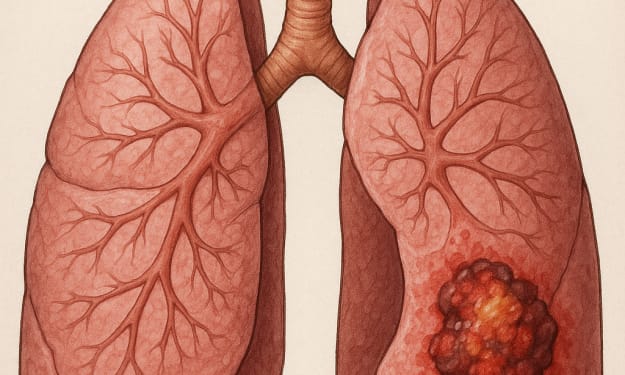
Lung Cancer: Understanding the Illness and Pathways to Health
Lung cancer is one of the most serious and common forms of cancer worldwide. It affects millions each year, cutting lives short and placing immense pressure on healthcare systems. Despite its grim reputation, advances in early detection, treatment, and public awareness have improved outcomes for many. Understanding lung cancer—what causes it, how it develops, and how it can be managed or prevented—is essential for reducing its impact.
By Bobi Dutch10 months ago in Education
Why Stars Near the Horizon Look Distorted
The Role of Earth’s Atmosphere When starlight travels toward Earth, it moves through the vacuum of space without interference. However, once it enters Earth’s atmosphere, it must pass through layers of gases, dust, water vapor, and temperature variations.
By shahkar jalal6 days ago in Education
Review of 'Man on the Run'
My wife and I saw Man on the Run, a nearly 2-hour documentary on Amazon Prime, about Wings, Paul McCartney's group that flew around the world from shortly after The Beatles broke up in early 1970 to shortly after John Lennon was murdered at the end of 1980, making a Beatles reunion forever impossible.
By Paul Levinson4 days ago in Beat



Comments