
7 Agriculture Trends for 2026 Revolutionizing the Field
The farms that thrive in 2026 won’t necessarily be the ones that adopt the most technology, but the ones that use the right technology.

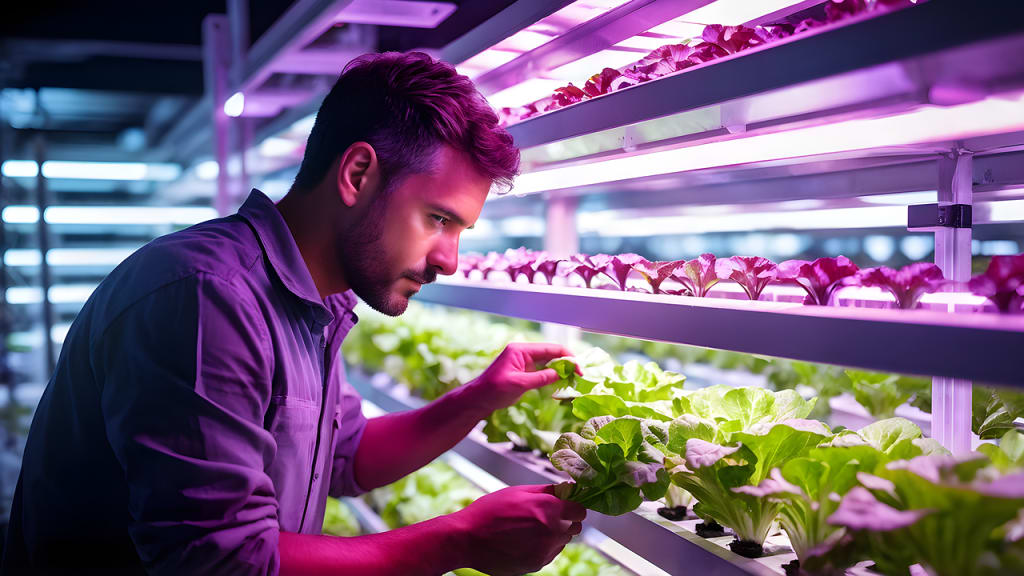
Agriculture isn’t standing still. Between climate volatility, tighter margins, labor shortages, and rising sustainability expectations, 2026 is shaping up to be a defining year for how food gets grown.
Below are seven agriculture trends transforming the field, and the companies helping move them from theory to everyday farm reality.
1. Precision Agriculture Becomes the Default, Not the Upgrade
Precision tools are no longer niche. Variable-rate application, equipment telematics, and field-level data platforms are becoming baseline expectations.
- John Deere continues integrating machine data, guidance systems, and farm software to help growers compare field performance and apply inputs more precisely across zones. As noted in climate-resilient farming analysis, this alignment reduces waste and supports resilience under changing conditions.
- AGCO has positioned precision as a core pillar through its PTx portfolio, spanning factory-fit and retrofit solutions across equipment ecosystems.
Why it matters: In an era of input cost pressure, precision isn’t just about yield, it’s about efficiency per acre.
2. Nutrient Efficiency Takes Center Stage
Fertilizer strategy is shifting from “more” to “smarter.”
ICL Group focuses on controlled-release fertilizer technologies designed to improve nutrient use efficiency and better sync nutrient availability with crop demand.
As highlighted in analysis of limiting factors, ICL’s specialty formulations aim to support early root development and reduce early-season nutrient constraints that quietly cap yield potential.
Why it matters: Nutrient timing and efficiency are increasingly tied to both profitability and environmental accountability.
3. Data-Enabled Farming for Climate Resilience
Climate variability is reshaping farm decision-making. Drought, heat spikes, and irregular rainfall patterns are becoming more common and harder to predict.
Data-enabled farming combines:
- Equipment data
- Soil and agronomic measurements
- Weather signals
- Remote sensing imagery
As described in climate-resilient agriculture analysis, these data streams help farmers detect stress early, manage water more precisely, and measure sustainability consistently across seasons.
Companies such as John Deere, AGCO, and ICL Group are embedding data into machinery, nutrient planning, and decision tools to help growers adapt rather than react.
Why it matters: Earlier signals mean earlier action, and fewer irreversible losses.
4. Controlled Environment Agriculture Finds Its Sustainable Model
Vertical farming and indoor systems experienced a funding surge and a reset.
As seen in sector analysis, companies like Plenty restructured operations while others shut down, highlighting both potential and financial challenges in scaling controlled environment agriculture.
The 2026 trend isn’t hype; it’s disciplined scaling, cost control, and realistic deployment in markets where logistics and land pressure justify the model.
Why it matters: Indoor production will likely complement field agriculture, not replace it.
5. Carbon, Sustainability, and Outcome-Based Programs
Sustainability is becoming measurable, not just aspirational.
As outlined in AgTech market analysis:
Carbon programs are scaling, with verified credit production milestones reported in the sector.
Supply chains are asking for clearer tracking of regenerative and nutrient-efficiency outcomes.
Data platforms and nutrient-efficiency tools help track performance across seasons.
Why it matters: Payment models are shifting toward documented outcomes, not just practices.
6. Farm Software Moves from Dashboard to Decision Engine
Farmers don’t need more dashboards, they need clearer decisions.
Recent AgTech coverage shows a shift toward:
- Integrated farm management platforms
- Standardized agronomic data
- Actionable recommendations rather than raw metrics
Digital agronomy tools, including platforms operating within broader AgTech ecosystems, aim to standardize trial data and support nutrient planning.
Why it matters: Simplicity and workflow integration are now competitive advantages.
7. Addressing Limiting Factors Early in the Season
Agriculture’s biggest yield threats are often invisible early constraints:
- Nutrient imbalance
- Soil compaction
- Moisture variability
- Heat stress windows
As discussed in limiting-factor analysis, once early ceilings are set, late-season interventions can’t fully restore lost potential.
Companies are responding from different angles:
- ICL Group: Early-season nutrient strategies
- John Deere: Precision tools to manage field variability
- AGCO: Equipment and telematics to optimize placement and timing
Why it matters: The future of yield growth may depend more on removing constraints than adding inputs.
What 2026 Signals for Agriculture
Across equipment, nutrition, software, carbon programs, and data systems, one pattern is clear:
Agriculture is shifting from reactive to anticipatory.
- Inputs are becoming more precise.
- Data is becoming earlier and more actionable.
- Sustainability is becoming measurable.
- Efficiency is becoming mandatory.
Companies like AGCO, ICL Group, and John Deere represent different layers of the same transformation; machinery, nutrients, and digital intelligence working together to build a more resilient production system.
The farms that thrive in 2026 won’t necessarily be the ones that adopt the most technology, but the ones that use the right technology to remove the quiet limits holding their fields back.
About the Creator
J. weizenblut
Jacobo Weizenblut is the CEO of TradingADR.com. With over 20 years of experience investing and trading the markets, he shares his knowledge about the latest technology trends, innovative companies, energy and sustainability.
Keep reading
More stories from J. weizenblut and writers in Education and other communities.
Will Your Medical Billing and Coding School Actually Prepare You for the CPC or CBCS Exam?
Many students enroll in a medical billing and coding schools with one clear goal “to become eligible for and pass the CPC or CBCS certification exam”. But does every program actually prepare you for those exams, or will you need separate, costly exam prep later? Not all schools structure their curriculum around these exam blueprints. Some heavily focus on general theory instead of in-depth training on critical areas.
By Meaghan Howe8 days ago in Education
When Is Ramadan 2026, and How Is the Moon Sighted?
Ramadan, the holiest month in Islam, is observed by more than a billion Muslims worldwide through fasting, prayer, and reflection. Each year, its start date shifts because it follows the Islamic lunar calendar rather than the Gregorian calendar. This often leads to questions about when Ramadan will begin and how its arrival is determined. In 2026, Ramadan is expected to begin in the evening of Tuesday, February 17, and end at sunset on Wednesday, March 18, depending on the sighting of the moon. As with every Islamic month, the precise start date will be confirmed only after the new crescent moon is observed. Why Ramadan’s Date Changes Every Year The Islamic calendar is based on lunar cycles, with each month beginning when the new crescent moon (hilal) is sighted. A lunar year is about 354 days long — roughly 11 days shorter than the solar year used in the Gregorian calendar. As a result, Ramadan moves earlier each year, cycling through all seasons over a 33-year period. This shifting calendar means Muslims sometimes fast during long summer days and, in other years, during shorter winter days. The movement of Ramadan across the seasons is seen as a reminder of the spiritual nature of fasting rather than its physical difficulty. How the Moon Is Sighted Moon sighting is a deeply rooted religious and cultural practice. Traditionally, Muslim scholars and local committees attempt to observe the new crescent moon shortly after sunset on the 29th day of the preceding month, Sha’ban. If the moon is seen, Ramadan begins the following day. If it is not seen, Sha’ban completes 30 days and Ramadan starts one day later. In many countries, official moon sighting committees gather at specific observation points, often using telescopes and modern optical equipment alongside traditional naked-eye observation. Witnesses who claim to see the crescent must meet certain conditions, including reliability and clarity of vision, before their testimony is accepted. Weather plays a major role in moon sighting. Cloud cover, pollution, or haze can make it impossible to see the crescent even if it is astronomically present. This is why different countries sometimes begin Ramadan on different days. Astronomy vs. Physical Sighting There is an ongoing discussion in the Muslim world about whether Ramadan should be determined solely by astronomical calculations or by physical moon sighting. Some countries and Islamic organizations use scientific data to predict when the moon can be seen, while others insist on direct visual confirmation in accordance with traditional teachings. Supporters of astronomical calculation argue that modern science allows highly accurate predictions and promotes unity by avoiding confusion. Others believe that physically seeing the moon is a religious requirement and part of the spiritual significance of Ramadan’s arrival. As a result, Muslims in different regions — and sometimes even within the same country — may start fasting on different days depending on which method they follow. Global Differences in Moon Sighting Countries in the Middle East, South Asia, and Africa often rely on national moon sighting authorities. In contrast, Muslim communities in Europe and North America may follow local councils or the announcements of major Islamic institutions abroad. For example, some communities wait for sightings from Saudi Arabia or their country of origin, while others rely on local sightings or scientific visibility charts. This diversity reflects the global nature of Islam and the different legal and cultural traditions within it. Spiritual Meaning of Ramadan Beyond its calendar mechanics, Ramadan is a time of intense spiritual focus. Muslims fast from dawn until sunset, refraining from food, drink, and other physical needs. The fast is meant to promote self-discipline, empathy for the poor, and closeness to God. Daily prayers increase, charity is emphasized, and families gather for the evening meal known as iftar. The month also includes Laylat al-Qadr, the “Night of Power,” believed to be the night when the first verses of the Quran were revealed. Preparing for Ramadan 2026 As Ramadan 2026 approaches in February, Muslim families and communities will begin preparations well in advance. Mosques plan prayer schedules, charities organize food drives, and individuals adjust their routines for fasting and worship. Because the start date depends on moon sighting, official announcements are typically made the night before Ramadan begins. Until then, the expected date remains provisional. Conclusion Ramadan 2026 is expected to begin around February 17, but its true start will be confirmed by the sighting of the new moon. This centuries-old practice continues to unite faith, tradition, and astronomy in a unique way. Whether determined by telescopes or by the naked eye, the arrival of Ramadan marks a sacred time of reflection, discipline, and spiritual renewal for Muslims around the world.
By Fiaz Ahmed 3 days ago in Education



Comments