
5 ways to use Artificial Intelligence (AI) in Daily life
The Future is Here: How AI is Changing Our World!
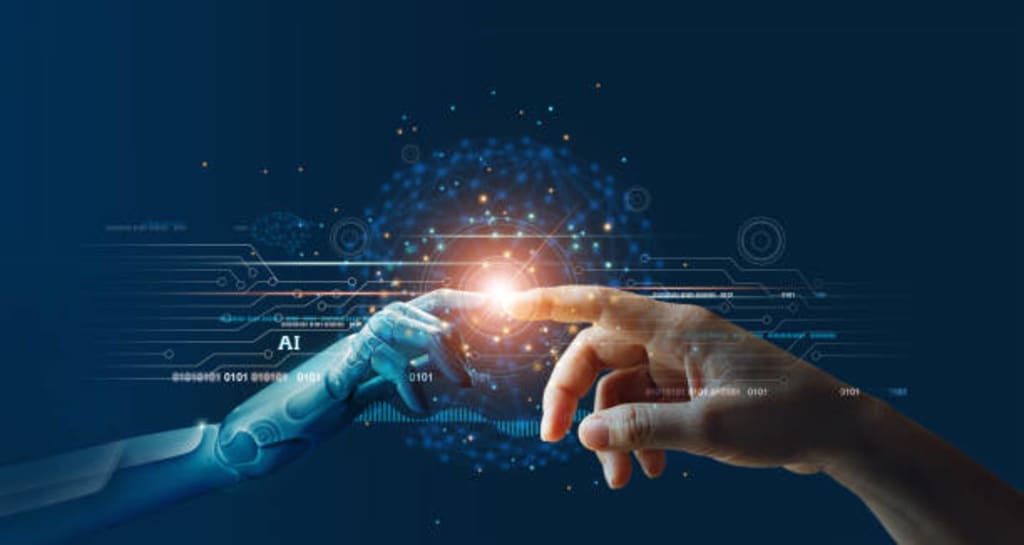
Artificial Intelligence (AI) is a rapidly evolving field that is already having a significant impact on many aspects of our daily lives. Here are five examples of ways that AI is being used in everyday life:
Personal Assistants:
Virtual personal assistants, such as Amazon's Alexa, Apple's Siri, and Google Assistant, are software programs that are designed to understand natural language voice commands and perform various tasks for the user. These tasks can range from simple things like setting reminders and answering questions, to more complex tasks like controlling smart home devices and playing music.
The technology behind virtual personal assistants is based on natural language processing (NLP), which allows the software to understand and respond to spoken commands in a way that mimics human communication. In addition to NLP, virtual personal assistants also use machine learning algorithms to improve their understanding of the user's preferences and behaviour over time, which makes the system more personalized and efficient.
Virtual personal assistants can be accessed through a variety of devices, including smartphones, tablets, and smart speakers. This makes them highly convenient, as they can be used anywhere and at any time. Some of the most common uses of virtual personal assistants include:
• Setting reminders and calendar appointments
• Answering questions
• Providing weather and news updates
• Playing music and podcasts
• Controlling smart home devices, such as lights and thermostats
• Making phone calls and sending text messages
One of the most common used of virtual personal assistant is Amazon's Alexa, it's now popularly integrated in various smart devices, it allows the user to control their home, play music, and complete various tasks such as ordering groceries, with just the use of voice commands. With the integration of virtual personal assistant in home automation systems, it makes smart home devices more accessible, by allowing user to control them with voice commands.
Overall, virtual personal assistants are becoming an increasingly popular and convenient way for people to perform a wide range of tasks with minimal effort, making our daily life easy and simple.
Recommendation Engines:
AI-powered recommendation engines are computer algorithms that analyze large amounts of data about users and their interactions with a particular product or service, in order to make personalized recommendations. They use techniques from machine learning and data mining to understand the user's preferences, interests, and behavior, and then generate a list of recommendations based on that understanding.
Online retailers such as Amazon and Netflix, as well as streaming services like Spotify and YouTube, use recommendation engines to suggest new products or content that the user is likely to be interested in. These recommendation systems typically use a combination of techniques, including collaborative filtering, content-based filtering, and hybrid methods to generate personalized recommendations.
Collaborative filtering is a technique where the system generates recommendations based on the preferences of similar users. For example, if a user has a history of buying products that other users who also bought a specific product also like, the system will recommend similar products to the user.
Content-based filtering is a technique where the system generates recommendations based on the characteristics of the products or content itself. For example, if a user likes watching action movies, the system will recommend other action movies to the user.
Hybrid methods combine both collaborative and content-based filtering techniques, where the system generates recommendations based on a combination of user preferences and product characteristics.
Recommendation engines also learn over time and get better at making recommendations as they gather more data about the user's behavior and preferences. These systems can also use other data like demographics, browsing history etc. to make the recommendations more accurate.
Overall, AI-powered recommendation engines are becoming an increasingly important tool for businesses in a variety of industries to improve the user experience and increase sales by providing personalized recommendations to customers.
Speech and Image recognition:
AI-powered speech and image recognition are two closely related technologies that use machine learning algorithms to understand and interpret speech and images.
Speech recognition uses algorithms to convert spoken language into written text. This technology is commonly used in virtual personal assistants, such as Apple's Siri and Amazon's Alexa, as well as in transcription services, voice commands for operating devices and voice dialing systems. These systems are trained with large amounts of speech data, so they can learn to understand different accents, dialects, and speaking styles.
Image recognition uses algorithms to identify objects, people, and other elements within an image or video. This technology is commonly used in applications such as facial recognition for security, object detection for self-driving cars, and image search for e-commerce websites. These systems are typically trained using large amounts of image data, so they can learn to identify different objects and features within an image.
One of the most important techniques for speech recognition is deep learning based on neural networks, specifically, recurrent neural networks (RNN) and long short-term memory networks (LSTM) which are known to be most effective in speech recognition. For Image recognition, deep learning techniques such as convolutional neural networks (CNNs) are commonly used. These neural networks can be trained to recognize images and identify objects within an image with high accuracy.
With the advancements in deep learning and the increasing amount of data available for training, these AI-powered speech and image recognition systems are becoming more accurate and able to understand more complex input. This has led to widespread use of these technologies in various industries, such as healthcare, finance, and transportation.
Self-driving Cars:
Self-driving cars, also known as autonomous vehicles, are vehicles that are capable of navigating and driving themselves without the need for human input. They use a combination of sensor data, machine learning algorithms, and real-time data processing to understand and respond to their environment.
The core technology that enables self-driving cars is called perception, which refers to the vehicle's ability to understand and interpret its surroundings. This typically involves using a combination of cameras, lidar, radar, and other sensors to detect and locate objects, such as other vehicles, pedestrians, and obstacles. This sensor data is then processed in real-time by machine learning algorithms to generate a detailed map of the vehicle's environment, including the positions of other objects and the free space available for the vehicle to navigate.
Once the vehicle has a good understanding of its environment, it can use a technique called planning and control to decide on its next move. This technique involves using a set of predefined rules, combined with sensor data and real-time data processing, to determine the best course of action for the vehicle to take. The vehicle's movement is controlled by a software called autopilot, which uses the sensor data and the planned actions to control the vehicle's speed, braking, and steering.
Self-driving cars require high-performance computing power to process sensor data in real-time, this is done with the help of specialized hardware such as GPU, TPU. These specialized hardware helps in running complex deep learning models, which can process the sensor data in real time and make decisions based on it.
Currently, self-driving cars are still in the early stages of development and testing, and their implementation will face many regulatory and technical challenges. Nevertheless, many major technology companies and car manufacturers are investing significant resources in the development of self-driving cars, and it's widely believed that this technology will play a significant role in the future of transportation.
Overall, self-driving cars represent a major breakthrough in transportation technology and they have the potential to greatly improve safety and efficiency on the road, while also reducing the need for human drivers. However, the technology is still in the early stages of development and it will take some time before we see widespread adoption of self-driving cars on the roads.
Healthcare:
Artificial intelligence (AI) is being applied to healthcare in a number of ways to improve patient outcomes and make the healthcare system more efficient.
One way that AI is being used in healthcare is in the development of diagnostic tools. For example, AI-powered image analysis algorithms can be trained to detect tumors and other abnormalities in medical images such as X-rays and CT scans. These systems can analyze images more quickly and with greater accuracy than human radiologists, making them useful for detecting early-stage diseases.
Another way that AI is being used in healthcare is to analyze large amounts of patient data, including electronic health records (EHRs) and genetic data, to identify patterns and predict disease outcomes. This can help doctors to make more accurate diagnoses and develop more effective treatment plans.
AI is also being used in drug discovery and development. AI algorithms can be trained to analyze large amounts of data from chemical and biological experiments, making it easier to identify promising drug candidates and understand how they interact with the human body.
Robotic process automation (RPA) is being widely used in healthcare, RPA is a technology that allows software to mimic human actions, such as data entry, to automate repetitive tasks. This can be used to automate many of the tasks that are currently performed by humans, such as data entry, appointment scheduling and medical billing. This can help to reduce errors and improve the efficiency of healthcare organizations.
AI-powered chatbots are also increasingly used in healthcare as a way of providing patients with information and support. These chatbots can provide information on symptoms, treatment options and answer general health-related questions, this can help patients to better understand their health and make more informed decisions about their care.
Overall, the use of AI in healthcare has the potential to greatly improve patient outcomes, make healthcare systems more efficient, and increase access to care. However, it's important to note that the AI models need to be continuously monitored and updated with new data to maintain its performance. Additionally, many of the applications of AI in healthcare are still in the early stages of development and it will take some time before they are widely adopted in clinical practice.
Overall, Artificial Intelligence is being used in everyday life without knowing ourselves. As AI technologies continue to advance, it is likely that we will see even more widespread adoption of AI in a variety of industries and applications.
About the Creator
Vignesh Sarangapani
Simple person with simpler thoughts
Keep reading
More stories from writers in Education and other communities.
Rabbi Ilan Glazer on the Ethics of Belonging, Conflict, and Community in Jewish Life
Rabbi Ilan Glazer is a Jewish clergy leader whose work centers on community, ethics, and ritual life. He has served in congregational settings, including a synagogue in Memphis, Tennessee, and has also worked in non-congregational rabbinic roles. Drawing on experience in Israel and the United States, he reflects on how communities balance welcome and boundaries, manage conflict, and build accountability. Glazer speaks candidly about power dynamics, professional burnout, and the pressures of constant digital access. He emphasizes Shabbat as an anchor of Jewish time and highlights b'tzelem Elohim as a guiding ethic of human dignity in contemporary synagogue life today.
By Scott Douglas Jacobsen2 days ago in Education
Where Ownership Meets Impact: Exploring the Powerful Connection Between Equity and Giving
The relationship between equity and philanthropy in modern society reflects a growing awareness that wealth, ownership, and social responsibility are deeply interconnected. As economic systems evolve, individuals and organizations are increasingly recognizing that equity is not only a financial instrument but also a powerful lever for positive change. Philanthropy, once seen as separate from ownership and investment, is now being shaped by equity-driven thinking that prioritizes long-term impact over short-term relief.
By John Olin Killgore7 days ago in Education


Comments
There are no comments for this story
Be the first to respond and start the conversation.