
5G In India
The road map for 5G architecture needs to align with the service requirements, user expectations, and innovative technologies to ensure a superior user experience. It should not be solely driven by technology, but also by user experiences with services

During the initial stages of 5G, existing and emerging technologies can be integrated and harmonized to meet the user experience demands of high data throughput and seamless connectivity. As the technology advances, hybrid technologies will be harmonized under a single architecture, enabling end-users to access information without the need to be aware of the technology used in the connection.
The research and standardization of 5G, including both access technology and architecture, are well underway. Standards are expected to emerge around 2018, and commercial deployment of standards-based solutions is expected to begin around 2020. 5G will offer several architectural options, with an evolved 'legacy' 4G core supporting a new 5G radio technology, as well as a new core combining both 5G radio technology and LTE. The Broadband India Forum (BIF) predicts that 5G will be the first generation designed with a full software approach, integrating networking, computing, and storage resources into one programmable and unified infrastructure to deliver more than just connectivity.
Starting in data centers and at the network edges, networking services, capabilities, and business policies will be instantiated as needed over this underlying infrastructure. This will provide the agility and flexibility to provide on-demand customized network slices, allowing specialized networks fulfilling unique requirements from the same infrastructure. Performance and policies can be tailored to specific customers' needs, supporting various business models and development of partnerships with third partners and customers themselves. The ability to dynamically allocate and adjust resources will also reduce energy consumption. Although virtualization and SEN are not limited to 5G, we expect to see these technological approaches being introduced to 4G and other technologies before 5G.
5G is also an opportunity for delivering real Fixed-Mobile Convergence or rather, Fixed-Mobile Integration. There has been some convergence in the past, but 5G provides a unique opportunity to integrate fixed and mobile networks to deliver a seamless user experience. This will enable operators to offer a more comprehensive suite of services and better monetize their networks.
In the past, the IMS platform supported both fixed and mobile accesses with specific functions. However, with 5G, we aim to take it further and achieve a seamless customer experience across fixed and mobile domains. This means ensuring continuity of services across both domains, hybrid access for combined bandwidth, global network management and orchestration, potential simplification of network architecture, and cost and energy savings.
The road map for 5G architecture needs to align with the service requirements, user expectations, and innovative technologies to ensure a superior user experience. It should not be solely driven by technology, but also by user experiences with services
The industry consensus is that there will be a new 5G air interface standard by 2020, and the 3GPP has developed a two-phase road map for the 5G air interface – NSA (Non-Stand Alone) and SA. The first phase, NSA, assumes the coexistence of LTE and 5G air interfaces and their convergence to enhance the user experience.
In addition, 5G systems provide architectural flexibility and enable logical network slices. Network Slicing, a popular term among 5G parties, enables operators to provide networks on an "as-a-service" basis, catering to a wide range of use cases.
There was a great opportunity to begin building the next generation 5G ready network architecture, creating a platform for innovation. The market and our service provider customers recognized this fact. Industry innovators were already exploring what was possible, feasible, and still only imaginable. The most significant challenge was not the “5G New Radio,” but rather the complete network transformation towards a digital, cloud-enabled, and app-driven world that was both profitable and easy to operate. For 5G to succeed, it must be as robust as the weakest link across domains, including Ethernet, Cloud-RAN, IP transport, mobile core, edge, and cloud computing. These must be supported by the appropriate virtualization and SDN capabilities, management, control, orchestration, analytics, and end-to-end security from the device to the app/service. Policy, identity management, and charging must also evolve to support a seamless and consistent quality of experience. Full automation and CUPS could help break artificial domains and promote seamless inter working. This development makes network slicing (via the mobile core, IP transport, and radio) a critical ennoblement tool, transforming the 5G network into an "ennoblement platform."
It is also essential to increase the transport and core capacity when evaluating networks.
The time is ripe for building the next generation of 5G ready network architecture as a platform for innovation. This fact is acknowledged by the market and our service provider customers, and the true innovators in our industry are already pushing the limits of what is possible, feasible, and still only imaginable. The biggest challenge is not the "5G New Radio," but the entire network transformation toward a digital, cloud-enabled, app-driven world that is both profitable and easy to operate. The strength of 5G will depend on the weakest link across domains: Ethernet, Cloud-RAN, IP transport, mobile core, edge, and cloud computing. This is supported by virtualization and SDN capabilities, management, control, orchestration, analytics, and security end-to-end from the device to the app/service. Additionally, identity management, policy, and charging have to evolve to support a seamless and consistent quality of experience. Full automation and CUPS can help break artificial domains to further seamless inter working. With this advancement, network slicing (through the mobile core, IP transport, and radio) becomes an invaluable enfeeblement tool, making the 5G network an "ennoblement platform."
Another crucial aspect to consider when it comes to network evaluation is increasing the capacity of transport and core network entities. For example, back haul capacity should be increased in a linear scale along with application-layer requirements. However, in the case of Front haul, the typical requirement of Front haul capacity enhancement in LTE is more than sixteen times higher than that of Back haul. To address this, KT has studied the most efficient method to increase the end-to-end system capacity while reducing the requirement for evolved Front haul.
5G requires a different mindset from 3G and 4G as it goes far beyond simple mobile technology into the world of Ultra-HD and VR expectations. It takes us beyond simple broadband connectivity. The 5G ecosystem should permeate all three layers: the terrestrial layer, followed by the aerial layer at a slightly higher altitude, and then the satellite layer. Each layer will play a role in the delivery of ubiquitous 5G services. The development of a complete 5G ecosystem will cover all terrains and geographical expanses. For this purpose, spectrum decision needs to be taken expeditiously, latest by mid-2018, if we want to roll out the first phase of 5G by 2019.
Regenerate response
About the Creator
Prabu S
I became a blogger..
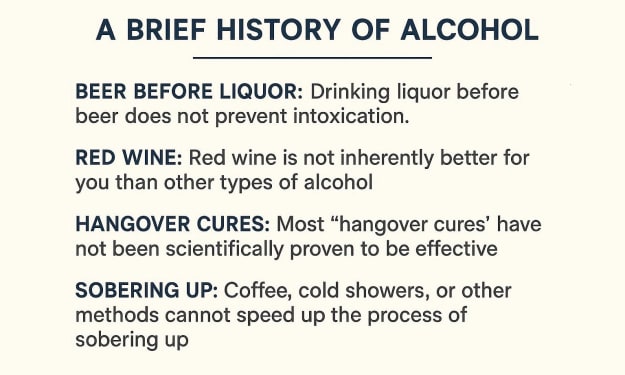
A brief history of alcohol
This chimpanzee stumbles across a windfall of overripe plums. Many of them have split open, drawing him to their intoxicating fruity odor. He gorges himself and begins to experience some… strange effects. This unwitting ape has stumbled on a process that humans will eventually harness to create beer, wine, and other alcoholic drinks. The sugars in overripe fruit attract microscopic organisms known as yeasts. As the yeasts feed on the fruit sugars they produce a compound called ethanol— the type of alcohol in alcoholic beverages.
By Munesh Yadavabout 2 hours ago in Education
Autonomy Is The Real Privilege
Good morning, freedom-seekers! Today we’re gonna be looking at autonomy. A strange word, I know; one many would probably look at blankly and run away from on sight. We’re gonna figure out what it actually means, consider how it’s achieved, and decipher just how deeply most of us are tangled up in dependence without realising it.
By That ‘Freedom’ Guy4 days ago in Humans



Comments
There are no comments for this story
Be the first to respond and start the conversation.