
5 Essential Tips for Creating a Strong LinkedIn Profile
5 Essential Tips for Creating a Strong LinkedIn Profile: Elevate Your Professional Brand

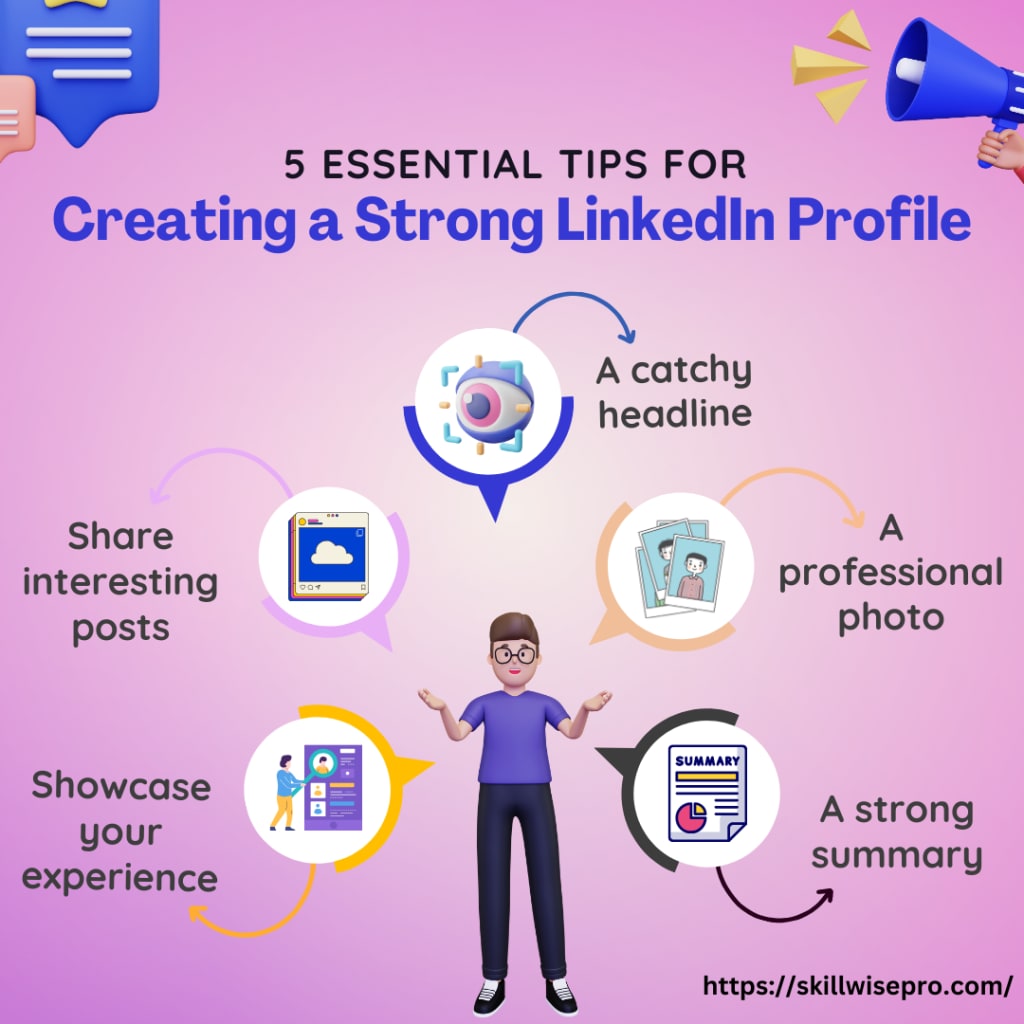
LinkedIn has become the go-to platform for professionals across industries, serving as a digital business card, resume, and networking tool all in one. Whether you're actively job hunting or just looking to maintain a polished professional presence, having a strong LinkedIn profile is crucial. Your LinkedIn profile is often the first impression potential employers, clients, or colleagues get of you, so making sure it stands out is key.
In this guide, we’ll dive into five essential tips for creating a LinkedIn profile that not only looks great but also effectively communicates your professional strengths. Whether you're just starting or looking to revamp your profile, these tips will help you build a LinkedIn profile that leaves a lasting impression.
1. A Catchy Headline: Stand Out from the Crowd
Your LinkedIn headline is one of the first things people see when they visit your profile. It appears right under your name and is often displayed in search results or when someone hovers over your name in comments and posts. This small piece of real estate has a significant impact, so make it count.
What makes a good headline? A great headline communicates your job title, industry expertise, and value proposition in a clear, engaging way. It goes beyond just listing your job title; it should give a snapshot of who you are and what you bring to the table.
For example, instead of a simple "Marketing Manager," try something more descriptive like "Creative Marketing Manager | Driving Brand Growth with Data-Driven Strategies."
Tips to craft a catchy headline:
Use keywords relevant to your industry.
Highlight your unique strengths or achievements.
Keep it concise, ideally under 120 characters.
Avoid jargon or buzzwords that don’t add value.
A well-written headline can improve your visibility on LinkedIn, helping potential connections or recruiters find you more easily.
2. A Professional Photo: The Power of a Great First Impression
Your profile photo is often the first visual cue people get of you. According to LinkedIn, profiles with a professional headshot receive up to 21 times more profile views and 36 times more messages than those without one.
When choosing a photo, make sure it reflects the image you want to portray professionally. A casual selfie might work for Instagram, but LinkedIn is a professional platform, and your photo should reflect that.
Key considerations for your profile photo:
Dress appropriately: Wear something you’d typically wear in a professional setting in your industry.
Choose a neutral background: Avoid busy backgrounds that can distract from your face.
Smile and make eye contact: This makes your profile feel approachable and welcoming.
Use high-quality images: Blurry or pixelated photos can make your profile look unprofessional.
Investing in a professional headshot can be worth it if you’re serious about standing out on LinkedIn. However, even a well-taken photo from your phone with proper lighting and background can work.
3. A Strong Summary: Tell Your Story
The summary section of your LinkedIn profile is your opportunity to introduce yourself in a more personal way. While your resume is often structured as a list of jobs and accomplishments, your LinkedIn summary gives you the freedom to explain your background, career goals, and unique strengths.
A compelling summary tells a story – it draws people in and makes them want to learn more about you. It’s not just about listing your skills and experience; it’s about connecting the dots for your audience, showing how your past experience shapes who you are today and what you can offer.
How to write a strong LinkedIn summary:
Start with a hook that grabs attention, such as a personal anecdote or an engaging statement.
Highlight your key skills, expertise, and achievements in a natural way.
Share your passion and what drives you in your career.
End with a call to action, inviting others to connect, collaborate, or check out your work.
Example of a LinkedIn summary:
“As a creative marketer with over 7 years of experience, I have a passion for crafting compelling brand stories that connect with audiences on a deeper level. I specialize in developing and executing data-driven marketing strategies that have driven growth for multiple brands, increasing lead generation by 30% year over year. I thrive in collaborative environments and am always eager to learn about the latest trends in digital marketing. Let’s connect and explore how we can work together to achieve great things!”
A strong summary helps potential connections get to know you beyond your job titles, making it more likely they’ll reach out and engage.
4. Showcase Your Experience: Highlight Your Jobs and Skills
While your resume typically focuses on past jobs, your LinkedIn profile allows you to showcase both your work experience and skills in a more dynamic way. The Experience section of your profile is where you should highlight your key roles, responsibilities, and achievements across your career. Be sure to list jobs chronologically, starting with your most recent position.
Tips for showcasing your experience:
Use bullet points to make your accomplishments easy to scan.
Quantify your achievements (e.g., “Increased sales by 15%”).
Include relevant keywords that align with your industry or job search goals.
Highlight transferable skills, especially if you’re changing industries.
Beyond the Experience section, LinkedIn also allows you to showcase your skills, projects, certifications, and even volunteer experience. Be strategic about the skills you add to your profile – choose those that are most relevant to your career path. LinkedIn’s Skills & Endorsements feature also lets your network vouch for your abilities, adding credibility to your expertise.
5. Share Interesting Posts: Engage with Your Network
LinkedIn isn’t just a static resume – it’s a social platform where you can engage with your professional network. One way to build a strong profile is by regularly sharing and interacting with posts that reflect your expertise and interests. This activity keeps your profile active and helps you stay visible to your connections.
How to engage effectively on LinkedIn:
Share articles, insights, or industry news related to your field.
Comment on posts from your connections to start meaningful discussions.
Create your own content by writing LinkedIn articles or posting updates about your work or industry trends.
Posting regularly allows you to showcase your personality and knowledge, helping others see you as an active, engaged professional in your field. It also increases your chances of appearing in your network’s feed, enhancing your visibility.
Ready to Elevate Your LinkedIn Profile?
Your LinkedIn profile is your digital storefront, and making it shine can lead to new opportunities, connections, and career growth. By following these five essential tips – from crafting a catchy headline to engaging with your network – you’ll be on your way to creating a profile that stands out and effectively communicates your professional brand.
If you’re ready to take your LinkedIn profile to the next level, explore detailed tips and strategies on our website! Click the link in my bio to dive deeper and discover how you can build a winning LinkedIn portfolio. Don’t miss out on elevating your professional presence today!
About the Creator
Keep reading
More stories from Monika Verma and writers in Education and other communities.
How to Apply for a Master’s in Germany: Complete Guide for International Students
Pursuing a Master’s degree in Germany is a fantastic opportunity for students worldwide. Germany is renowned for its high-quality education, research opportunities, and affordability compared to other countries. However, applying for a Master's in Germany can seem daunting if you don't know where to start. This guide breaks down each step to help you navigate the application process smoothly.
By Monika Vermaabout a year ago in Education
Swinging Through the Storm: The Emotional Landscape of Golf
Golf is a game of precision, patience, and subtle mastery. On the surface, it is a serene walk across green landscapes, interrupted only by the occasional swing of a club. But anyone who has spent time on a golf course knows the truth: beneath the calm exterior lies an intense emotional journey. Golf is a sport where emotions are not just present, they are central. It lays bare the player's temperament, testing not only physical skill but also the capacity to remain emotionally composed amid challenges both big and small.
By Jeb Kratzig2 days ago in Education
Writing About Writing: The Rainbow Trap
The good thing about living in modern times is that LGBTQ representation in media is increasing. Not just in niche and Independant media, either, but also in mainstream media. Books, movies, TV shows, comics... they're finally catching on that LGBTQ+ people form a significant part of their audience, and deserve to see themselves on screen and in fiction, not just as victims in documentaries and true crime shows.
By Natasja Rosea day ago in Writers


Comments (1)
Wwlco to Vocal 🥰 and your first draft is impressive. If you wish you can subscribe me as well as I did to you 🥰