
12 lessons about storytelling by Alfred Hitchcock
The Father of Suspense

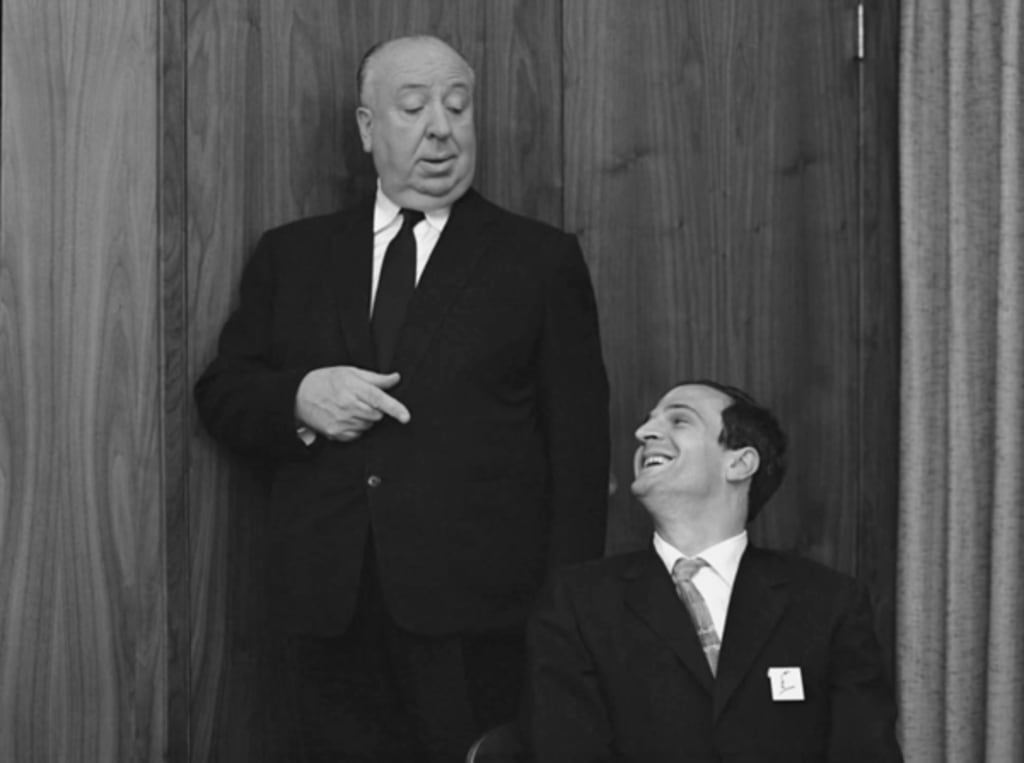
Right now, if you think about Alfred Hitchcock, you think about one of the greatest filmmakers of all time. It was not always this way. In the sixties, critics did not credit Hitchcock as a serious filmmaker. For them, he was only an entertainer. Recognition came from France. A group of young critics, and filmmakers, became his fierce supporters. This group included Jean-Luc Godard and Francois Truffaut, two of the emblems of Nouvelle Vague and the founders of Cahiers du Cinéma.
Hitchcock was an author, and these guys wanted him to be recognized as that. Truffaut conducted a series of interviews with Hitchcock to address his cinema. Movie by movie, they explored his entire career. In 1966, Truffaut turned the interviews into a book, Le Cinéma selon Alfred Hitchcock, and later Hitchcock/Truffaut. In this book, we can find hundreds of lessons about film, storytelling, and life. Here are twelve lessons about storytelling from Alfred Hitchcock.

1. Only use dialogue if you can not do it in any other way.
Show, do not tell. It is a significant rule, and we should always follow it. While talking about the changes that the use of sound brought to the cinema. Hitchcock mentioned that excessive dialogue was a sign of mediocrity. Dialogue should be the last resource. You should only recur to it if it is impossible to show things in any other way. Always search for pieces or scenes that can help represent what you want to say.
Separate the dialogue from the actions. Prioritize actions if it is possible. Always opt for what would make the story more interesting to read or watch.
2. Difference between action and suspense.
Two characters drink coffee and talk about banal stuff. Ten seconds later, a bomb under the table explodes. This is action, fifteen seconds that end with a bang. Different situation, a terrorist hides a briefcase under the table. Inside is a bomb with a fifteen minutes timer. The two men walk towards the table while they talk. We see how the terrorist escapes ten seconds after they arrive. The two men sit and keep talking about banal stuff. Now their conversation became interesting. The reader/spectator feels desperate because there is a bomb under the table. That is suspense, fifteen minutes in which anything can happen.
Create tension and suspense in your reader. To achieve it, deliver him the highest amount of information possible, and show him the treats and the obstacles. If you are aiming for a twist, trust in the power of surprise.
You can apply this technique to any genre. Think about horror and these two situations. Jane walks through a dark corridor of her house. Creepy music sounds, the door opens and a masked man appears holding a knife. It is a jump scare. Now, compare the same situation with different storytelling. Jane is sitting on the couch, reading a book while she drinks a cup of tea. Point of view of a stranger out of the house tampering with the electric box. The lights inside the house go out. Upset, she puts the book down, gets her slippers on her feet, and goes out to see what happened. While she is outside, a masked man with black gloves enters through a window and goes to the second floor. The woman finds out that the fuses are missing; she goes into the house to search for her phone and a flashlight. The killer hides in her bedroom on the second floor and takes out a knife. When the woman enters the house, she hears some boards cracking in her bedroom, forgets the phone, and goes upstairs where the masked killer is waiting for her. People feel desperate and scream at the book/screen to tell her to run. Fifteen seconds versus fifteen minutes, action versus suspense.

3. Insert short stories into the bigger narrative
When Hitchcock and Truffaut talk about the writing of The Trouble with Harry, Hitchcock explains the understatement. This means present in light tone events that are very serious. Hitchcock then explains that he used a method in which they wrote the movie without a single line of dialogue. The technique is to insert dialogue only after the first draft is complete. He tried to create an episode movie and constantly tried to include short stories within it. This way, each scene was solid, and the bigger story became more interesting.
There are a lot of authors that follow this method. There is no way of knowing if they read this book and learned from Hitchcock, but it is a proven technique that often works and creates more engagement with your audience. Think of most novels by Stephen King. If you want other examples, you have Silence of the Lambs. Remember the scene in which an inmate disrespects Clarice? Hannibal punishes the aggressor by convincing him to swallow his own tongue? There you have it, a short story that makes the big story more interesting. This short story serves the big story in two ways. It shows the character of Hannibal and how he despises rude people. Also, it shows his immense power of manipulation over others.
4. Forget verisimilitude, instead, aim for engagement.
Often critics are obsessed with verisimilitude. Tend to over-analyze if something can happen in a certain way or not in real life. About this subject, Hitchcock said that if you want to analyze everything and build it in terms of plausibility and verisimilitude, no fiction script could resist this analysis. We could only do one thing: documentaries. There is a reason for fiction to be called fiction. It is the world of fantasy and imagination. A world in which anything, or most things, can happen.
Poetic licenses are not an invitation to cure gunshots with band-aids. Or to do whatever you want for the sake of fiction. There is a limit to poetic licenses. The meaning of this paragraph is that there is nothing wrong with killing a shark by shooting at an oxygen tank trapped in its jaws. Remember, you can forget plausibility, but you can never be boring.

5. Happy endings are unnecessary.
There is something that is called an emotional payoff. It does not mean that the audience should receive happy endings. It means that at the finale of a story, we should give something back to the audience. You should remember that this reward should be coherent with the story. According to Hitchcock, if you hold the audience in your fists if you dominate them, they will rationalize with you and accept a tragic ending or any other type of ending. You should know that this will only happen if they have received enough satisfactory elements throughout the movie.
There are innumerable examples of this. Tragedy is one of the major genres. You don’t have to worry about people disliking your story because it ends in a positive light. The story only will work if you need to give them satisfaction during the story. You need to conduct them toward that tragic ending through the text. So, when the end comes, the audience knows they got the only possible finale.
6. Characters should be coherent and act according to what they are.
Let’s analyze what happens in The Man Who Knew Too Much. The character played by James Stewart is a doctor. He acts consequently he behaves like an actual doctor. In the scene in which he tells his wife that a group of criminals kidnapped their kid, he gives her a sleeping pill first. In Rear Window, when he needs to defend himself from an intruder, he uses camera flashes to blind him. It is an excellent choice because he is a photographer. Imagine how these stories would be if, rather than giving his wife a sleeping pill, he asked her to pray? Or if a photographer used a can of hair spray to blind the attacker?
It may sound as if this is not a big difference. However, these minor details differentiate good storytelling from excellent. You should know your characters, give them the proper tools and skills, and make them act according to them.

7. The Mac-Guffin
Maybe you have heard the term before. Alfred Hitchcock used it during his entire career as a trademark, after all. But what the hell is the Mac-Guffin? A gimmick, simple as that. A trick, a distraction, an empty resource. Something that is very important for the characters but is not important at all for the story. The Mac-Guffin is an empty element whose only function is to fool the audience. It is part of being you who controls the narrative. Makes the audience believe what you want them to believe to surprise them later.
Often the best stories are the ones that seem to be about one thing and then change entirely in the middle or even later. Think about Psycho, perhaps the most known of Hitchcock movies. The first half of the movie and until the shower scene, the audience is sure that the movie is about the stolen forty thousand dollars. What will Marion do? Will she go back to Phoenix and return the money? Or will she run with her lover? When Mother murders her, the genuine nature of the movie explodes. It is a horror movie. Want another example. Think of Alien. The first hour is a space exploration movie. Once things go out of control and we get the chest-buster scene, the horror movie starts.
This is how Hitchcock used the Mac-Guffin. Use it wisely.
8. Run for Cover.
Any time you lose your way or get confused in a story, run for cover. This is what Hitchcock says and often did in his career. In his words, it is what explorers do. When they get lost, they do not continue and guess the right way. They retrace their steps to find the starting point or the point at which they lost track, and this is what we should do when telling a story.
Writers often get lost while creating a story. It is the most normal thing in the world. When that happens, the worst idea is to keep going, thinking you will figure it out later. If you get lost, stop, and reread your material until you can find out where things went wrong. Anytime you feel confused and do not know what to do, know that it is time to run for cover. Go to the known territory and do what you know how to do. Go for what has worked for you before.

9 A story is only as good as its villain.
The core of all stories is conflict, challenges, and the obstacles that your character has to overcome. Make your protagonist face tougher challenges and his victory will be more meaningful. It is impossible to have a great hero if he is not facing a great adversary. Imagine Superman fighting pickpockets. It has no sense, and even worst, it is not appealing. One opposite example, a young FBI trainee who has to catch a terrible serial killer. She has to manipulate an even worst serial killer and cannibal into helping her to achieve her goal of catching a killer and becoming an FBI agent. There you have something that is interesting. This challenge is what will make Clarice push her own limits. Defying Hannibal to catch Buffalo Bill is what brings out the best version of herself and helps her achieve her goals.
Villains that are impressive and challenge the hero, works all the time. Create epic heroes by growing the challenges. Create great villains. Know that the opposite doesn’t work. Nobody wants to see James Bond against a group of High-School bullies.
10. The finesse in sex (and in everything)
Hitchcock had many trademarks. One of those trademarks, one that anybody can identify, is his cast of elegant blonde women. He had a reason for casting this type of actress. In the interviews with Truffaut, he says he wanted genuine ladies that could turn into prostitutes in the bedroom. Anytime the promise of sex was straightforward, there was no suspense. There is no surprise for the audience. Besides, pronounced sex is vulgar.
You can translate this into every aspect of the storytelling. Violence, sex, you name it. Do you know why the best villains are often elegant men that don’t yell and never lose their nerves? Because when they show violence. Or when they take drastic measures, the audience gets shocked. Remember when Gus Fring slashes the throat of his employee in Breaking Bad? If you saw it, it shocked you, and you never forgot it. When the quiet, innocent girl takes her glasses off, takes the guy by the lapel of his jacket, and kisses him passionately, people gasp and get turned on.
That is the power of subtlety.
11. Never start too strong.
Let’s use the same example Hitchcock uses with Truffaut. The Mystery of the Mary Celeste. A group of mariners discovers a ship in the middle of the Atlantic. The boat is empty; the lifeboats are missing, boilers are still warm, and the table is full of leftovers from a recent food. But the ship is uninhabited and nobody saw the crew escaping in the boats. There are no signs of life to be found. This story will never work for Hitchcock.
You can write a novel with this beginning. You can shoot a movie with this beginning, it has been done. Yet, it won’t work for a single reason: the opening is too strong. There is so much mystery, so many questions and possibilities. The audience is so captivated by that first scene that any explanation given at the end will be a letdown. Nothing can survive such high expectations.
You might think an opening with something bigger than life is an excellent idea to hook the audience from the beginning. Well, it might work… only at the beginning, start this way and in the end, you will disappoint them. The entire story will feel like a waste of time. Or, in the best case, a letdown.
12. Remember that you are the one in charge. Play with the audience.
Readers and spectators always want to guess what will happen. They want to prove they are more intelligent than anybody else and can discover the killer before the detective catches him. At least, that’s what they say, but it is not true. If the audience can guess what will happen and who the killer is, they won’t like it. They will label the story as predictable. Instead of making them feel intelligent and proud, you will bore them.
People want to be surprised. They read novels and go to the movies because they want mystery and suspense. The longer you can postpone the revelation, the better. Don’t think that this is about thrillers and mystery genres. This is necessary for every genre. In a romance, if the guy gets the girl and they are happy together since the second act, why do you need the rest of the novel or movie? Imagine Rocky wins the title in the first fight. The rest of the movie will be boring.
Extend the mystery, and play with the audience. Encourage guessing and give the audience a surprise.
About the Creator
Álex E Hejre
I've been an academic researcher in Film and Television studies since 2010. Avid reader, horror, crime, mystery and suspense fan.
Keep reading
More stories from writers in Education and other communities.
Restored to Its Roots: The Homecoming of a Historic Waterwheel
The quiet sound of rushing water once again spins a historic waterwheel in its original location. After decades of absence, the wheel has returned to the same stream it once relied on for power, bringing a sense of closure and continuity to a community that never forgot its value. This return marks not just the restoration of a structure but the revival of a piece of living history.
By Grady Gaston5 days ago in Education
How to Enhance Team Productivity
Team productivity improves when leadership replaces guesswork with structure, clarity, and accountability. Through Strategic coaching, businesses enhance productivity by aligning teams around clear outcomes, defined roles, strong communication systems, and leadership driven standards creating high performance teams that operate without constant supervision.
By Alice Adams4 days ago in Education
Autonomy Is The Real Privilege
Good morning, freedom-seekers! Today we’re gonna be looking at autonomy. A strange word, I know; one many would probably look at blankly and run away from on sight. We’re gonna figure out what it actually means, consider how it’s achieved, and decipher just how deeply most of us are tangled up in dependence without realising it.
By That ‘Freedom’ Guy3 days ago in Humans




Comments
There are no comments for this story
Be the first to respond and start the conversation.