
10th of Muharram
Why Do Shia Muslims Engage in Self-Flagellation on

Please Like and SUBSCRIBE ... Read For End ... Thank you
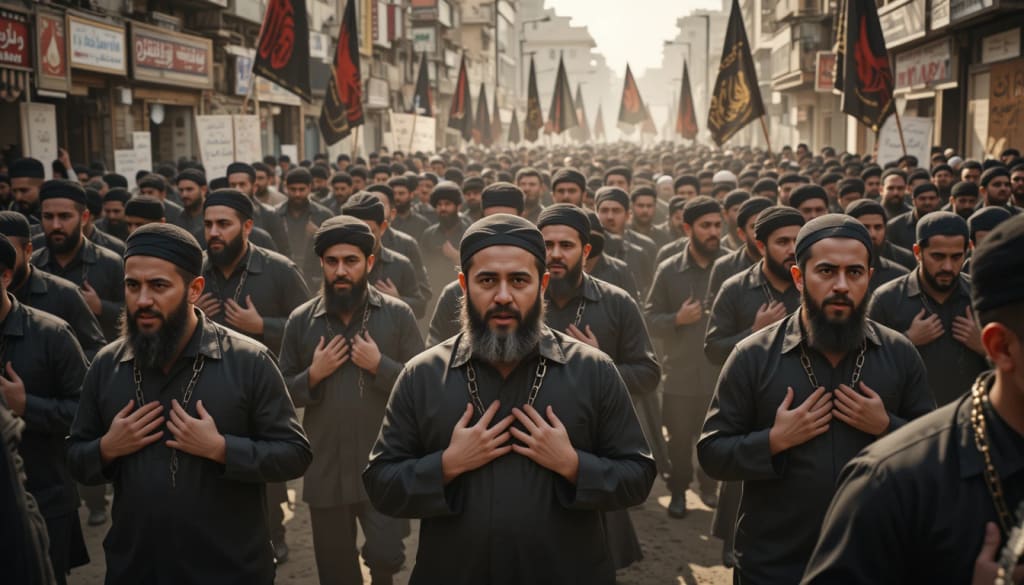
Every year, millions of Shia Muslims around the world gather during the Islamic month of Muharram to remember one of the most tragic events in their religious history: the martyrdom of Imam Hussain, the grandson of Prophet Muhammad (peace be upon him). The 10th day of Muharram, known as Ashura, holds a special place in the hearts of Shia Muslims. One of the most striking and often misunderstood aspects of Ashura is the act of self-flagellation, where some participants beat their chests or even use chains or blades on their backs. To many people outside the faith, this can seem shocking or difficult to understand. But for Shia Muslims, it is deeply rooted in history, emotion, and religious devotion.
The story goes back to the year 680 AD in Karbala, a desert land in present-day Iraq. Imam Hussain, along with his family and followers, stood up against Yazid, the ruler of the time, because he believed Yazid was unjust and corrupt. Hussain refused to pledge allegiance to him, wanting to preserve the true values of Islam. This led to the tragic battle of Karbala, where Hussain and his small group were surrounded, denied water, and eventually killed. Hussain’s death became a symbol of standing against tyranny and fighting for justice, no matter the cost.
For Shia Muslims, mourning Imam Hussain is not just remembering a historical event but also expressing loyalty to his values. During Muharram, especially on Ashura, people attend gatherings called “majlis” where religious scholars narrate the story of Karbala in great detail. These speeches are very emotional, often moving listeners to tears. The sadness, grief, and respect felt by the Shia community is so intense that many feel the need to express their sorrow physically.
This is where self-flagellation comes in. Some Shia Muslims perform chest-beating, known as “latmiyah” or “matam.” Others use chains or small blades, lightly striking their backs until blood appears. This is not mandatory in Islam and not practiced by all Shias, but for those who do it, the act symbolizes sharing in Hussain’s pain and sacrifice. It’s also a way to show that they are willing to endure physical suffering for the sake of truth and justice, just as Hussain did.
However, it’s important to note that many Shia scholars advise against extreme forms of self-harm, especially when it causes serious injury or health risks. In many places, Shia communities have shifted toward safer practices, such as donating blood as a symbolic act of sacrifice instead of harming themselves. Blood donation campaigns have become very popular during Muharram as a modern and health-conscious way of honoring Imam Hussain’s sacrifice.
Beyond self-flagellation, Ashura is a time of charity, kindness, and reflection for Shia Muslims. Many people cook food and distribute it to the poor, offer free drinks to passersby, and engage in acts of community service. The spirit of Muharram is not only mourning but also standing up for justice, helping others, and remembering the importance of truth.
In summary, self-flagellation on the 10th of Muharram is a physical expression of deep grief and devotion among some Shia Muslims. It is connected to a powerful story of sacrifice and courage that continues to inspire millions today. While the practice may appear harsh to outsiders, for many, it is an act of love and loyalty to Imam Hussain and the principles he died defending. More and more, communities are choosing safer and symbolic ways to remember Karbala, showing that the message of Ashura lives on, adapting to time and place, but never losing its core meaning.
About the Creator
Bilal Mohammadi
welcome to Bilal Mohammadi articles please follow my page
Keep reading
More stories from Bilal Mohammadi and writers in Education and other communities.
Unlocking Success on Vocal Media
Introduction In today’s digital world, many writers and creators search for platforms where they can share their stories, build an audience, and earn money for their work. Vocal Media has become one of those popular places. But simply publishing articles isn’t enough to succeed. If you want to grow on Vocal Media, engage readers, and earn rewards, you need to know some important secrets. Let’s explore how you can unlock success on Vocal Media.
By Bilal Mohammadi8 months ago in Education
Top Website Monetization Platforms to Maximize Your Revenue in 2026
Website monetization platforms are tools that help website owners generate revenue from their traffic. These platforms support different monetization models, including programmatic advertising, affiliate marketing, sponsored content, and performance-based ads.
By Iryna Podliesna3 days ago in Education
The BAFTA Awards
By now, in a stunning departure from recent years, most of the world is aware of what happened at the BAFTA film awards. Social Media Headlines will tell you the bare bones: that John Davidson, a Tourette's Syndrome advocate, shouted a racial slur at two Actors of Colour, Michael B Jordan and Delroy Lindo.
By Natasja Rose4 days ago in Psyche




Comments
There are no comments for this story
Be the first to respond and start the conversation.