
10 Mistakes Agile Project Managers Still Make And How to Avoid Them
Learn how to overcome Agile pitfalls - from backlog mismanagement to skipping retrospectives- and deliver consistent project success.


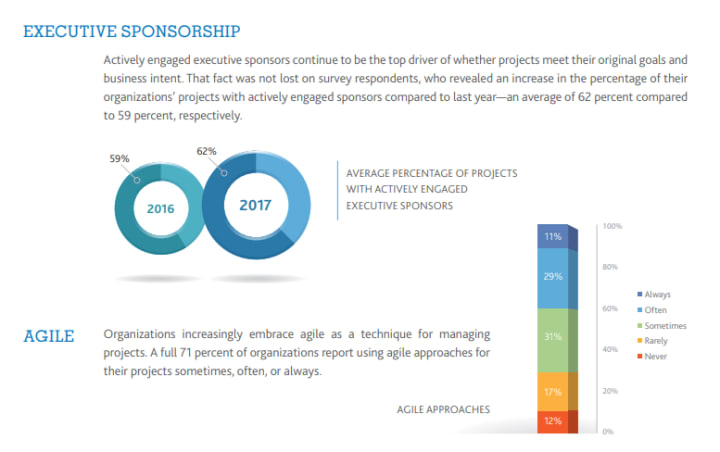
Agile project management has become the go-to approach for modern teams. Research shows that over 70% of organizations use Agile in some form today.
With frameworks like Scrum and Kanban, the promise is clear: faster delivery, adaptability, and greater customer satisfaction.
Yet despite its widespread adoption, Agile is still often misunderstood. Too many teams reduce it to ceremonies and tools rather than adopting it as a mindset.
The result?
- Missed deadlines,
- Frustrated teams and
- Disappointed stakeholders.
This guide unpacks ten mistakes Agile leaders continue to make—and practical strategies to avoid them.
Mistake #1: Treating Agile as a Methodology Instead of a Mindset
Agile is not just about daily stand-ups or Kanban boards. When organizations treat Scrum or Kanban as rigid processes, they fall into “fake Agile” patterns.
Impact
- Superficial adoption leads to decreased morale and inefficient processes, as teams go through the motions without understanding why.
- Moreover, executives with only partial Agile knowledge may make top‑down decisions that conflict with Agile principles. It causes confusion and project failures.
How to Avoid
- Educate leadership and teams on the Agile Manifesto and its principles, which emphasize collaboration, adaptability, and customer value over process compliance.
For a deeper understanding of what true Agile leadership looks like in practice, check out Mastering the Role of an Agile Project Manager: A Complete Guide.
- Encourage psychological safety and continuous learning through coaching, workshops, and mentoring.
- Reinforce that Agile is a mindset and culture change—not just a set of meetings or tools.
Mistake #2: Poor Backlog Management & Prioritization
Moving further, a constantly shifting or unclear backlog destroys predictability. Teams end up delivering the wrong features or missing deadlines.
Impact
- Wasted effort and missed deadlines when tasks spill over into subsequent sprints.
- Delivery of the wrong features or out‑of‑order priorities.
- Frustrated stakeholders and reduced confidence in the team.
How to Avoid
- Establish regular backlog grooming sessions with the Product Owner and key stakeholders.
- Use prioritization frameworks (MoSCoW, WSJF, Kano) to rank items by business value.
- Ensure user stories meet INVEST criteria—Independent, Negotiable, Valuable, Estimable, Small, Testable.
- Maintain transparency of the backlog so everyone understands what will deliver the highest value next.
- Agile works best when stakeholders are fully engaged in shaping outcomes.
A great example is shared in What Role Does Agile Methodology Play in the Development of Apps, which highlights how active collaboration drives better app development results.
Mistake #3: Insufficient Stakeholder Engagement & Communication
Well, Agile thrives on collaboration. Without ongoing feedback, expectations drift and scope creep follows.
Impact
- Misaligned expectations and scope creep due to a lack of early feedback.
- Last‑minute changes that disrupt sprint commitments.
- Reduced buy‑in from sponsors and customers.
How to Avoid
- Run sprint reviews,
- Share progress transparently, and
- Involve stakeholders in backlog prioritization.
Mistake #4: Neglecting Technical Debt & Quality
Teams often prioritize new features over code quality, letting technical debt pile up. The slowdown eventually becomes painful.
Impact
- Slower velocity and increased defects as the codebase becomes brittle.
- Higher long‑term costs due to rework and maintenance.
- Burnout from constant firefighting and bug fixing.
How to Avoid
- Allocate a fixed percentage of each sprint to address technical debt—refactoring, upgrading libraries or improving performance.
- Define a robust “Definition of Done” that includes testing, documentation and peer review.
- Adopt test‑driven development (TDD), pair programming and continuous integration/continuous delivery (CI/CD) to maintain quality.
- Encourage a culture where engineers feel safe to surface technical concerns and advocate for time to address them.
Modern PMOs are evolving to support Agile principles while maintaining technical excellence. See how in An Effective PMO Strategy for 2024.
Mistake #5: Failing to Empower the Team (Micromanaging)
In command‑and‑control environments, project managers dictate solutions, assign tasks, and monitor every detail. This undermines Agile’s principle of self‑organizing teams and servant leadership.
Impact
- Low morale, reduced innovation, and slower decision‑making.
- Overdependence on the project manager creates bottlenecks.
- Stifled professional growth and lack of ownership.
How to Avoid
- Adopt a servant‑leader mindset: your role is to remove impediments and enable the team.
- Delegate decision‑making authority; trust the team to choose the best technical solutions.
- Encourage collaborative planning sessions (e.g., sprint planning, backlog refinement) where everyone contributes to estimates and tasks.
- Provide coaching and mentorship rather than orders; focus on outcomes rather than how tasks are performed.
Mistake #6: Skipping or Superficial Retrospectives
Rushed or skipped retrospectives prevent teams from learning. Problems repeat, morale drops.
Impact
- Missed opportunities to improve processes, tools, and team dynamics.
- Stagnation; the same blockers reappear sprint after sprint.
- Growing frustration among team members who feel their feedback isn’t heard.
How to Avoid
- Hold a retrospective at the end of every sprint, regardless of how busy the schedule is.
Retrospectives are increasingly shaping project management best practices. You can explore this trend further in Project Management Trends in 2025.
- Create a safe environment for open discussion by focusing on processes and not personal blame.
- Use structured formats (e.g., Start‑Stop‑Continue, Mad‑Sad‑Glad) to guide discussion and surface actionable insights.
- Assign owners to improvement actions and track progress in subsequent retrospectives.
Mistake #7: Over‑committing & Setting Unrealistic Expectations
Taking on too much leads to burnout and broken trust with stakeholders.
Impact
- Burnout and lower quality as the team rushes to finish work.
- Missed sprint goals and erosion of stakeholder trust.
- Demoralization when commitments are consistently unmet.
How to Avoid
- Base sprint commitments on historical velocity and capacity.
- Use estimation techniques like Planning Poker or Story Points to gauge effort realistically.
- Communicate openly about risks, dependencies and capacity constraints with stakeholders.
- Protect the team from external pressure to over‑commit by explaining the impact on quality and sustainability.
Mistake #8: Separating Discovery & Delivery (Rigid Planning)
Some organizations try to finalize all requirements up front, treating discovery as a separate phase and even using Gantt charts to plan Agile projects.
Impact
Inflexibility: teams cannot adapt when user needs or market conditions change.
Slow feedback loops, delaying learning and improvement.
Overinvestment in unvalidated features.
How to Avoid
- Blend discovery and delivery by releasing minimum viable products (MVPs) and iterating based on customer feedback.
- Recognise that requirements will evolve; maintain a living product backlog rather than a fixed scope.
- Avoid rigid Gantt charts; use roadmaps or release plans that allow flexibility.
- Involve stakeholders throughout development so discovery continues alongside delivery.
Staying current with certification and PMO trends ensures Agile discovery and delivery remain aligned. A helpful resource is Future Trends in PMO Certification and Project Management.
Mistake #9: Mismanaging Metrics & the Product Backlog
Teams may focus on output‑centric metrics (e.g., velocity) without considering customer value or quality, or they may prioritise low‑value backlog items because of external pressure.
Impact
- Delivering features that don’t solve customer problems or drive business outcomes.
- Chasing speed at the expense of quality, leading to technical debt.
- Difficulty predicting release timelines due to inconsistent velocity.
How to Avoid
- Prioritize backlog items based on impact, customer value, and return on investment.
- Use a balanced set of metrics: lead time, customer satisfaction (NPS), defect rates, and team health alongside velocity.
- Review and adjust KPIs during retrospectives; ensure they encourage sustainable practices.
- Engage stakeholders in discussing metrics so everyone understands what success looks like.
Mistake #10: Overemphasis on Tools & Terminology
When teams equate Agile with specific software (Jira, Trello) or buzzwords, they risk focusing on process over people. Stand‑ups become status reports instead of problem‑solving sessions.
Impact
- Tools drive behavior rather than facilitate collaboration.
- Rigid adherence to terminology can create gatekeeping and discourage new ideas.
- Loss of agility as the process overshadows the product.
How to Avoid
- Remember the Agile Manifesto’s first value: individuals and interactions over processes and tools.
- Use tools as enablers—for transparency and traceability—but encourage face‑to‑face (or virtual) communication to address issues.
- Adapt ceremonies and practices to your team’s context rather than following them dogmatically.
- Promote a culture of continuous improvement where feedback about tools and processes is welcomed.
Final Tip
Avoiding these ten common mistakes is less about memorizing a checklist and more about embracing the Agile mindset in every aspect of project management.
Agile project managers, Scrum Masters, and product owners who treat Agile as a cultural shift—prioritizing collaboration, adaptability, stakeholder communication, and continuous improvement—consistently see stronger outcomes.
When teams focus only on rituals or tools, they risk slipping into “fake Agile” patterns that slow delivery and erode trust.
By recognizing pitfalls such as poor backlog management, micromanagement, skipping retrospectives, or neglecting technical debt, leaders can take proactive steps to foster resilience and innovation.
The most effective Agile leaders don’t just manage tasks; they cultivate empowered, self-organizing teams that can respond quickly to customer needs and market changes.
If you’re looking to strengthen your Agile journey further, exploring resources like Master Agile Certification: Elevate Your Career with the Dynamic Power of Project Management can provide structured learning paths and recognition for your skills.
Start implementing these strategies today in your next sprint and let us know which of these mistakes you have experienced in your own Agile projects?
Share your thoughts in the comments, and let’s continue building stronger, more adaptable teams together.
About the Creator
Sahil Aggarwal
Senior Delivery & Project Manager, Scrum Master, PMI Agile Certified, and Life Coach. Transforming teams, steering projects, and empowering individuals.
Keep reading
More stories from writers in Education and other communities.
How Intentional Listening Transforms Leadership and Team Excellence
Leadership has long been associated with decisiveness, direction, and the ability to articulate vision. While these qualities remain essential, the most effective leaders today are distinguished by a different capability: their ability to listen with intention. As workplaces become more collaborative and knowledge-driven, leadership success increasingly depends on understanding people rather than simply directing them. Intentional listening allows leaders to grasp not only what is being said, but also what remains unspoken. This deeper understanding strengthens relationships, improves decision-making, and fosters trust. In high-performing teams, listening is not passive but strategic, shaping how leaders connect with individuals and guide collective effort.
By Thomas Kuriakose, MD5 days ago in Education


Comments
There are no comments for this story
Be the first to respond and start the conversation.