
10 Habits That Are Secretly Draining Your Energy (And How to Stop Them Today)
Feeling Tired All the Time? 10 Habits That Are Stealing Your Energy

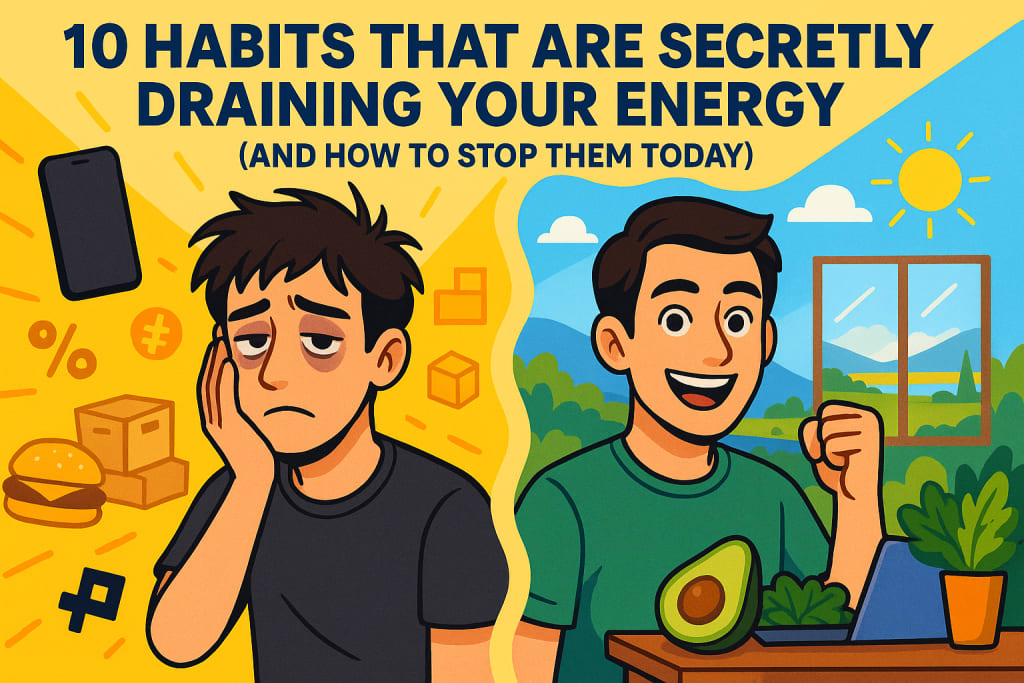
Introduction
Do you wake up tired even after a full night’s rest? Does your energy seem to vanish by mid-afternoon, no matter how much coffee you drink? If this sounds familiar, you’re not alone. Many of us feel exhausted not because of lack of sleep or overwork, but because of hidden habits that quietly steal our physical and mental energy every single day.
The worst part? Most of these energy-draining habits feel normal. They’re deeply woven into our routines — and that’s why we don’t question them. But once you identify and eliminate these energy thieves, you’ll experience more clarity, focus, motivation, and joy.
Below are 10 everyday habits that might be secretly draining your energy, along with practical tips to stop them starting today.
1. Checking Your Phone First Thing in the Morning
The moment you open your eyes and grab your phone, your brain is hit with notifications, emails, and messages. This immediately triggers stress and puts you in a reactive mode. Your cortisol levels (the stress hormone) spike, and your day starts with anxiety.
Fix: Avoid screens for the first 30 minutes of your day. Instead, start with a calm routine: drink water, stretch, meditate, or write in a journal. This grounds your mind and sets a more peaceful tone for the day.
2. Constant Multitasking
Multitasking might feel productive, but science shows it reduces efficiency and increases mental fatigue. Your brain isn’t designed to focus on multiple tasks at once — it switches back and forth, which wastes energy and lowers the quality of your work.
Fix: Embrace deep work and single-tasking. Use the Pomodoro Technique — 25 minutes of focused work followed by a 5-minute break. This increases both productivity and mental freshness.
3. Saying “Yes” to Everything
. Saying “Yes” to EverythingAlways agreeing to take on extra tasks, favors, or social events can leave you physically and emotionally drained. Saying yes to everything means saying no to your own priorities and rest time.
Fix: Learn the power of a respectful “no.” If you struggle, use this phrase: “Let me check my schedule and get back to you.” This gives you space to assess whether the commitment aligns with your goals and energy.
4. Poor Posture
Your body posture affects how you breathe, how you feel, and how much energy you have. Slouching restricts airflow, reduces oxygen to the brain, and causes muscle fatigue.
Fix: Align your posture by keeping your shoulders back and your spine upright. Use ergonomic furniture, and set hourly reminders to stretch and reset your position.
5. Negative Self-Talk
The way you talk to yourself can either boost your energy or destroy it. Harsh internal criticism creates stress, doubt, and low motivation — all of which drain mental energy.
Fix: Catch negative thoughts and reframe them. Instead of saying “I always mess up,” try “I’m still learning.” This small change rewires your brain for resilience.
6. Skipping Meals or Eating Junk Food
When you skip meals or eat sugary, processed foods, your blood sugar spikes and crashes — leading to fatigue, mood swings, and brain fog. Your body and brain need steady fuel.
Fix: Prioritize high-fiber, high-protein meals with healthy fats. Add whole foods like eggs, nuts, fruits, and leafy greens. Also, drink water consistently throughout the day — even mild dehydration can reduce focus by 20%.
7. Holding on to Grudges
Carrying emotional baggage like anger, resentment, or bitterness silently drains your energy. These emotions take up mental space, increase stress levels, and reduce your capacity for joy.
Fix: Practice forgiveness for your own peace, not for the benefit of others. Letting go doesn’t mean condoning the behavior — it means freeing yourself from the burden.
8. Excessive Screen Time
Spending hours scrolling through social media, watching TV, or glued to your computer can overstimulate your brain and exhaust your mental bandwidth. Plus, blue light messes with your sleep cycle.
Fix: Set daily screen limits. Try a “no screens after 9 PM” rule and replace scrolling with a good book, gentle yoga, or journaling. Also, do a 24-hour digital detox once a month to reset your brain.
9. Cluttered Environment
A messy desk, disorganized room, or chaotic workspace can overwhelm your senses and increase mental fatigue. Visual clutter competes for your attention and creates a constant sense of “unfinished business.”
Fix: Declutter one small area each day. Clean your workspace every evening so you start the next day fresh. Use the “one in, one out” rule — for every new item you bring in, remove one.
10. Lack of Natural Sunlight
Natural light regulates your sleep-wake cycle and boosts vitamin D, which affects energy levels and mood. Staying indoors all day can cause fatigue, depression, and poor sleep.
Fix: Get 15–30 minutes of sunlight each morning. Go for a walk, sit by a sunny window, or take your coffee outside. Even a brief dose of natural light helps reset your body’s energy clock.
Bonus Tip: Not Prioritizing Sleep Quality
You might be getting 7–8 hours of sleep, but poor sleep quality is just as damaging as not sleeping enough. Disrupted sleep leads to tired mornings, brain fog, and low energy.
Fix: Create a consistent bedtime routine. Turn off screens an hour before bed, keep your room cool and dark, and avoid caffeine after 2 PM. Apps like Calm or Headspace can also help with sleep meditation.
Final Thoughts
Your energy is your most precious resource. It fuels your focus, relationships, career, and happiness. When your energy is constantly low, everything feels harder — but the solution isn’t always more coffee or more sleep. Often, it’s about cutting out the things that are silently stealing your vitality.
Start by changing just one habit from this list. You’ll be surprised how quickly your energy levels bounce back.
Remember: You don’t need a life overhaul. Just consistent, intentional tweaks to your daily habits can make all the difference.
About the Creator
From Despair to Hope: How Animal Rescue Efforts Rebuild Broken Lives
Animal rescue efforts stand as a powerful response to suffering that often goes unseen. Across towns, cities, and rural areas, animals face neglect, abandonment, injury, and fear every day. Many are left without food, shelter, or medical care. Others are harmed by abuse or natural disasters. Without help, their future is uncertain. Through patience, care, and action, animal rescue efforts transform despair into hope and give animals the chance to heal and live safely.
By Brenda McGrane5 days ago in Education
How to Gain Real Work Experience in Wealth Management
Breaking into wealth management can feel confusing at first. Many roles ask for experience, but it is not always clear how to get it. The good news is that real wealth management work experience comes from action, not just titles. With the right approach, you can build skills, credibility, and confidence before landing a full-time role.
By John Lennox Cummings4 days ago in Education



Comments (1)
This is highly informative. However, I, personally have always been a multi-tasker. I tried to be one task at a time for decades. I tried to change my personality and my life. It was a catastrophe. Now I multitask with my computers. I focus on one story at a time. However, my brain never stops even in my dreams, I am busy! SO, I WILL BE MYSELF! What works for one person does not work for everyone!