
#1 Difference between Maqamat & Qirat Course
Difference between Maqamat & Qirat Course

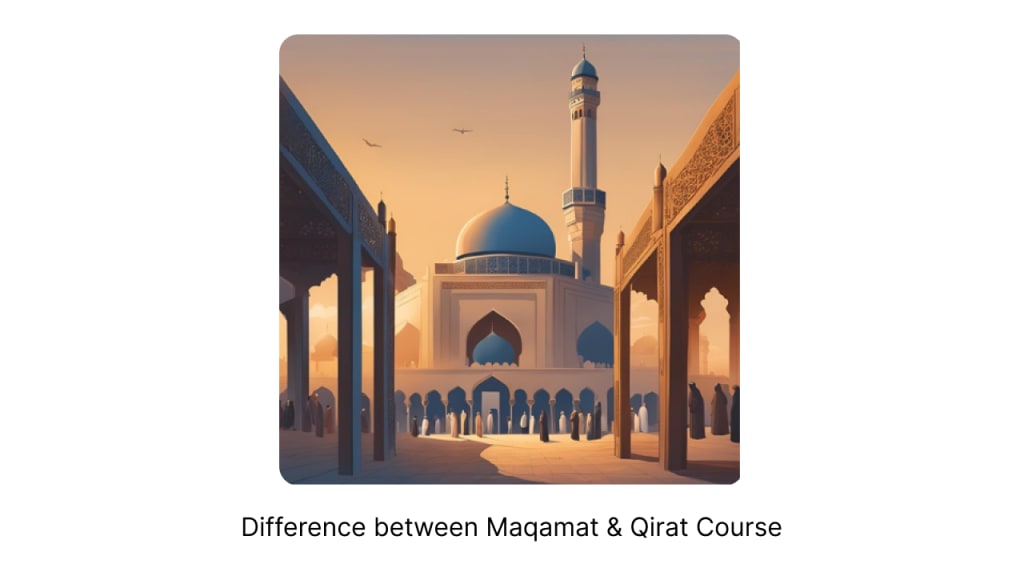
Maqamat and Qirat are two important concepts in Islamic vocal music. Both deal with the recitation and melodic delivery of the Holy Quran, but there are some key differences between the two. Examine what Maqamat and Qirat are, their origins and development, the main styles and schools of each, and the key differences between these two traditions of Quran recitation. The top-notch institute in Uk Qiratul Quran that provide qualitative maqamat & Qirat course.
What are Maqamat?
Maqamat (singular: maqam) refers to a system of melodic modes or scales in Arabic and Islamic music. It provides the rules and frameworks for melodic composition and improvisation. The maqam specifies the patterns of tones and semitones, the tonic note, and the melody formulas that distinguish one maqam from another.
There are several main maqamat in use today, each with its own unique sound and melodic characteristics. Some of the most important maqamat include Rast, Bayati, Saba, and Hijaz. The maqam system originated in the medieval Islamic period under the Abbasid Caliphate, developing out of ancient Arabic, Persian, and Byzantine systems of melodic organization. By the 10th century, the theorist al-Farabi had laid down the foundations of the maqam system, explaining the intervallic structure and characteristic melodic formulas of the main maqamat.
Over the centuries, the maqam system spread throughout the Muslim world from its heartland in the Middle East to North Africa, Iran, Central Asia, and parts of Europe under Islamic rule. It became firmly established as one of the core concepts and organizing principles of classical Arabic and Islamic music. Today, the maqam tradition continues to thrive and evolve in music from the Arab world, Turkey, and Muslim communities in Europe and Asia.
What is Qirat?
Qirat (also spelled qira'at) refers to the recitation and melodic styles used in reading or chanting the Holy Quran. It developed alongside the revelation of the Quran itself in the 7th century CE, as the companions of the Prophet Muhammad began to recite the holy verses in beautiful and melodious ways.
Different qirat schools arose over time, each tracing its style of recitation back to a prominent Quran reciter from the early Muslim community. The seven major qirat schools still in use today are named after renowned early reciters like Nafi al-Madani, Ibn Kathir, and Asim al-Kufi. Each qirat or recitation style has its own intricate rules governing elements like pronunciation of letters, intonation, phrasing, and use of melodic modes or maqamat.
Qirat is thus the practical, performance art of reciting the Quran according to the rules and style of a particular school. Mastering the qirat is considered extremely meritorious in Islam, as it spreads knowledge of the Quran and perpetuates the recitation traditions of the earliest Muslim community. Qirat is an important field of advanced Islamic study, taught by masters through one-on-one instruction and rigorous repetition and memorization.
Differences Between Maqamat and Qirat
While maqamat and qirat are interconnected in Quranic recitation, there are some clear differences between these two traditions:
- Maqamat are melodic modes that provide a framework for composition and improvisation in Islamic music. Qirat refers specifically to Quran recitation styles and techniques.
- Maqamat developed as a secular vocal tradition in medieval Islamic music and poetry. Qirat developed to preserve the proper recitation of the divine Quranic verses.
- Maqamat are used not just for Quran recitation but also for singing Islamic folk songs, poetry, and classical music. Qirat is used exclusively for reciting the Quran.
- There are a finite number of maqamat(8-12 main ones). There are far more qirat schools (up to 35 historically), each with own recitation style.
- All qirat reciters use maqamat in some form during recitation. But most classical maqam singing does not follow the strict rules of qirat.
- Memorization and repetition are central to learning qirat. Maqamat are learned more through practice of melodic patterns and formulas.
- Qirat is transmitted person-to-person within recitation schools. Maqamat are taught more formally in conservatories and music programs.
So in short, maqamat provide the modal framework, while qirat is the practical application of maqamat and recitation techniques to beautify your voice in Quran. Qirat draws upon but is also more specialized than the broader tradition of maqamat in Islamic music.
Main Styles and Schools of Maqamat
As mentioned earlier, there are several core maqamat that form the foundation of the system. Here are some of the most prominent maqamat, their scale structure, characteristic sounds, and regions where they are most commonly used:
- Rast - The most popular maqam, equivalent to the major scale. It has a bright and cheerful mood. Common across the Middle East and Central Asia.
- Bayati - Similar to the natural minor scale with a sad and touching mood. Popular in Iraq, Syria and Turkey.
- Hijaz - Has a flattened second degree and dominant fifth degree. Creates a solemn, dignified mood. Common in the Levant and Egypt.
- Saba - Features a minor second and major third. Has a soft, gentle, and melancholic mood. Popular in Iraq, Syria and Egypt.
- Sikah - Resembles the Byzantine scale. Creates a rich, lush, heavier sound. Popular across the Middle East into Iran.
- Nahawand - Based on the natural minor scale but with a major second. Mood is serious and deeply emotional. Prominent in Iran and Central Asia.
There are also numerous regional maqamat like the extra-tonal Hijaz Kar Kurd of Turkey or the Saba Zamzama of Iraq. This variety of maqamat contributes to the diversity and richness of Middle Eastern and Central Asian maqam music.
Main Qirat Schools and Styles
The major qirat schools that are still actively used and taught today include:
- Qirat Hafs an Asim – The most common & popular recitation style, spread by the Ottoman Empire. Based on the recitation style of Asim ibn Abi al-Najud al-Kufi, as transmitted by his student Hafs.
- Qirat Warsh an Nafi’ – Originating from Nafi’ al-Madani, one of the most respected early Quran reciters in Medina. Transmitted and taught by his student Abu Sa'id Uthman Ibn Sa'id al-Misri, nicknamed “Warsh.”
- Qirat al-Duri from Abu 'Amr – Traces back to Abu 'Amr Zabban ibn al-Ala’ al-Mazini, based in Basra then Kufa. Known for its clear pronunciation and accuracy.
- Qirat Ibn Kathir from Abu ‘Amr – This style comes from Abd Allah ibn Kathir al-Makki, through his teacher Abu ‘Amr al-Basri. Similar to the Duri style but with some unique recitation rules.
- Qirat Abu Ja’far from Khalaf – Based on the Medinan reciter Ibn Khalaf al-Bazzar, transmitted by the Persian reciter Abu Ja’far Yazid ibn al-Qa'qa' al-Makki.
- Qirat al-Bazzi from Qunbul – Originated with Muhammad ibn Abd al-Rahman al-Bazzi, transmitted by his main student Qunbul. It has robust pronunciation and unique phrasing.
These schools differ in details like vowel prolongation, pausing, letters pronounced distinctly or assimilated, and which maqamat are favored. They help preserve the rich variety of original Quran recitation styles.
Key Differences Between Maqamat and Qirat
To summarize, the main differences between maqamat and qirat are:
- Origins – Maqamat emerged purely as a musical tradition while qirat developed specifically for Quranic recitation.
- Use – Maqamat are used broadly including non-religious music but qirat is only for Quran chanting.
- Number of styles – There are fixed number of maqamat(8-12 core ones) but far more qirat schools (over 35 historically).
- Memorization – Qirat requires meticulous person-to-person transmission and memorization. Maqamatare learned more broadly through practice and repetition.
- Relationship – Qirat applies the framework of maqamat along with other recitation rules and techniques. Maqamat can be used independent of qirat.
- Flexibility – Qirat follows strict rules of established schools. Maqamat allows for more flexibility and improvisation.
- Status – Mastery of qirat is considered very meritorious. Maqamat are respected but secular musical skills.
In conclusion, maqamat provide the basic melodic modes while qirat builds upon maqamat to create intricate and revered styles of Quran recitation and chanting, following transmittal lineages back to the Prophet Muhammad (PBUH) himself. Both traditions remain pillars of classical Arabic and Islamic music around the world.
About the Creator
M Haseeb
Reading can be a fantastic way to unwind and take a break from the hustle and bustle. Reading has the power to transport you to another world, providing a much-needed escape and helping to reduce stress.
Twenty Years of Medical Experience: Knowledge That Will Redefine Future Healthcare
Medicine has changed profoundly over the last two decades. Scientific breakthroughs, digital innovation, and evolving healthcare policies have reshaped how medical professionals diagnose illnesses, treat patients, and manage healthcare systems. Conditions that were once difficult to detect or treat now benefit from advanced imaging, improved medications, and minimally invasive procedures. These developments have significantly improved survival rates and overall patient outcomes.
By Yousuf A. Gaffar, M.Dabout 4 hours ago in Education
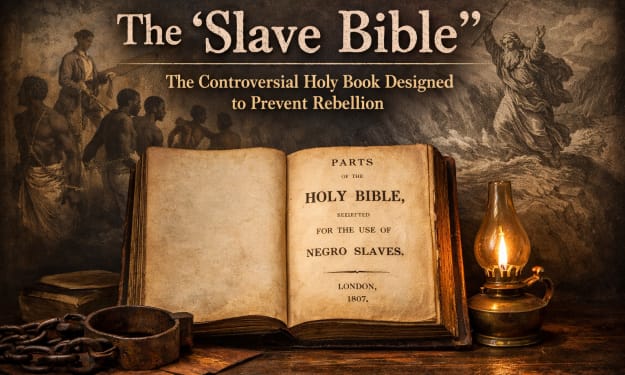
The “Slave Bible”: The Controversial Holy Book Designed to Prevent Rebellion
In the early nineteenth century, a heavily edited version of the Bible was printed with a singular and deeply troubling purpose: to control enslaved Africans and discourage rebellion. Today, this rare publication—commonly known as the “Slave Bible”—is one of the most controversial religious texts in history. Only four copies are known to exist in the world.
By Irshad Abbasi 7 days ago in Education



Comments