
Yellowstone’s Supervolcano: A Sleeping Giant or a Looming Catastrophe
What Makes Yellowstone One of the Most Dangerous Supervolcanoes

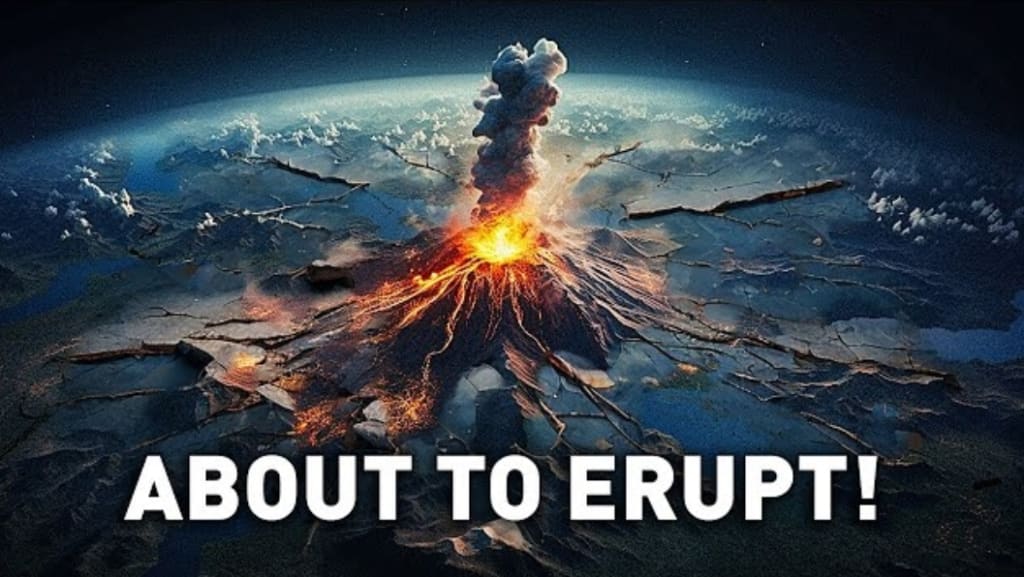
One day, the peaceful grasslands began to tremble as the ground cracked open, releasing thick clouds of volcanic gas and ash into the sky. Lava flowed swiftly down the hills, consuming everything in its path. In a matter of moments, black volcanic glass began raining down, destroying plants and animals. The landscape caved in, creating giant pits filled with red-hot magma.
Recently, strange changes in Yellowstone Lake have been noticed. Water levels have fluctuated in different parts of the lake, with one side rising and the other falling at the same time. It looks as if underground forces are lifting the lake basin. Is this a warning of an impending disaster? Could Yellowstone's supervolcano be gearing up for another eruption?
Yellowstone National Park is home to some of the most unique geothermal features in the world, from geysers to hot springs, all powered by a massive supervolcano. Supervolcanoes are capable of causing catastrophic eruptions when they erupt, releasing vast amounts of molten rock, ash, and gases into the atmosphere. A single eruption can release over 240 cubic miles of volcanic material — enough to fill the Grand Canyon several times.
These supervolcanoes form when large amounts of magma build up beneath the Earth's crust. The magma becomes pressurized and eventually breaks through, resulting in an eruption. However, sometimes the magma doesn't escape and instead gathers in large underground pools, which increases the pressure even more until an eruption becomes inevitable.
Yellowstone has experienced at least three super eruptions in the past: 2.1 million, 1.3 million, and 640,000 years ago. The most recent eruption, known as the Lava Creek eruption, created the Yellowstone caldera. It was so powerful that it released 240 cubic miles of volcanic ash, dust, and rock into the air. If Yellowstone were to erupt today with the same intensity as its previous eruptions, it could spew out enough lava to fill Sydney Harbor 4,500 times.
Despite the potential devastation, scientists believe the chance of another eruption at Yellowstone is extremely low. Over the last three million years, the frequency of these super eruptions has decreased significantly. Experts once thought there was a super eruption about every 500,000 years, but now they believe that number may be much lower.
So, is another eruption on the horizon? If it were to happen, it would be catastrophic. A column of lava, ash, and gas would shoot up into the atmosphere, potentially reaching heights of over 16 miles. The eruption could continue for days, with clouds of ash moving at speeds of up to 300 miles per hour. The temperatures near the eruption would be incredibly hot — up to 570°F. If ash were to reach the stratosphere, it could cause global temperatures to drop significantly, possibly leading to years without summer and agricultural disruptions worldwide.
However, the good news is that current research shows the Yellowstone supervolcano isn't likely to erupt anytime soon. For an eruption to occur, the magma beneath Yellowstone would need to be at least 50% molten, but scientists believe it's currently only 5-15% molten. This makes the probability of an eruption extremely low — roughly 1 in 730,000. This is similar to the chance of a large asteroid hitting Earth.
Some have proposed solutions to prevent a potential eruption, such as cooling the supervolcano by extracting heat from the magma beneath it. The idea is to drill deep wells and pump cold water into the magma chamber, which would gradually cool the magma and prevent an eruption. However, there are significant risks involved in such a project. If the drilling accidentally hits the magma chamber, it could cause the magma to become more fragile, potentially triggering an eruption. There's also the risk of releasing toxic gases that have accumulated in the magma chamber, which could cause dangerous explosions.
Moreover, the process would take thousands of years, and scientists are not confident that it would prevent future eruptions. Even if the cooling project succeeded, there’s no guarantee that the volcano would remain dormant for more than 100 years.
Yellowstone isn’t the only supervolcano on Earth. Others include Long Valley in California, the Atana Ignimbrite in Chile, and Toba in Indonesia. While the threat of an eruption is low, the potential consequences of one are so severe that scientists continue to monitor these supervolcanoes closely.
In conclusion, while Yellowstone’s supervolcano is an active threat, the likelihood of a major eruption in the near future is minimal. The recent changes in the water levels of Yellowstone Lake are interesting, but they do not necessarily indicate an imminent disaster. Regardless, scientists continue to study the region and explore ways to mitigate the risks of a potential eruption. For now, the supervolcano remains dormant, but its power is ever-present, lurking beneath the surface.
About the Creator
Nora Ariana
Empowering through stories and sound igniting purpose, sparking growth, and awakening the power within.
Keep reading
More stories from Nora Ariana and writers in Earth and other communities.
A goal is a dream with a deadline
A goal is a dream with a deadline. This powerful quote reminds us that without action, dreams remain just that wishes floating in our imagination. But when we set a timeline and commit to achieving them, they evolve into goals, bringing clarity, direction, and purpose. Many people go through life holding on to dreams, hoping they will come true someday. But someday is not a day on the calendar. Dreams without structure often fade with time or get buried under the weight of daily responsibilities. Turning a dream into a goal is what separates those who achieve from those who continue to wish.
By Nora ArianaExclusive • 9 months ago
Greenland: New Shipping Routes, Hidden Minerals – and a Frontline Between the US and Russia?
Once seen as a remote and largely isolated Arctic territory, Greenland is rapidly emerging as a focal point of global geopolitics. Climate change, melting ice, and technological advances are transforming the island into a strategic hub defined by new shipping routes, vast mineral resources, and growing rivalry between major powers, particularly the United States and Russia. As the Arctic opens up, Greenland’s geographic position and untapped potential are pushing it to the center of international attention, raising questions about security, sovereignty, and sustainable development. Melting Ice and the Opening of New Shipping Routes One of the most visible impacts of climate change in the Arctic is the reduction of sea ice, which is making previously inaccessible waters navigable for longer periods each year. New Arctic shipping routes, including passages near Greenland, promise shorter travel times between Europe, Asia, and North America. Compared to traditional routes like the Suez Canal, Arctic pathways can reduce shipping distances by thousands of kilometers, cutting fuel costs and emissions. For global trade, this could be transformative. Greenland’s coastal waters are increasingly important as potential transit corridors and support hubs for these routes. However, the expansion of Arctic shipping also raises concerns about environmental risks, maritime safety, and the lack of robust emergency infrastructure in the region. Hidden Mineral Wealth Beneath the Ice Beyond shipping, Greenland holds significant reserves of critical minerals, many of which are essential for modern technologies and the global energy transition. These include rare earth elements, lithium, graphite, uranium, and other strategic resources used in electric vehicles, wind turbines, batteries, and defense systems. As demand for these materials grows, Greenland is being viewed as a potential alternative to existing supply chains dominated by a small number of countries. This has increased interest from Western governments seeking to diversify mineral sourcing and reduce strategic dependencies. However, mining in Greenland is controversial. Local communities and policymakers must balance economic opportunities with environmental protection and cultural preservation. Greenland’s harsh climate and fragile ecosystems make resource extraction both technically challenging and politically sensitive. The United States’ Strategic Interest in Greenland The United States has long considered Greenland strategically vital, largely due to its location between North America and Europe. The US already maintains a military presence at Pituffik Space Base (formerly Thule Air Base), which plays a key role in missile warning systems and space surveillance. In recent years, Washington has renewed its focus on Greenland, emphasizing Arctic security, infrastructure investment, and cooperation with Denmark, which oversees Greenland’s foreign and defense policy. US interest is driven by several factors: protecting transatlantic security routes, countering rival powers in the Arctic, and ensuring access to critical minerals. Greenland is increasingly viewed as a frontline in maintaining Western influence in the High North. Russia’s Arctic Ambitions Russia, meanwhile, sees the Arctic as central to its economic and military strategy. It has invested heavily in Arctic military bases, icebreaker fleets, and energy projects, particularly along its northern coastline. Although Greenland is geographically distant from Russia’s main Arctic territories, Moscow closely monitors developments there. The island’s proximity to key Arctic sea lanes and North Atlantic routes makes it strategically relevant in any broader confrontation between Russia and NATO. As tensions between Russia and the West remain high, Greenland’s location places it near the intersection of competing security interests, increasing its geopolitical significance. Greenland Between Global Powers The growing attention from major powers puts Greenland in a delicate position. While the island seeks greater economic independence and development, it must navigate complex relationships with Denmark, the United States, and other international actors. Greenland’s government has emphasized the importance of maintaining control over its resources and ensuring that development benefits local populations. At the same time, geopolitical competition risks turning Greenland into a strategic chessboard rather than a partner in decision-making. This balancing act is becoming more difficult as Arctic competition intensifies. Environmental and Social Challenges Greenland is on the front lines of climate change. Melting ice sheets contribute to global sea-level rise, while local communities face changes to traditional livelihoods such as fishing and hunting. The expansion of shipping and mining could bring jobs and infrastructure, but it also threatens fragile ecosystems and raises concerns about pollution, habitat disruption, and long-term sustainability. Any future development in Greenland will require careful regulation, international cooperation, and meaningful engagement
By Aarif Lashari3 days ago in Earth
Top Australian Writers’ Festival Cancelled After Palestinian Author Barred
One of Australia’s most respected literary festivals has been cancelled following a fierce backlash over the decision to bar a Palestinian author from participating. What began as a programming dispute quickly escalated into a national debate about free speech, cultural inclusion, and political pressure in the arts. The cancellation has sent shockwaves through Australia’s literary community, raising urgent questions about whose voices are allowed on public platforms and at what cost.
By Aarif Lashari4 days ago in Earth




Comments
There are no comments for this story
Be the first to respond and start the conversation.