
Wolf Communication.
Unraveling the Language of Howls.

Wolf Communication: Unraveling the Language of Howls.
Introduction
The haunting howl of a wolf echoing through the night has captivated human imagination for centuries. Wolves are highly social creatures known for their intricate communication skills. While their vocal repertoire extends beyond howling, this article focuses on their distinctive and evocative howls. By exploring the various types of howls and their significance, we can gain a deeper understanding of the complex language of wolves and the importance it holds in their social structure and survival.
Wolves, renowned for their captivating howls, possess a rich and intricate communication system. Their vocalizations convey a wealth of information, from expressing social bonds to coordinating hunts. Understanding the language of wolf howls unlocks a deeper appreciation for these majestic creatures and provides insights into their behavior and social dynamics. In this article, we explore the fascinating world of wolf communication and delve into the meanings behind their haunting cries.
1. The Purpose of Howling
----------------------------------
Howling serves a multitude of purposes for wolves, acting as a powerful means of communication. One of the primary functions of howling is to establish territory boundaries. Wolves use their howls to announce their presence and warn neighboring packs to stay away. Howls can travel long distances, allowing wolves to effectively communicate without direct physical contact.
2. Howling as Social Cohesion
----------------------------------
Howling also plays a crucial role in maintaining social bonds within a wolf pack. Packs often engage in a chorus, where each member contributes their unique howl, creating a symphony of voices. This group howling serves as a way for wolves to reaffirm their social bonds, coordinate activities such as hunting, and strengthen their unity as a pack.
3. Individual Recognition and Expression
----------------------------------
Each wolf possesses a distinctive howl, similar to a vocal fingerprint, allowing pack members to identify each other. This individual recognition is particularly vital during hunts or when pack members become separated. Wolves can also convey their emotions through howling, expressing excitement, distress, or contentment, and other members of the pack can interpret these vocalizations accordingly.
4. Howl Variations and Meaning
----------------------------------
Wolves have a diverse repertoire of howls, each carrying specific meanings. For instance, a lone wolf's howl may express solitude or serve as a call to locate other pack members. A chorus howl signifies unity and strength within a pack. There are also specific howls during mating season to attract potential mates and communicate reproductive readiness. Understanding these variations provides insights into the complex social dynamics and needs of wolf communities.Studying wolf communication has practical implications for conservation efforts. Recognizing the vocal signatures of individual wolves allows researchers to monitor population sizes, track movement patterns, and assess the health of wolf communities. Moreover, understanding the social dynamics revealed through howling patterns helps inform management strategies for wolf populations in the wild. By unraveling the language of howls, we gain valuable tools to aid in the conservation and protection of these remarkable creatures.
Conclusion
----------------------------------
The language of howls is a vital aspect of wolf communication, allowing them to convey messages of territorial boundaries, social cohesion, individual recognition, and emotional states. Howling enables wolves to maintain strong social bonds within their pack, coordinate activities effectively, and ensure their survival in challenging environments. Studying and appreciating the intricacies of wolf communication not only deepens our understanding of these magnificent creatures but also underscores the importance of preserving their habitats and protecting their existence in the wild.Wolf howling represents an extraordinary form of communication, enabling wolves to navigate their social interactions, coordinate activities, and express emotions. By deciphering the language of howls, scientists have unraveled important aspects of wolf behavior and ecology. This knowledge not only enhances our understanding of wolves but also holds implications for their conservation. As we continue to explore the intricate world of wolf communication, we deepen our connection to these iconic creatures and foster a greater appreciation for their vital role in our ecosystem.
About the Creator
Ayaanahamed
Blogs Writer......
Keep reading
More stories from Ayaanahamed and writers in Earth and other communities.
Wolf Conservation Efforts.
Wolf Conservation Efforts: Protecting an Iconic Species. Introduction : Wolves are magnificent creatures that have captivated human imagination for centuries. However, their survival has been threatened by habitat loss, hunting, and human-wildlife conflicts. Recognizing the importance of preserving these iconic predators, numerous conservation efforts have been implemented worldwide. This blog post will delve into the significant conservation initiatives that are being carried out to protect wolf populations and ensure their long-term survival.
By Ayaanahamed3 years ago in Earth
How Much Do You Need in an ISA for a Passive Income That Beats the State Pension?
For many people in the UK, the State Pension is expected to form the backbone of retirement income. But with rising living costs and growing uncertainty about the future, more savers are asking a crucial question: Can I build a passive income that beats the State Pension — and how much would I need in an ISA to do it?
By Aarif Lashari4 days ago in Earth
Tiny Lion Cubs Struggle To Keep Up With Mom
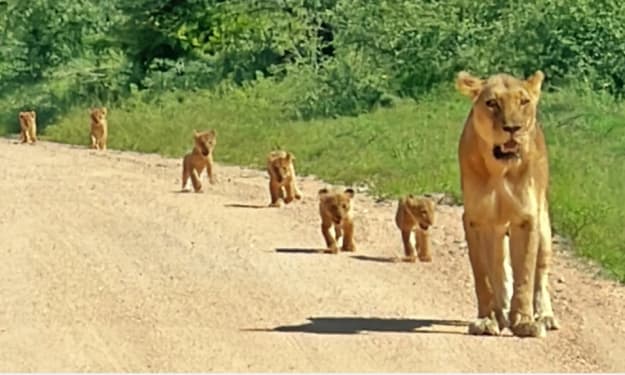
In the heart of the African savannah, life is a constant lesson for young animals. Few scenes are as endearing — or as heartwarming — as tiny lion cubs trying to keep pace with their mother. These little bundles of fur face a world full of challenges, from learning to hunt to avoiding dangers, all while depending on the guidance and protection of their experienced mom. Watching cubs wobble and tumble as they attempt to keep up with their mother reminds us that growing up, even in the wild, is a journey full of struggle, determination, and adorable missteps. The Early Days of Lion Cubs Lion cubs are born blind and helpless, usually in litters of two to six. For the first few weeks, they rely entirely on their mother for warmth, food, and safety. Even after opening their eyes and beginning to explore, the cubs are far from independent. The first months are crucial. Cubs learn social cues, hunting basics, and survival skills simply by watching their mother and the pride. But as anyone who has observed them knows, there’s often a huge gap between observation and action. Tiny cubs often struggle to match their mother’s pace, especially when she moves through long stretches of savannah or leads the family on patrols. A Mother’s Role in the Wild For a lioness, raising cubs is a full-time commitment. She hunts, defends her territory, and teaches her young, all while staying alert to predators such as hyenas, leopards, and even rival lions. The cubs, meanwhile, attempt to mimic her every move — often with clumsy yet charming results. A mother lion’s patience is remarkable; she frequently slows down, nudges them along, or stops to ensure no cub is left behind. These moments, while stressful for the tiny cubs, are vital learning opportunities. Struggling to Keep Up: Why It’s So Hard There are several reasons why tiny lion cubs have trouble keeping pace with their mother: Short Legs, Big Steps: Lion cubs’ legs are tiny and their coordination is limited, making it difficult to cover the same distance as an adult lioness. Curiosity: Cubs are naturally curious. A single butterfly or rustling bush can distract them, leaving mom to pause repeatedly. Energy Levels: Young lions tire quickly. Even with frequent naps, the cubs’ stamina is far lower than their mother’s. Learning Through Play: Play is not just fun; it teaches hunting, balance, and social skills. Running off to pounce on a sibling or chase an insect is all part of their education. Despite these challenges, the cubs’ determination to keep up demonstrates their resilience and growing understanding of the wild world. Lessons in Teamwork and Survival Every cub struggling to keep up is also learning crucial survival skills. The journey across the savannah is more than a test of speed — it’s a lesson in: Coordination: Cubs learn how to move efficiently across different terrains. Patience: They begin to understand the rhythms of adult life and the pace required for survival. Social Skills: Staying with the group teaches cubs how to interact with siblings and the pride, which is essential for their future roles. Observation: By following their mother, cubs study hunting techniques, territorial behavior, and predator awareness. Even the moments when cubs stumble or lag behind are essential for their development. These experiences prepare them for independence, which comes sooner than many might expect. The Cutest Moments in the Wild Anyone who has watched tiny lion cubs knows that their struggles are often irresistibly cute. Video clips from wildlife reserves frequently show cubs toddling along, tumbling over each other, or getting distracted mid-step. Observers often comment that these little stumbles reveal personality, determination, and playfulness, making them one of nature’s most heartwarming spectacles. While their mother is serious and focused, the cubs inject a sense of humor and lightness into life on the savannah. Why This Matters The struggles of lion cubs aren’t just adorable — they’re vital for understanding wildlife behavior. Conservationists and animal behaviorists use these moments to study growth patterns, social structures, and survival strategies in lion populations. These observations also highlight the importance of preserving natural habitats. Cubs must learn in a safe environment to survive; habitat loss, poaching, and climate change make these early struggles even more dangerous. Protecting the African savannah ensures that future generations of lions can experience the same lessons and playful tumbles. The Road to Independence Within a year, these tiny cubs will be more agile, faster, and more confident. By the time they reach two to three years old, males may begin to leave the pride, while females often stay and become caretakers themselves. Every misstep, tumble, and lagging moment is part of the journey toward strength, coordination, and independence. Watching them now gives us a glimpse of the challenges they will overcome, and the survival skills they will carry for life. A Celebration of Motherhood Ultimately, these scenes remind us of the incredible bond between mother and cubs. Her patience, vigilance, and teaching are the foundations of their future. The cubs’ struggles highlight the trials of growing up, while their determination showcases the resilience and beauty of wildlife. For those observing, it’s a powerful lesson in care, guidance, and perseverance, not just in lions but in the natural world as a whole. Final Thoughts Watching tiny lion cubs try to keep up with their mother is both entertaining and enlightening. It’s a story of growth, struggle, and resilience — a reminder that even the fiercest creatures start small, learning step by step. These little lions capture hearts while teaching life lessons: patience, determination, teamwork, and the importance of guidance. As they tumble and waddle across the savannah, they show us that growth is a process, one adorable misstep at a time. For wildlife enthusiasts, animal lovers, and anyone enchanted by nature, these tiny cubs are proof that even in the wild, love, care, and persistence are universal truths.
By Aarif Lashari4 days ago in Earth
📢 Raise Your Voice Thread: 01/22/2026
Our “Raise Your Voice Threads” are hosted most alternating Thursdays at 12PM ET to offer creators more avenues to uncover exceptional stories on Vocal. As we are continuously searching for fresh creators and inspiring stories, this thread provides an opportunity to exchange and discuss the stories that have moved and motivated us on Vocal.
By Raise Your Voice by Vocalabout 17 hours ago in Resources



Comments
There are no comments for this story
Be the first to respond and start the conversation.