
Wings Like the Sky: The Beautiful Secret of the Common Blue Butterfly
A Garden’s Little Gem

A Fleeting Blue Flicker in the Grass
On a summer afternoon, when the wind is soft and the grass stands still, a flicker of blue dances among the wildflowers. It’s not a petal, nor a piece of the sky—it’s a butterfly. But not just any butterfly.
The Common Blue Butterfly (Polyommatus icarus) may carry the word "common" in its name, but its beauty is anything but ordinary. Often overlooked due to its small size, this butterfly hides a world of wonder in its wings—science, survival, and silent elegance.
Let’s take a closer look at this fluttering gem and discover the beautiful secret it carries in its wings.
A Glimpse of Sky on Wings
The male Common Blue is instantly recognizable by its vivid blue wings, which shine like the afternoon sky. These aren’t soft pastels—they’re electric, alive, and glowing. The edges of the wings are lined with a clean white fringe, almost like lace stitched by nature.
In contrast, the female Common Blue can vary in appearance. While some females also display blue wings, many are a warm chocolate brown, adorned with orange and white spots along the outer edges. This difference between males and females is known as sexual dimorphism, and it adds a layer of visual diversity to the species.
So, even within the same meadow, you might see a mix of vibrant blues and earthy browns fluttering side by side—each one carrying its own version of beauty.
The Secret Behind the Color
What makes the blue so mesmerizing? Surprisingly, it's not pigment.
Instead, the Common Blue’s striking hue is a result of structural coloration. Under a microscope, the scales on their wings are made up of tiny ridges and layers that manipulate light. When sunlight hits the wing, these microscopic structures scatter the light in a way that reflects only blue wavelengths back to our eyes.
It’s not colored like a crayon—it's built like a prism.
This clever trick of physics is also seen in other creatures like peacocks and morpho butterflies. But while those animals are often seen as exotic, the Common Blue brings this magic to ordinary fields and parks—quietly, gently, beautifully.
A Butterfly with Humble Homes
Despite its magical appearance, the Common Blue is not a rare rainforest species or an island marvel. It’s found across:
- Europe
- Asia
- North Africa
It thrives in many open, sunny habitats such as:
- Grassy meadows
- Roadside verges
- Coastal dunes
- Gardens and even cemeteries
They don’t need exotic environments—just places where wildflowers grow and pesticide use is minimal. It’s a reminder that even small patches of green can become homes for wildlife if we let them flourish.
A Lifecycle Worth Watching
The journey of the Common Blue, like all butterflies, follows four stages: egg, caterpillar, pupa, and adult.
1. Egg Stage
Females lay tiny, pale eggs on the leaves of plants like bird’s-foot trefoil, clover, or vetch. Each egg is no bigger than a pinhead, often laid one at a time to avoid competition between larvae.
2. Caterpillar (Larva)
When the egg hatches, a small green caterpillar emerges. It blends well with the leaves and has a smooth body with faint yellow lines. What makes them special is their relationship with ants. The caterpillars produce a sweet secretion that ants love—so in return, the ants guard them from predators. Nature’s version of a win-win friendship.
3. Pupa (Chrysalis)
The caterpillar eventually finds a safe spot and transforms into a pupa. In this stage, it's completely still, changing shape behind a fragile casing. It can remain this way for weeks, even months, depending on the season.
4. Adult Butterfly
One day, quietly and almost unnoticed, the adult butterfly emerges, dries its wings, and begins its fluttering life in the sun.
What They Feed On
Common Blues are nectar feeders, meaning they rely on flowers to survive. Their favorite blooms include:
- Bird’s-foot trefoil
- Clover
- Thistle
- Knapweed
- Wild thyme
These flowers don’t just serve as food—some also act as host plants, providing a place for the butterfly to lay its eggs and for the caterpillars to feed.
By feeding on flowers, they play a small but meaningful role in pollination. Every flap of their wings helps connect one flower to another, continuing the circle of life in the ecosystem.
When and Where to Spot Them
You’re most likely to see Common Blues between May and September, depending on your location. In warmer regions, there can be two or even three generations per year. In colder climates, usually just one generation appears during the summer.
Look for them in the morning or early afternoon, especially on sunny, still days. They’re small and quick, often resting with their wings closed, showing only the subtle patterns on the undersides.
But when they open their wings—that flash of blue is like a hidden jewel revealed.
Final Thoughts: Beauty in the Background
The Common Blue isn’t loud. It doesn’t roar, sting, or glow in the dark. It simply flutters—light, blue, and fleeting.
But if you pause long enough to watch, you’ll see more than just a butterfly. You’ll see a quiet miracle:
- A flash of sky on earth
- A light-bending masterpiece
- A humble life with a powerful role in nature’s balance
In a world that often celebrates the rare and dramatic, the Common Blue teaches us that the ordinary can be extraordinary—if only we take the time to notice.
So next time you find yourself in a quiet field, look down before you look up.
The sky might just be resting on a flower.
About the Creator
Britain in Talks With NATO to Boost Arctic Security
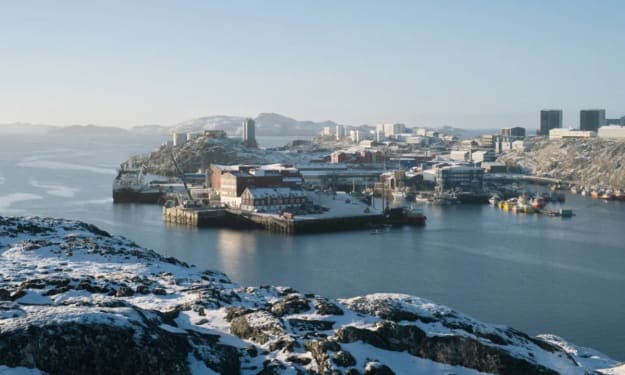
The Arctic Is No Longer a Frozen Backwater For decades, the Arctic sat quietly on the margins of global politics—remote, frozen, and largely ignored. That era is over. Britain is now in talks with NATO to strengthen Arctic security, acknowledging growing risks posed by Russia and China. In a notable shift, London’s assessment aligns closely with warnings long emphasized by Donald Trump, particularly as he continues to express strategic interest in Greenland. What once sounded like an eccentric fixation has evolved into a serious geopolitical conversation. The Arctic is rapidly becoming one of the world’s most contested regions, and Britain is positioning itself to play a larger role. Why Britain Is Paying Attention Now Although the UK is not an Arctic nation, it is an Arctic-adjacent power with significant strategic interests. British officials increasingly view the High North as critical to national and allied security. Melting ice is opening new shipping routes, exposing untapped natural resources, and making military movement easier than ever before. Britain’s talks with NATO focus on intelligence sharing, joint exercises, surveillance capabilities, and protecting undersea infrastructure such as communication cables and energy pipelines. These are not abstract concerns. Any disruption in the Arctic could have immediate consequences for European security and global trade. In short, what happens in the Arctic does not stay in the Arctic. Russia’s Expanding Arctic Footprint Russia is the dominant military power in the Arctic, and it is not slowing down. Moscow has reopened Soviet-era bases, deployed advanced missile systems, expanded its icebreaker fleet, and increased patrols across the region. The Arctic coastline represents a core part of Russia’s nuclear deterrent, making it strategically vital to the Kremlin. From NATO’s perspective, this military buildup creates both risk and uncertainty. Britain, which has long been vocal about Russian aggression—from Ukraine to cyber warfare—sees the Arctic as another front where deterrence must be strengthened before tensions spiral. The concern is not necessarily an immediate conflict, but miscalculation. In a region with harsh conditions and limited communication infrastructure, even minor incidents could escalate rapidly. China’s Quiet but Steady Arctic Ambitions While Russia’s presence is overt, China’s Arctic strategy is more subtle—and equally concerning to Western planners. Beijing calls itself a “near-Arctic state,” a label that has raised eyebrows in Europe and North America. Through investments, research stations, and partnerships, China is laying the groundwork for long-term influence. Britain shares NATO’s concern that China could use civilian projects for dual-use purposes, blending scientific research with intelligence gathering and infrastructure control. As Arctic shipping routes become commercially viable, China’s interest in controlling parts of the supply chain only grows. London’s alignment with these concerns reflects a broader shift in UK foreign policy: China is no longer viewed solely as an economic partner, but as a strategic competitor. Trump, Greenland, and Strategic Reality Donald Trump’s repeated interest in Greenland—most famously his suggestion that the United States should buy it—was widely mocked at the time. Yet behind the headlines was a strategic logic that many Western governments now openly acknowledge. Greenland sits at the heart of the Arctic, hosting vital air and naval routes between North America and Europe. It is also rich in rare earth minerals critical for modern technology and defense systems. As ice recedes, Greenland’s strategic value only increases. Britain’s current position, which aligns with Trump’s warnings about Arctic vulnerabilities, shows how quickly political perceptions can change. What once seemed unconventional now appears prescient. NATO’s Arctic Awakening NATO has traditionally focused on Eastern Europe and the North Atlantic. The Arctic, despite its importance, received less coordinated attention. That is changing. Britain’s talks with NATO reflect a broader alliance effort to integrate Arctic defense into its core strategy. This includes: Increased joint military exercises in cold-weather environments Enhanced monitoring of Russian and Chinese activity Strengthening cooperation with Arctic nations like Norway, Canada, and Denmark Protecting critical undersea and satellite infrastructure For Britain, this is also about credibility. As a leading NATO member and a key military power, the UK wants to demonstrate that it can contribute meaningfully beyond its immediate geography. Climate Change as a Security Multiplier One of the most striking aspects of Arctic security is how closely it is tied to climate change. Melting ice is not just an environmental issue—it is a strategic one. New sea lanes shorten travel between Asia and Europe, while access to oil, gas, and minerals becomes easier. This transformation increases competition and reduces natural barriers that once limited military movement. Britain’s involvement reflects recognition that climate-driven changes are reshaping the security landscape faster than traditional institutions were designed to handle. In this sense, Arctic security is a preview of future global challenges where environmental change and geopolitics collide. Domestic and Diplomatic Balancing Acts Britain’s Arctic engagement is not without challenges. Increased military involvement raises questions about defense spending, priorities, and escalation risks. Diplomatically, London must balance deterrence with dialogue, avoiding actions that could unnecessarily provoke Russia while still protecting allied interests. There is also the question of public awareness. Arctic security lacks the visibility of conflicts like Ukraine, making it harder to sustain political attention. Yet policymakers increasingly argue that prevention is cheaper—and safer—than crisis response. What This Means Going Forward Britain’s talks with NATO mark an important shift in how the Arctic is viewed: not as a distant frontier, but as a central arena in 21st-century security. Agreement with Trump-era assessments on Russia, China, and Greenland underscores how geopolitical realities can outlast political controversies. As competition intensifies, the Arctic will likely become a testing ground for cooperation, deterrence, and strategic foresight. Britain’s involvement signals that mid-sized powers are no longer content to watch from the sidelines. Final Thoughts The Arctic is warming faster than any other region on Earth—and so are the geopolitical tensions surrounding it. Britain’s move to boost Arctic security with NATO reflects a growing consensus that ignoring the High North is no longer an option. Whether driven by Russia’s militarization, China’s quiet expansion, or lessons drawn from Trump’s blunt warnings, one truth stands out: the future of global security may well be shaped at the top of the world, where ice, ambition, and power now intersect.
By Muhammad Hassan7 days ago in Earth
Miss Persephone's Manual to a Seemingly Ordinary Life
Miss Persephone was found at the dining table, her blue eyes swollen, her tears arriving and retreating like the tides of the ocean. Earlier that day, her family had visited her in the retirement home where she had lived for eight years. It was her eightieth birthday.
By Imola Tóth4 days ago in Fiction



Comments
There are no comments for this story
Be the first to respond and start the conversation.