
Will we ever be able to travel back in time?
Time travelling


Have you ever imagined the possibility of journeying through time? I am certain that we all have. Perhaps you desire to venture into the past, to witness how things were or even alter certain events. Alternatively, you may prefer to venture into the future, to observe how events unfold. Time travel has long been a staple of science fiction, with numerous books and movies exploring the advantages and risks associated with such a capability. However, the question remains: is time travel truly feasible? And if so, what prerequisites must be met in order to achieve it? To comprehend the mechanics of time travel, we must first grasp the concept of time itself. In classical physics, time was perceived as an entity that exists universally, independent of any observer, and progresses uniformly for all. This notion implies that a cause is always followed by an effect, never the other way around, forming the foundation of the universe's structure. Nevertheless, this understanding of time fails to hold true in all circumstances. This is precisely why Einstein's theory of relativity is regarded as one of the most significant scientific breakthroughs in history, as it elucidates the dynamic nature of time.
The theory of relativity views time as a component of four-dimensional space-time and acknowledges its susceptibility to external influences. Objects moving at high speeds, for instance, experience a noticeable slowing down of time compared to those moving at lower velocities. Similarly, objects within gravitational fields also exhibit a similar effect. On a human scale, this implies that an astronaut orbiting the Earth would age at a slower rate than individuals remaining on the planet. However, there are even more unforeseen ramifications of this theory. Take black holes, for instance. They possess the most powerful gravitational forces in the entire universe, to the extent that even light cannot escape their grasp. Furthermore, black holes cause time to decelerate to an extreme degree. If one were to hypothetically fall into a black hole, gazing out into the vast expanse of the universe, they would theoretically witness events spanning hundreds of millions of years before ultimately succumbing to their inevitable fate. Alternatively, they might find themselves trapped behind some bookshelves, although escaping a black hole is highly improbable. The passage of time on the outside would be so extensive that life would be utterly unrecognisable.
Another phenomenon of time occurs at the speed of light, where time slows down as you accelerate faster and faster. This deceleration continues until you reach the maximum theoretical speed that anything can attain - the speed of light. At this incredible velocity, time has slowed down to such an extent that events seem to happen instantaneously. For instance, consider a photon of light emitted by a star on the opposite side of the universe. Despite its astonishing speed, it would still take millions of years to reach Earth and be observed as a twinkle in the sky. However, from the photon's perspective, the journey is instantaneous - it is created and reaches us in the same instant. When travelling at the speed of light, time remains neutral, neither moving forward nor backward. Therefore, the faster you go, the slower time appears for you in comparison to everything else. This concept presents a potential pathway to travelling forward in time. By accelerating away from Earth and returning, many years could pass without you ageing significantly.
The challenging aspect, of course, lies in the ability to travel backwards in time. If time becomes stagnant at the speed of light, then the question arises: would travelling faster than the speed of light enable reverse movement? Many researchers speculate so, and there exists a theory proposing the existence of a subatomic particle called a tachyon that accomplishes this feat. However, tachyons remain purely theoretical and have never been observed. This is partly due to the fact that if the theory holds true, one would never be able to perceive their approach as it would occur in the future. The concept of cause and effect would operate in reverse for tachyons. Nevertheless, some individuals believe that harnessing tachyons could provide valuable insights into time travel. Another theory involves the existence of wormholes, which serve as tunnels through the fabric of space-time, connecting any two locations at any given time. The theory of relativity allows for the possibility of wormholes, but the energy levels required to create them would be astronomical and could potentially lead to the formation of a black hole. Stephen Hawking proposed that the radiation feedback, similar to sound feedback, would render wormholes inherently unstable and incapable of lasting long enough to function as time machines.
In conclusion, the concept of time travel has captivated researchers for a considerable period of time. At some point or another, it has piqued the interest of all of us. Initially deemed utterly unattainable, recent advancements in our comprehension of the universe have altered this perception. Although still far beyond our present capabilities, it is no longer regarded as completely impossible. The laws of physics may eventually permit such a phenomenon to occur, transforming it from fiction into reality. But let me know what you think in the comment section.
About the Creator
Keep reading
More stories from The Explorer and writers in Earth and other communities.
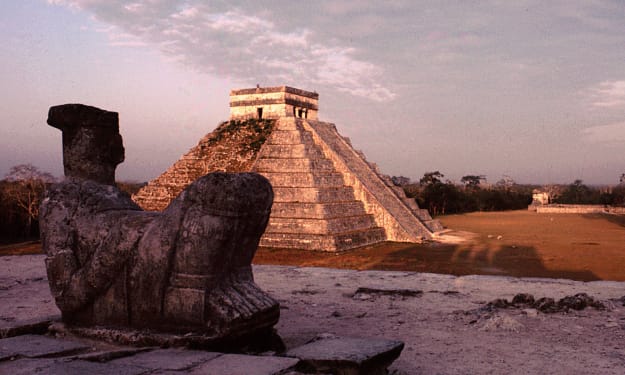
The Maya were more advanced than we thought
THE MAYA WERE FAR MORE ADVANCED THAN WE THOUGHT A great deal occurred during the initial Millennium CE. Undoubtedly, we are referring to a millennium's worth of significant events in human history. As you may recall from your schooling, this era witnessed the remarkable ascent and decline of the Roman Empire. Moreover, it marked the transition towards the tumultuous era known as the Middle Ages. Additionally, some argue that it represented the pinnacle of the Mayan civilization in Mesoamerica. However, owing to exceptional technological progress, we now have the ability to perceive history from a completely new perspective.
By The Explorer 2 years ago in History
I Saw People Getting Shot’: Eyewitness Tells of Iran Protest Crackdown
When protests erupt, statistics often dominate headlines — numbers of arrests, deaths, or injuries. But behind those figures are people who witnessed events unfold in real time. One such eyewitness has spoken out about Iran’s protest crackdown, delivering a chilling but important account of what happened on the streets.
By Muhammad Hassan5 days ago in Earth
Dow Jones Futures: Tesla, Microsoft, Meta, Apple Lead Earnings Wave; What To Do Now
As the stock market enters the heart of earnings season, investors are closely watching the Dow Jones futures, which reflect expectations for the blue-chip index’s performance in the coming days. This week, Tesla, Microsoft, Meta, and Apple are at the forefront, with analysts and traders scrutinizing their results to gauge both company performance and broader market trends.
By Muhammad Hassan4 days ago in Earth



Comments (1)
Time travel, the ultimate mind-bender! Great read!